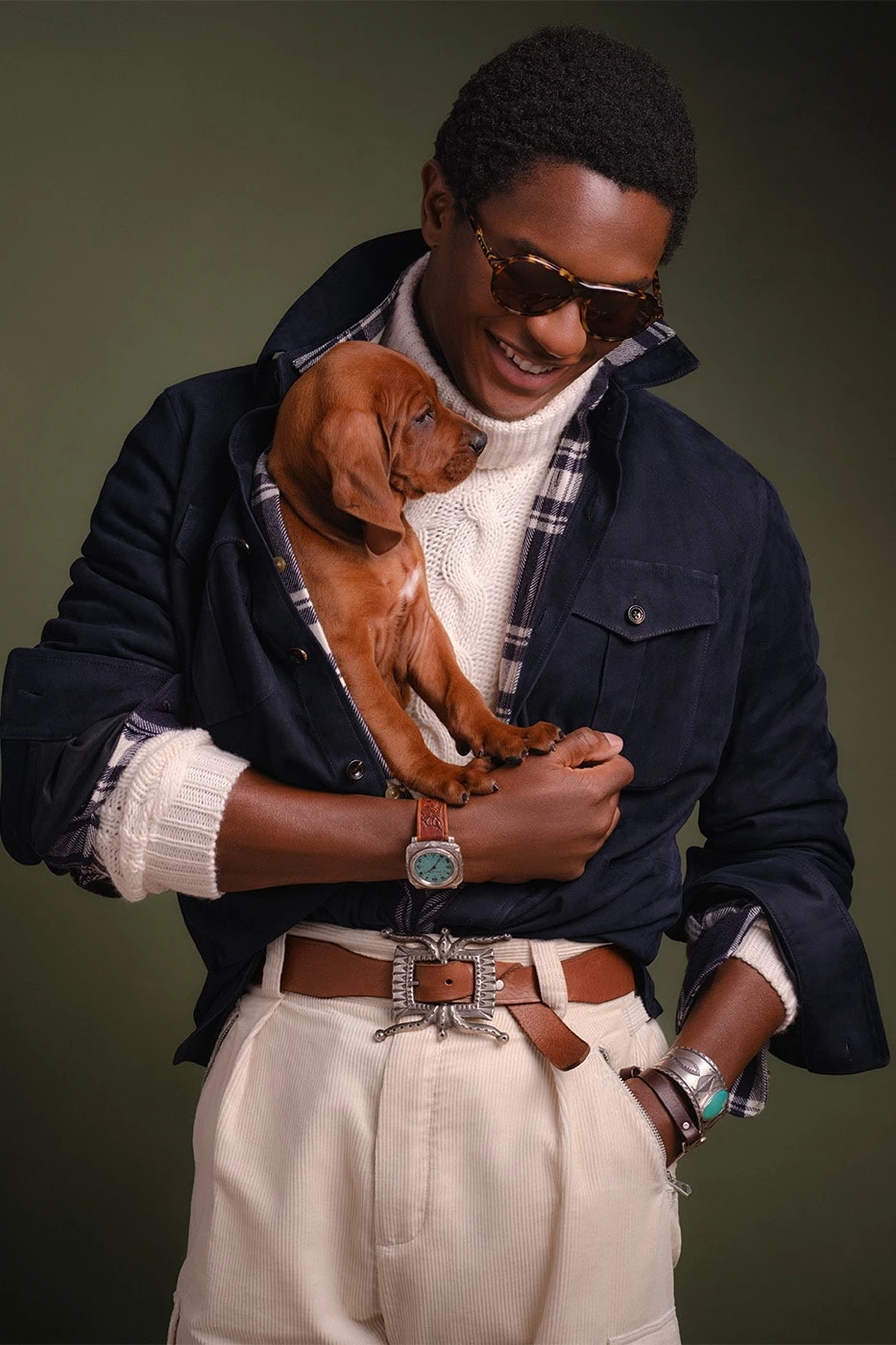
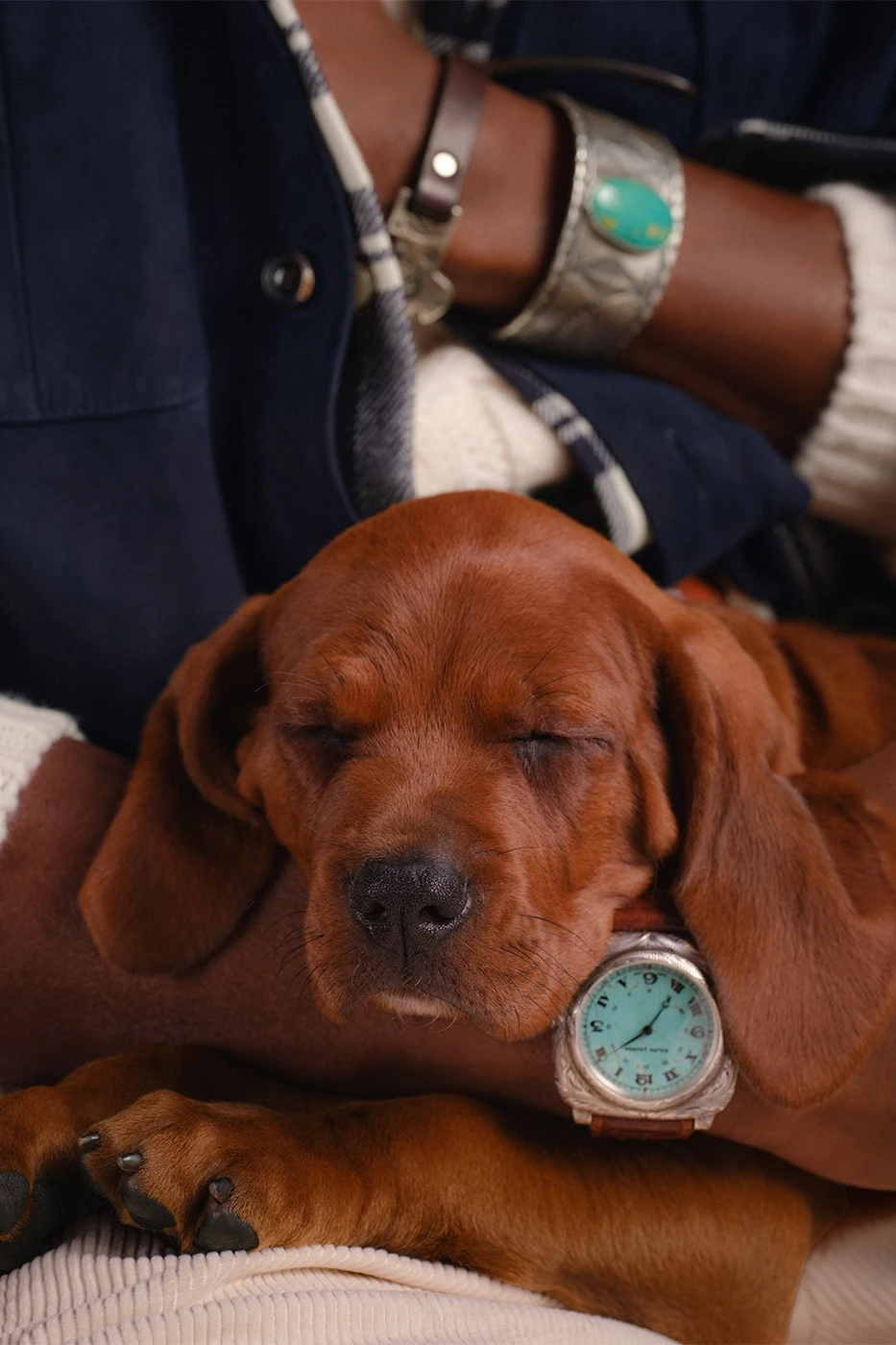
Three dial options. One case size, 38mm, down from the standard American Western Collection cushion case. One movement, the RL514, self-winding, built by Piaget and sold under no name but Ralph Lauren's. The case is engraved and lightly aged sterling silver. The dials are black lacquer, off-white lacquer, and natural turquoise stone. The price and the production run were not disclosed in the release.


Piaget is a Swiss haute horlogerie manufacturer. It builds in-house movements for its own collections, for select high-jewelry commissions, and for a small number of exclusive manufacture agreements with outside houses. Ralph Lauren's agreement with Piaget for the RL514 is one of those arrangements, confirmed in the brand's own Fall 2026 runway reporting earlier this year. The movement does not appear under the Piaget name on any Piaget-branded watch. It appears only inside Ralph Lauren cases.
The contradiction sits in category placement, not in craft. A manufacture movement from a house that counts among the handful of Swiss brands still producing its own balance wheels, hairsprings, and escapements in-house is, by the watch industry's own classification, a haute horlogerie component. The case it has been built into is styled after Western tack: engraved silverwork drawn from saddle and belt buckle ornamentation, a silhouette the Ralph Lauren Collection has run under the American Western banner for years. One half of the object belongs to a discipline measured in centuries of guild technique. The other half belongs to a design language built around ranch wear and rodeo culture.
The arrangement reveals a hierarchy that the object itself does not announce. Piaget supplies a movement it will not put its own name on in public view, confirmed only through Fall runway reporting rather than through the release copy itself. Ralph Lauren receives the manufacture credential without carrying the manufacture framing. The exclusivity runs in one direction: Piaget gains nothing visible from the pairing, while Ralph Lauren gains a caliber number it does not need to explain to its own audience.
Dial material, case engraving, and finish stand in for the specifications a horlogerie buyer would expect first. Lacquer and turquoise stone describe a surface. Self-winding and manufacture describe an engine. Ralph Lauren's copy spends its paragraphs on the surface and spares a clause for the engine, which is consistent with a house that sells silverwork and ranch styling rather than calibers and power reserve. The RL514 becomes proof of capability rather than a feature to be read closely by a buyer shopping on movement finishing.
No watch house markets a manufacture movement as a footnote. Piaget's own collections lead every release with movement specifications: caliber number, power reserve, finishing. Ralph Lauren's release does the inverse. The RL514 is mentioned once, in a single clause, after three paragraphs establishing dial color and case engraving. The movement that would be the headline of a Piaget release here reads as a supporting credit in a Western jewelry release. That sequencing decision, buried spec against foregrounded silverwork, is the operational record. The RL514 sits inside a 38mm case built for a lifestyle category, not a horlogerie one, and Ralph Lauren's own copy treats it that way.