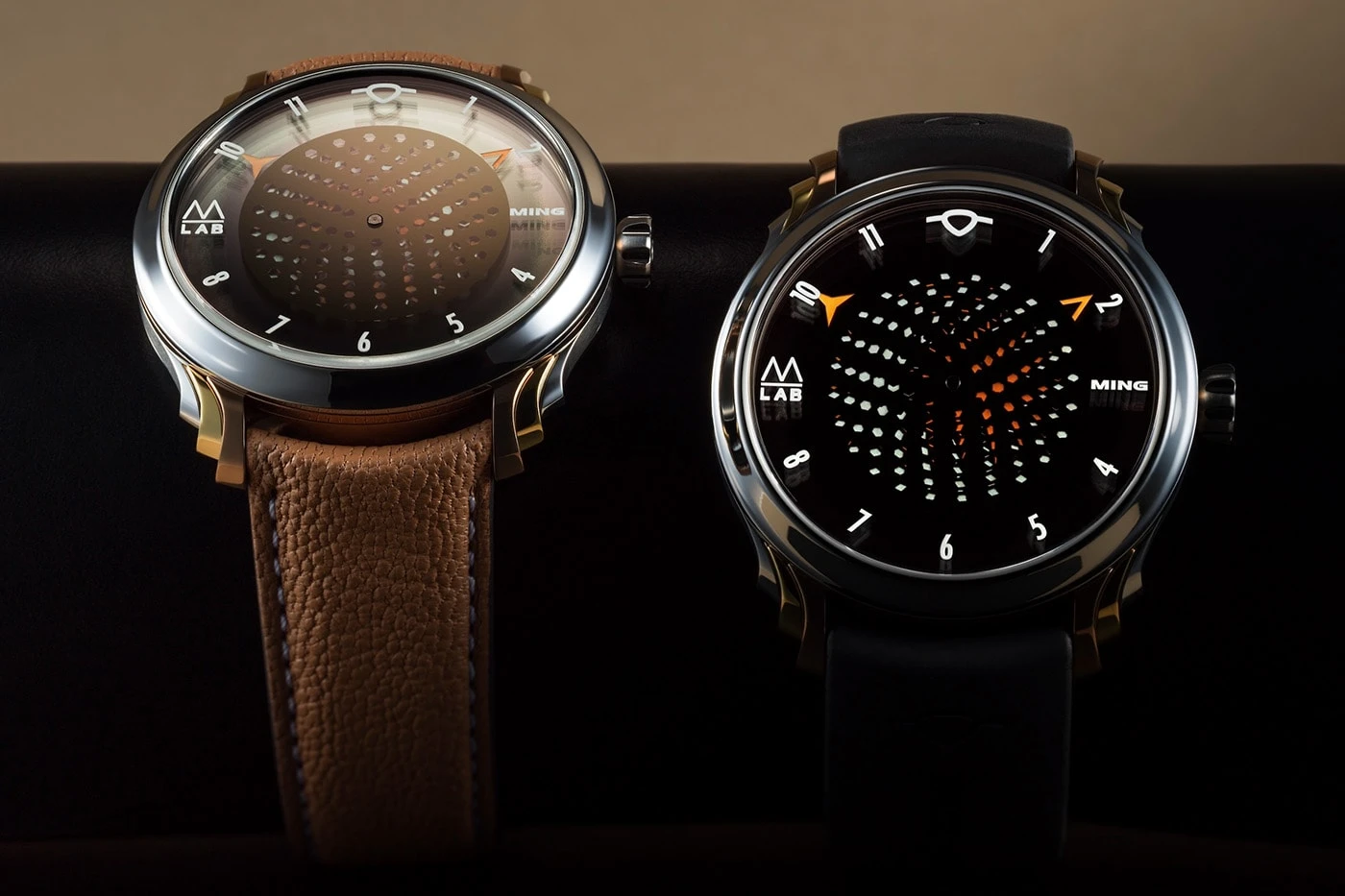
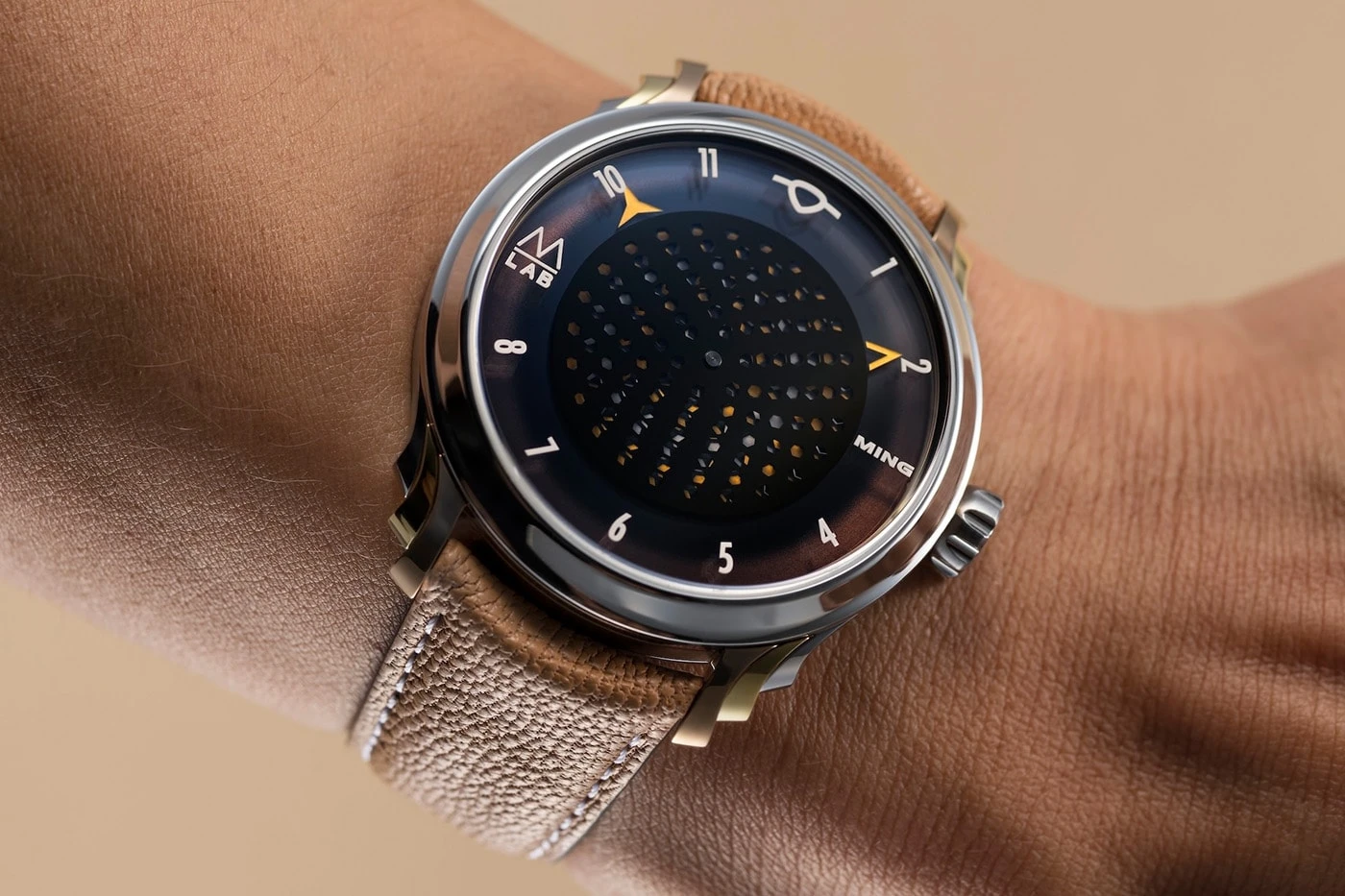
Three sapphire discs sit stacked over the dial of the 57.09 Secret Honey, rotating independently so the honeycomb pattern underneath shifts every time the wrist moves. MING calls this a dynamic guilloche. It is the kind of detail that only reads at arm's length, in direct light, which is exactly the audience this watch is built for.
In 2021, MING and Massena LAB put out the 17.09 Honey and 17.09 Black, a 200-piece run that introduced the honeycomb motif as a kind of in-joke between two small, independent names in a watch world dominated by heritage houses with marketing budgets neither brand has ever had. Five years later, the two are back with a run of 125, priced and built for a collector base that has had half a decade to decide whether the original was a novelty or a reference point.
This is small-batch watchmaking, the kind of category where a five-year gap between drops is not a lapse but a deliberate pace, and where scarcity is structural rather than manufactured. Both brands have, in the interim, become founding members of something called the Alternative Horological Alliance, a label that formalizes what used to be an informal peer group of micro-brands trading techniques and customer lists. The sequel arrives carrying that institutional weight, a tri-tone titanium case and a 50-hour automatic movement replacing what was, in 2021, a simpler proposition.
What is notable is the discipline of the wait itself. Five years is long enough that most streetwear collaborations would have cycled through three unrelated follow-ups and a logo refresh by now. Watchmaking at this scale runs on a different clock, where a second chapter only gets written once there is something mechanically new to say, not just a new colorway to push. The 57.09 Secret Honey is a product built on patience as a marketing strategy, and in an industry addicted to quarterly drops, patience is the actual flex.
The upgrade from a single honeycomb layer to three independently rotating sapphire discs is the clearest evidence of what five years and a formal alliance can buy. The original paired MING and Massena LAB as two independent names testing a shared motif. The sequel pairs them as founding members of an institution built for exactly this kind of trade in technique, and the tri-tone titanium case and automatic movement are the visible result of that shift from informal peer group to structured collaboration.
The honeycomb itself has gone from a static pattern to a mechanical argument. Where the 2021 release let the motif sit flat under the dial, the dynamic guilloche turns it into something that changes with the wrist, which is the same logic the two brands applied to their own relationship: start with a shared idea, then build the infrastructure that lets the idea move.
The run of 125 will sell out within days, to a collector base that has been waiting since 2021 for exactly this. The Alternative Horological Alliance now has its proof of concept, and the next chapter belongs to whichever brand in that alliance writes it first.