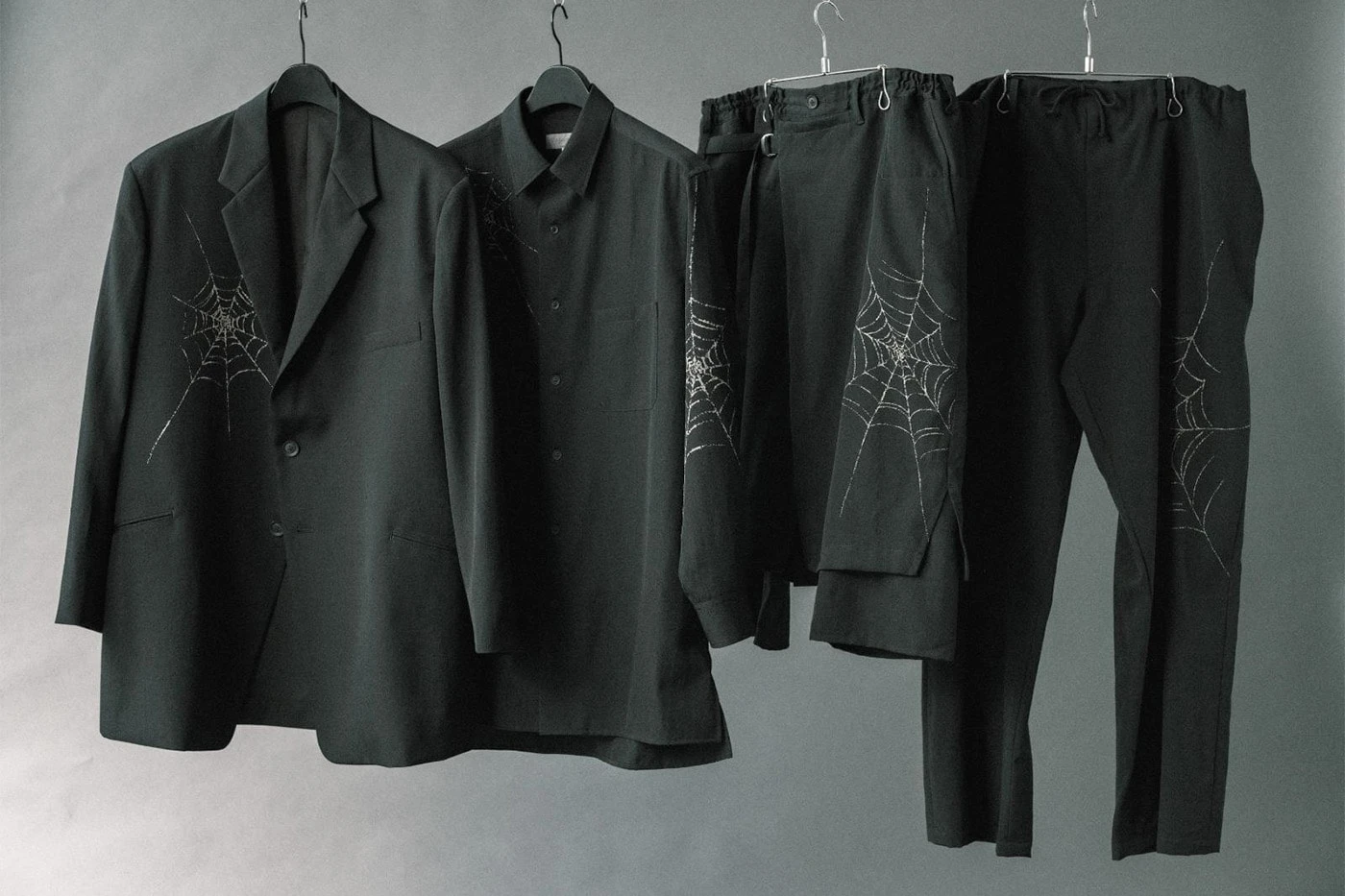
The black wool gabardine arrives first, before any pattern registers. It is only on a second look that the web resolves: not printed on top of the fabric but discharged out of it, the dye stripped away in a lattice so the pattern reads as negative space rather than ink. This is the trick Yohji Yamamoto POUR HOMME used on its Fall/Winter 2018 runway, and it is the trick the label is using again, eight years later, on a four-piece capsule built from the same two-button jacket silhouette, an oversized shirt, and two cuts of trouser: a drawstring pant and a wrap pant.
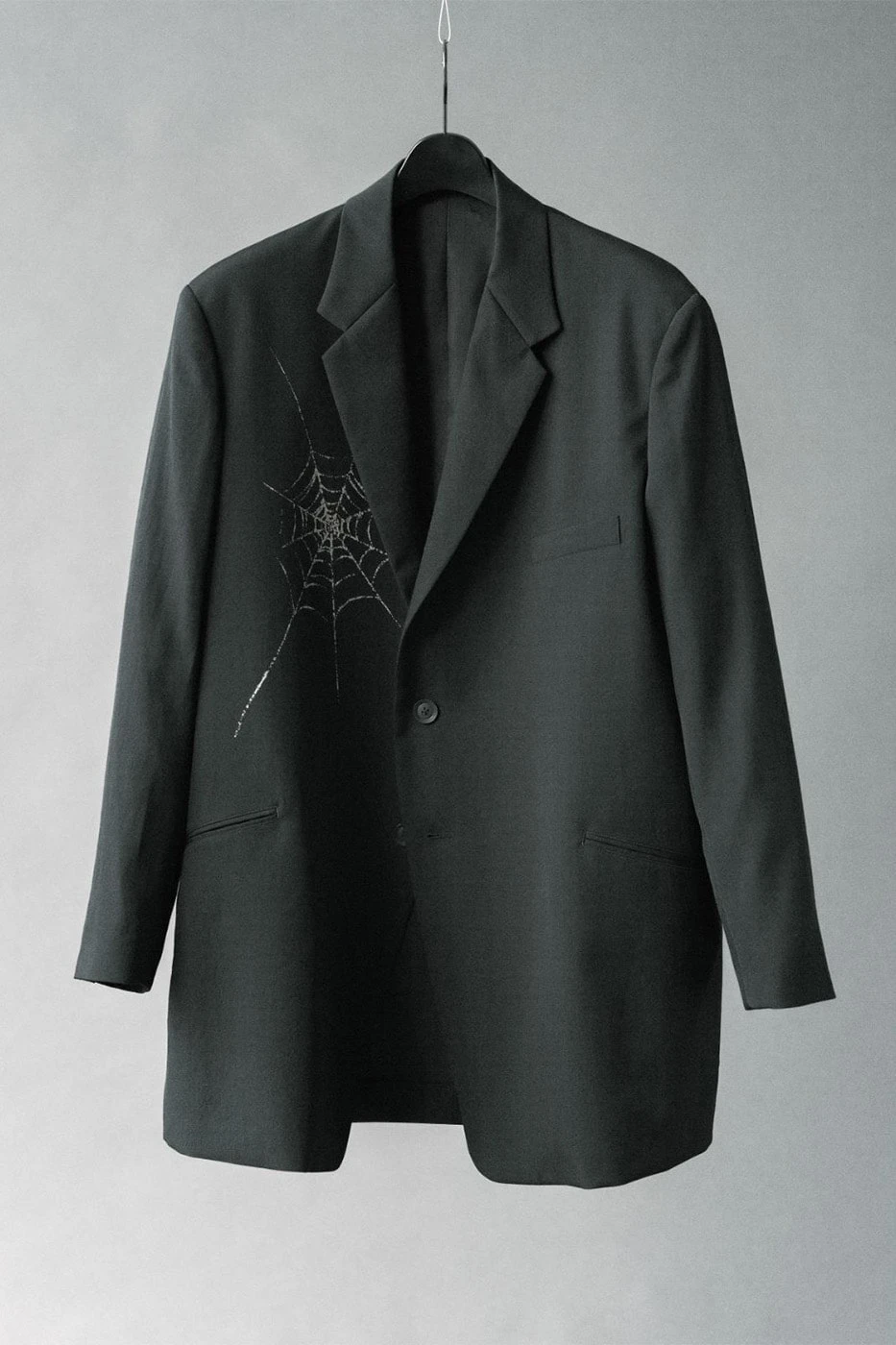
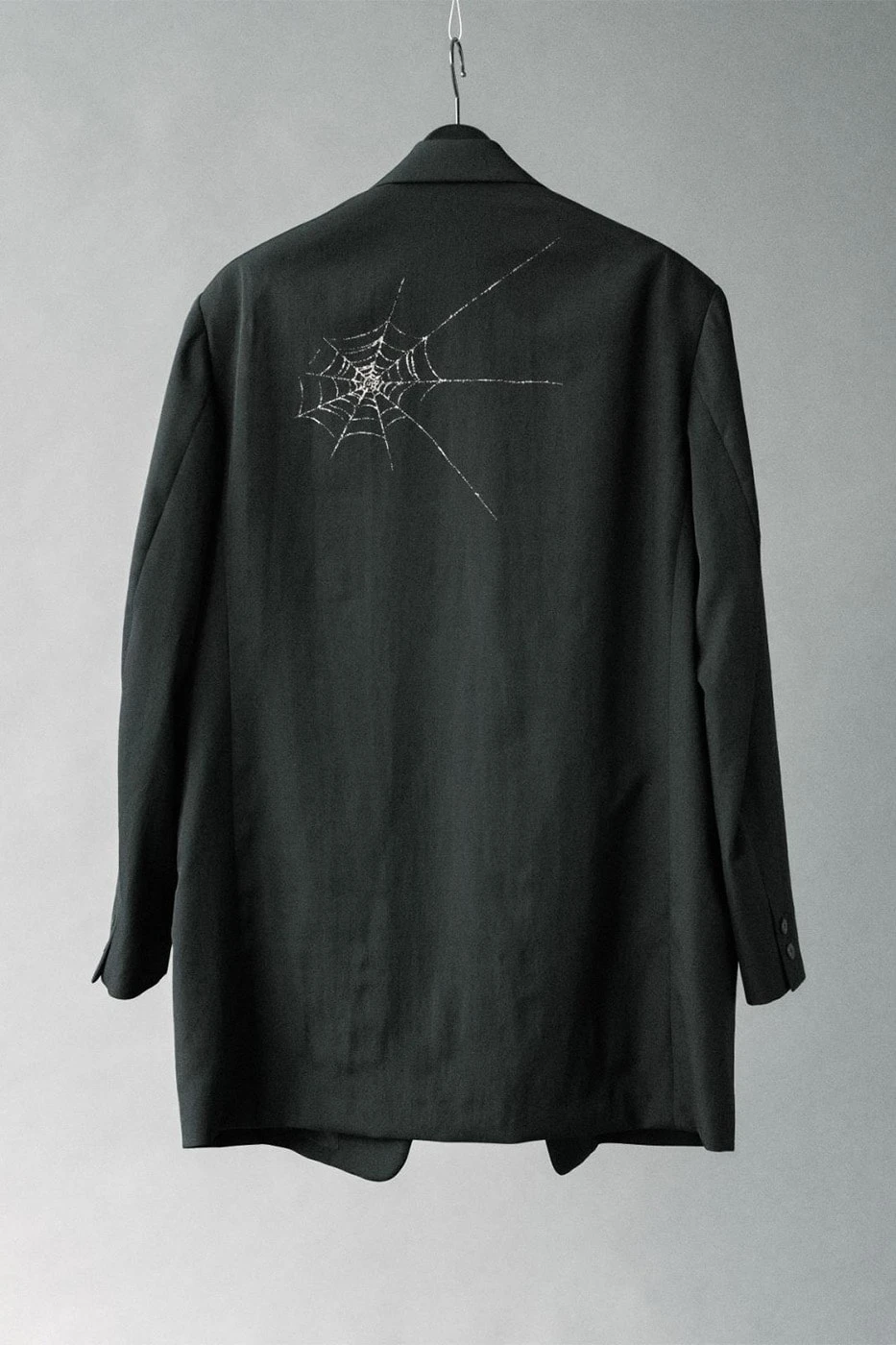
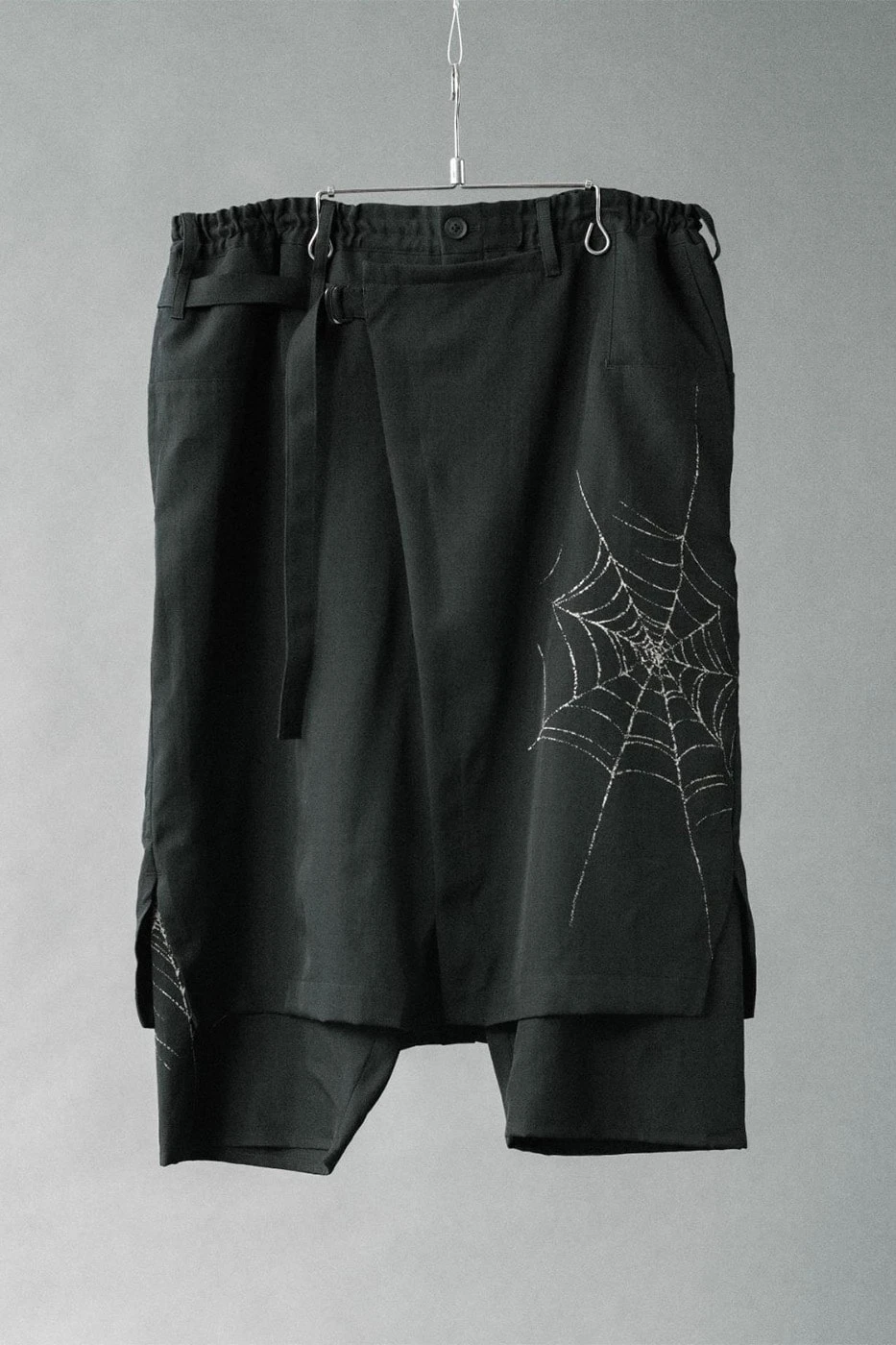
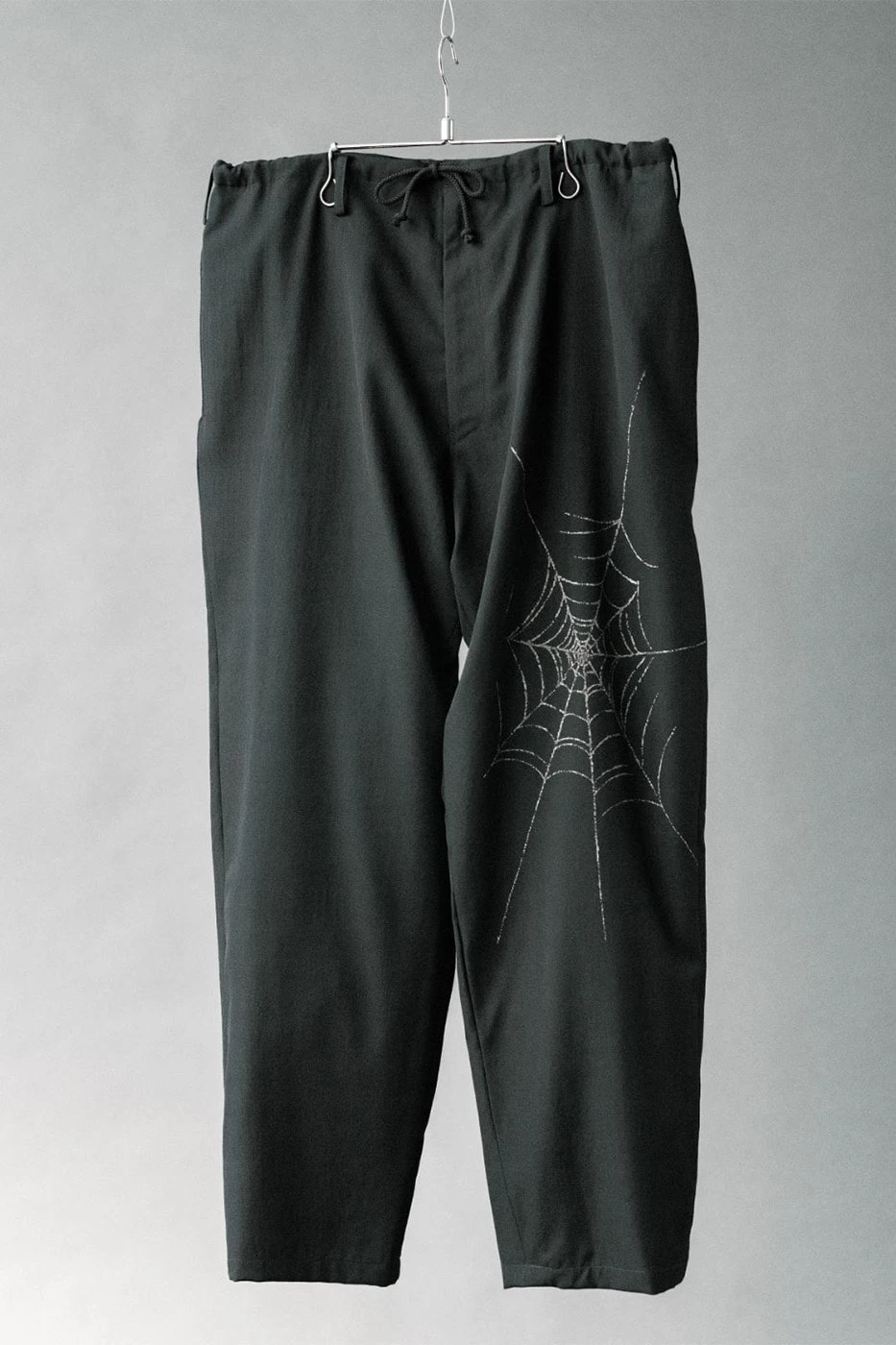
Nothing here has been redesigned. The jacket is the jacket. The web is the web. What has changed is the context around it: menswear's relationship to its own runway archive has shortened considerably since 2018, when a motif like this would have stayed buried in lookbooks and auction-house consignments for a decade or more before resurfacing. Eight years is now the gap. That is not a long memory, it is a short one, and it says something about how labels with real archives, Yohji's included, have started treating their own runway seasons less like history and more like inventory.
The brand has form here. Earlier this year it ran a separate archival callback built around cracked embroidery pulled from its own back catalog, which means this spider web capsule is not a one-off gesture of nostalgia but the second instance of the same mechanism inside twelve months: find a runway-only motif, recreate the process that made it, release it as a standalone capsule with no new design work attached. Called back to twice in a year, an archive stops functioning as history and starts functioning as a product line with a very long lead time, which is a different kind of asset than the one most labels think they are sitting on when they talk about heritage.
What makes this particular revival worth sitting with is the discharge technique itself. Printing a pattern on top of fabric is additive and infinitely repeatable; discharging a pattern out of fabric is subtractive and tied to the dye lot, the gabardine weave, the exact chemistry of 2018's production run. A label that chooses to remake a pattern this way, rather than simply reprinting the original artwork, is choosing difficulty over convenience, and that choice is the clearest signal in the release: the capsule is not nostalgia merchandise, it is a technical object that happens to look like one. Eight years from the original season, the spider web belongs less to Fall/Winter 2018 and more to a working method the label keeps returning to when it wants to prove it still remembers how.