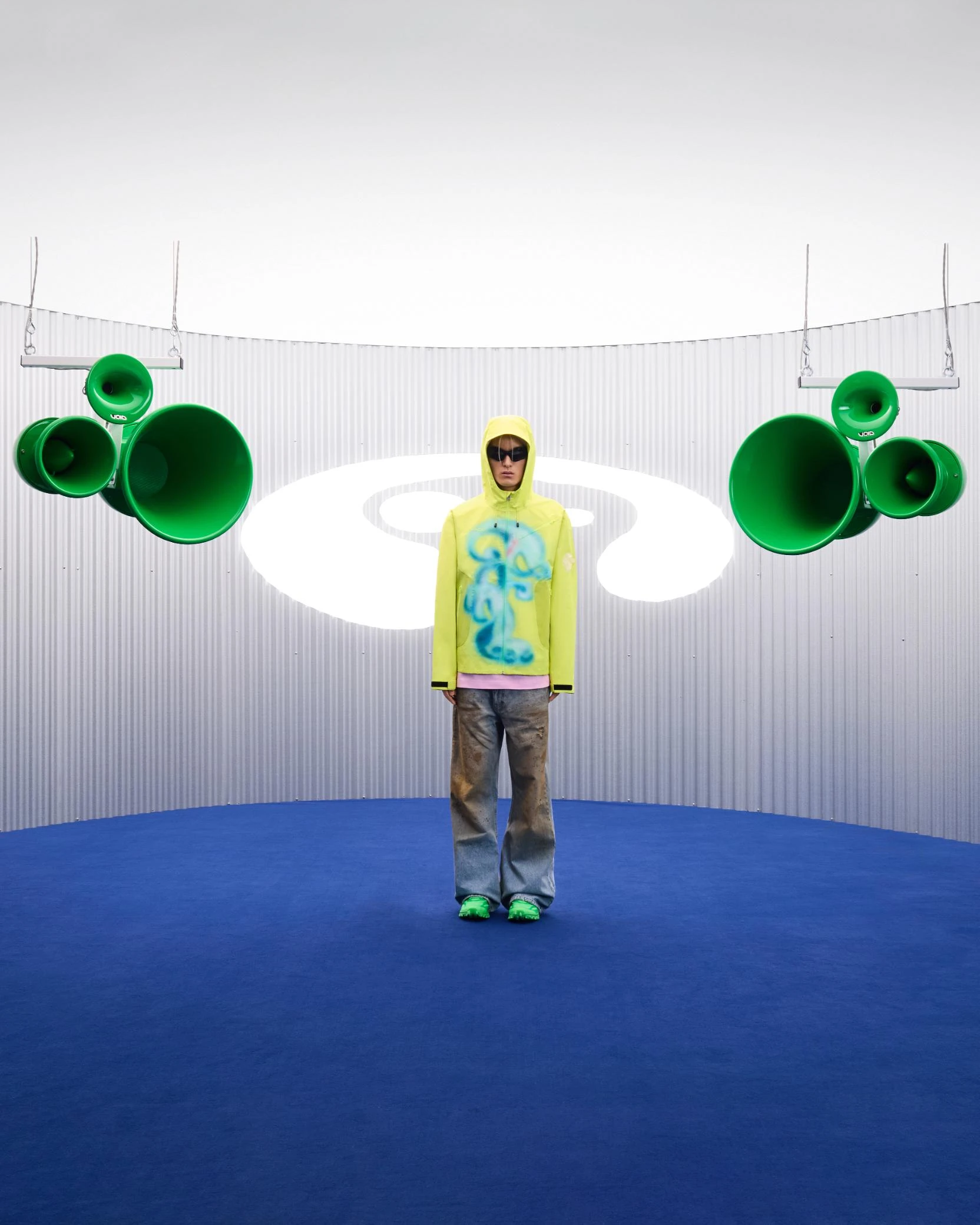
FLÂNEUR opened a store on Cornelis Schuytstraat in 2023 as a small-scale Amsterdam label rendering electronic music as garments. Translucent fabrics, 3D-rubber detailing, seamless tailoring. The clothes were good. The clothes were also, plainly, downstream of a music project that the brand had not yet declared.
Roos saw it first, on Instagram, the night of the SS26 campaign drop. The brand's feed posted the lookbook and a separate post: a livestream from the FLÂNEUR studio in Amsterdam, with floating speakers, a glowing FLÂNEUR MUSIC logo, raw industrial materials and a deep-pile rug. The livestream did not turn off. It is still on. That is not a campaign asset. That is a label.
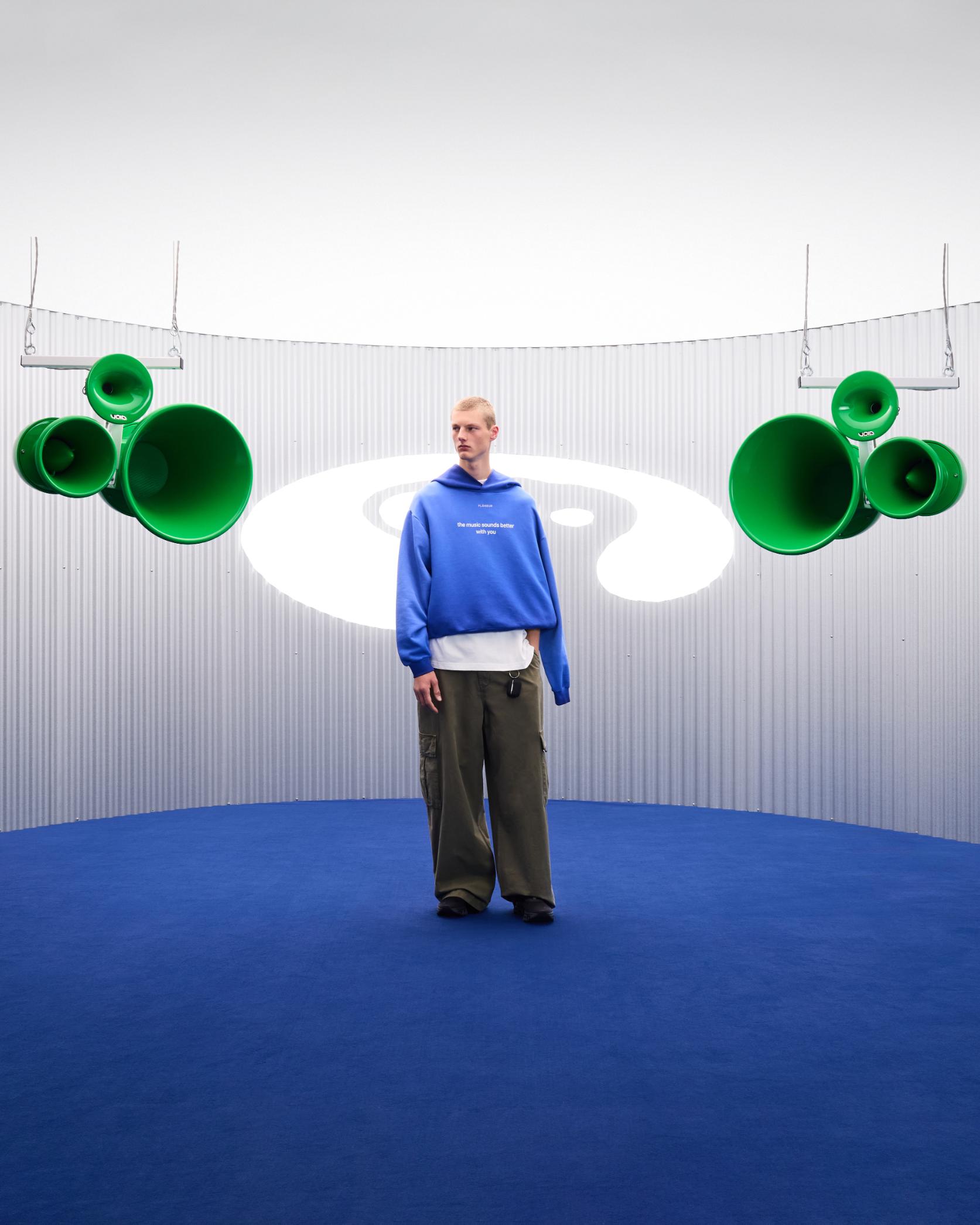
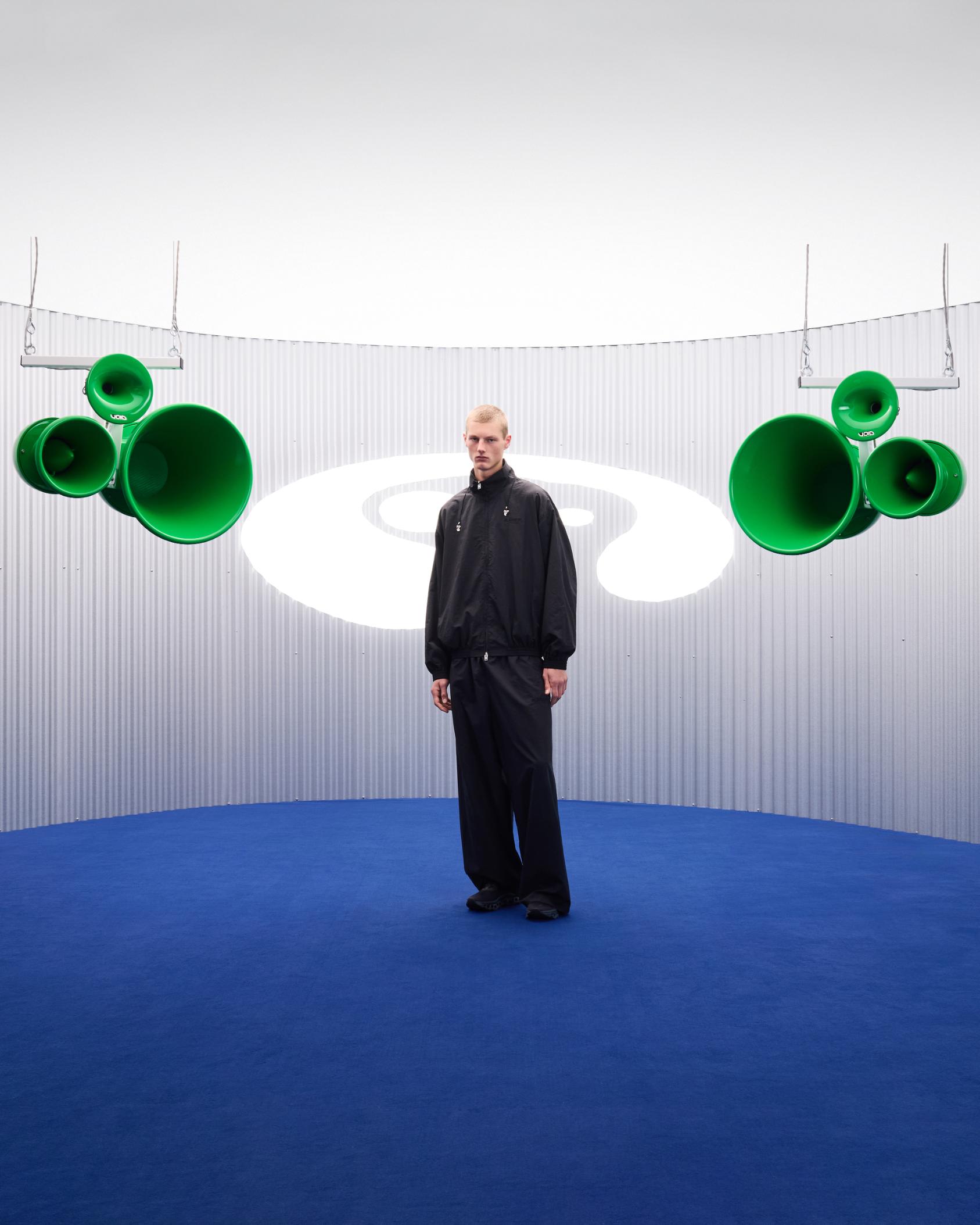
FLÂNEUR MUSIC is the fashion brand's second label. The studio space is not a fashion campaign location with a sound-system retrofit. It was built for both functions from the start. VOID Air Motion speakers, custom finished in FLÂNEUR's signature green. The livestream is curated. The label has signings. The press release describes the project in the language of A&R, not the language of campaign craft.
Niek's read on the pattern: this is not unique to FLÂNEUR. The international precedent is Off-White's recurring partnerships with electronic and experimental music projects in the late 2010s, and 1017 ALYX 9SM's adjacency to the same scene. The local precedent is more specific. Patta's in-store soundsystem programme has been quietly running for fifteen years and is the reason a Patta drop event in 2026 is materially closer to a club night than to a fashion launch. FLÂNEUR is not borrowing from a tradition. It is building inside one.
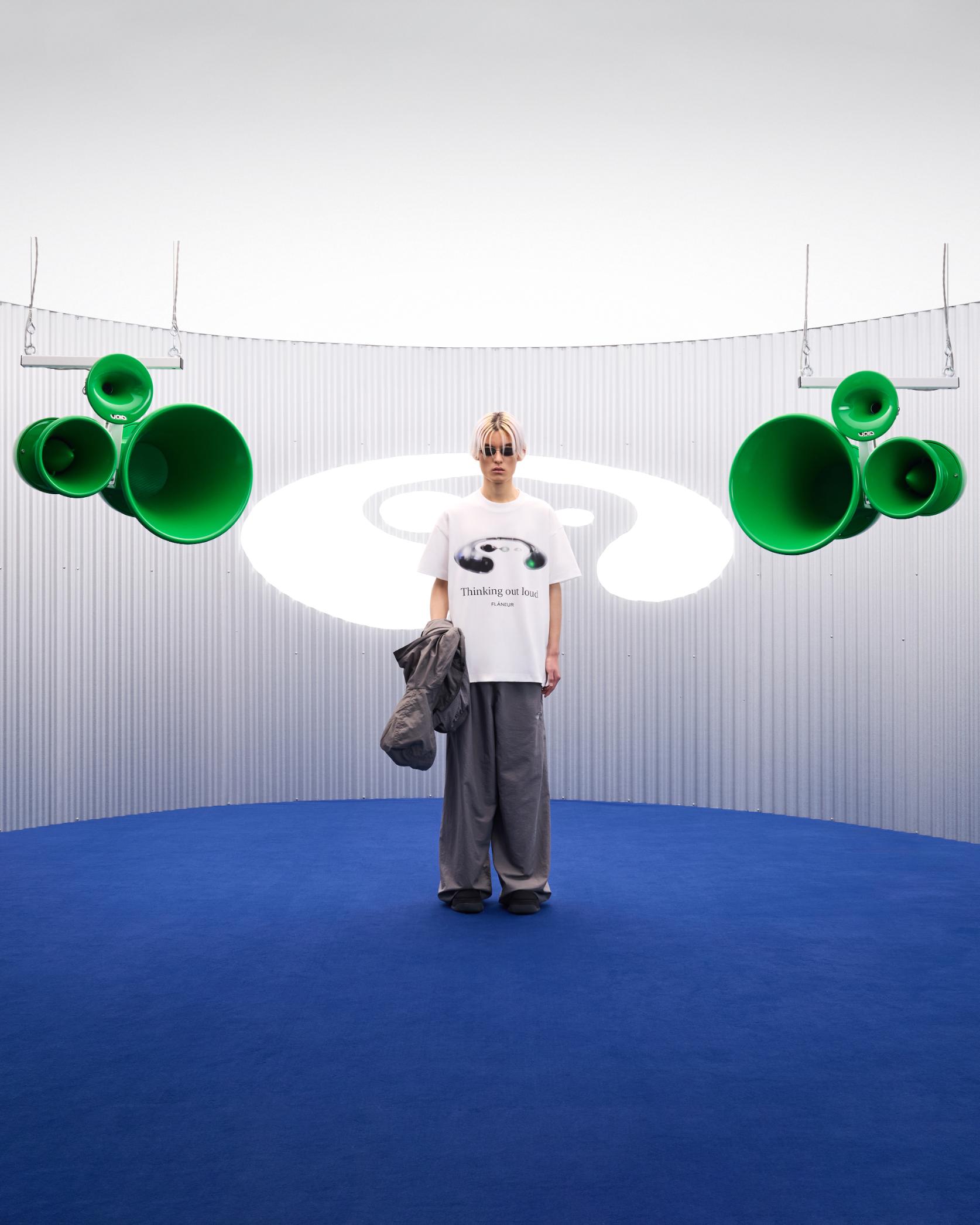
The structural reading is drift. FLÂNEUR has crossed from a fashion label into a music label that also produces clothes. The brand's public communication is honest about it. The press cycle has not caught up. The international fashion press treated the SS26 collection as a campaign with a music angle. RED·EYE went further and named the label. Both stopped before naming what FLÂNEUR has structurally become, which is a brand that prices its garments as the visible exhaust of an editorial music project.
Why the lag matters
The pricing on FLÂNEUR's garments is currently set against the European fashion market. The market it is actually competing in is closer to Boiler Room's merchandise economics, where the garment is a membership artefact for a music programme. Those two markets value the same hoodie at different price points. FLÂNEUR is currently selling at the higher one. Whether the customer base agrees with the price will be visible in this season's sell-through, not in the press.
What to watch: which DJs the label signs in its first six months, and whether the FLÂNEUR store on Cornelis Schuytstraat starts hosting livestreams as in-store events. The store is the site where the two business models meet. If the events fill the store, the drift has compounded. If they do not, the brand has built a music label as a marketing line item, and the press read of “a fashion brand with music adjacency” will turn out to be correct after all.
The first read was Roos's, filed at one a.m. on April 25 with three Reels screenshots and a single observation: the livestream did not turn off. The structural read followed.