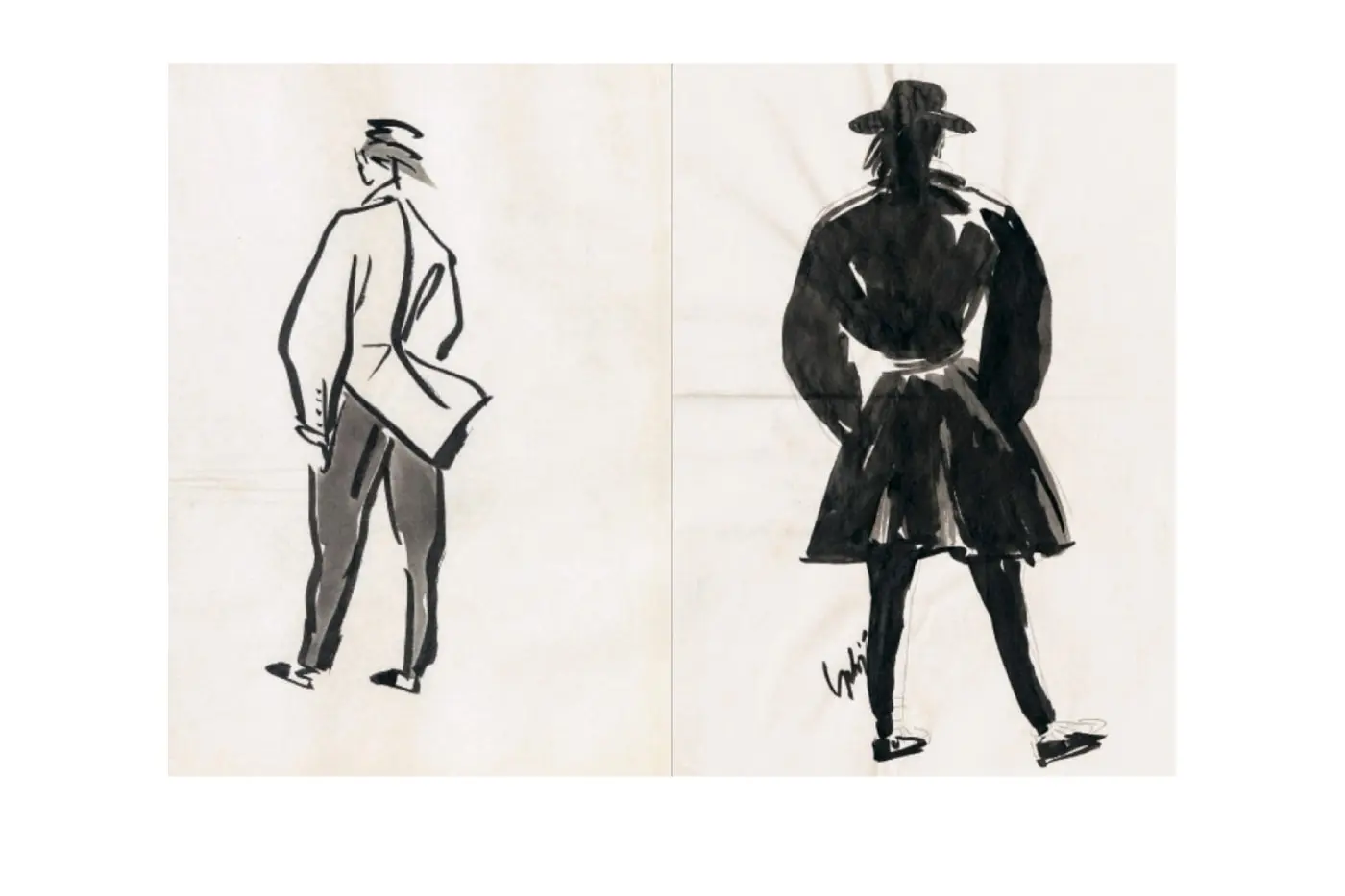
The pages are rough, varying weights of paper that Yamamoto has accumulated across decades of collection cycles. Some sheets carry the texture of newsprint, others the tooth of watercolor stock. Ink pools differently on each surface, and the book makes no effort to smooth those inconsistencies away.
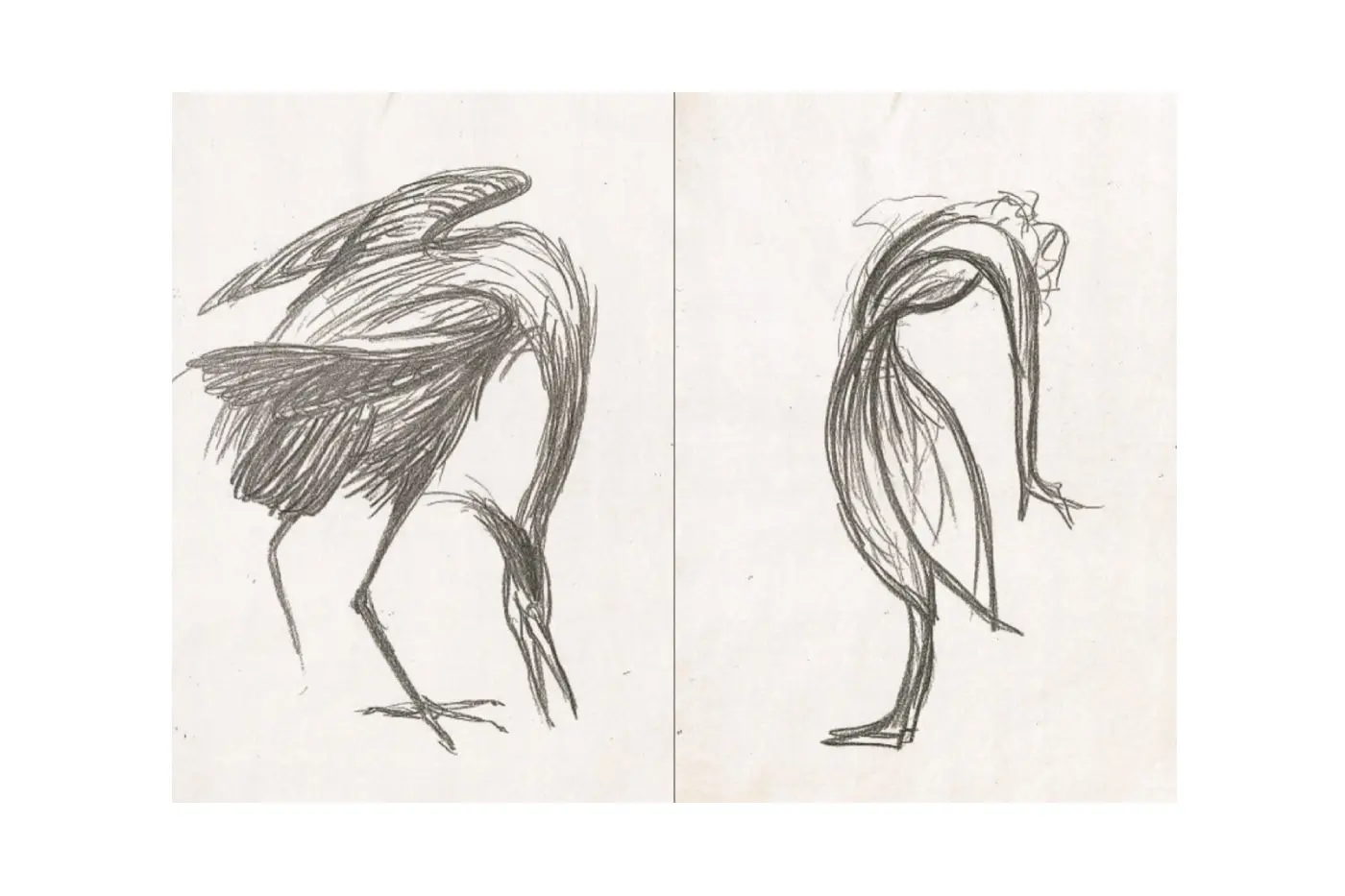
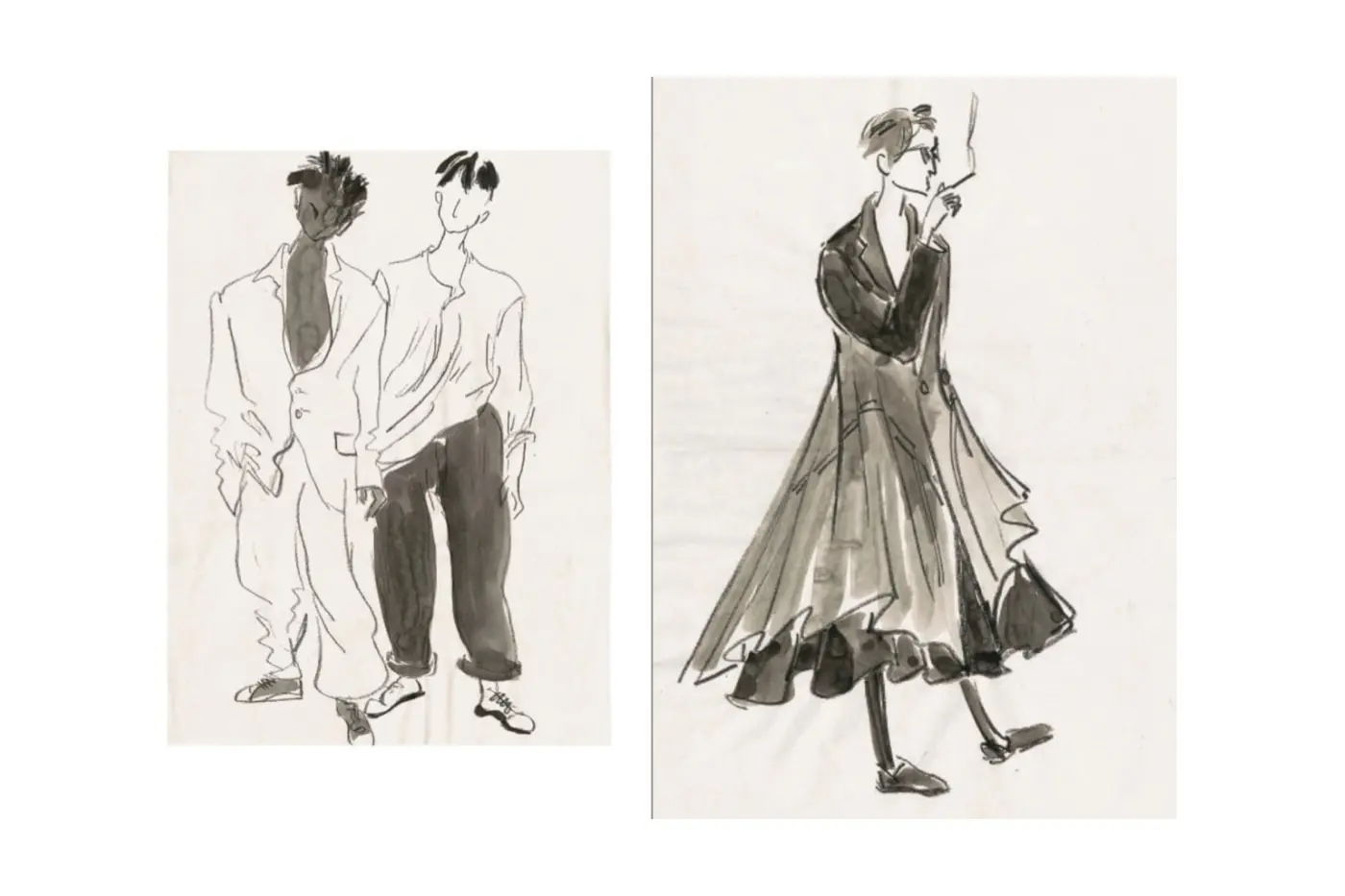
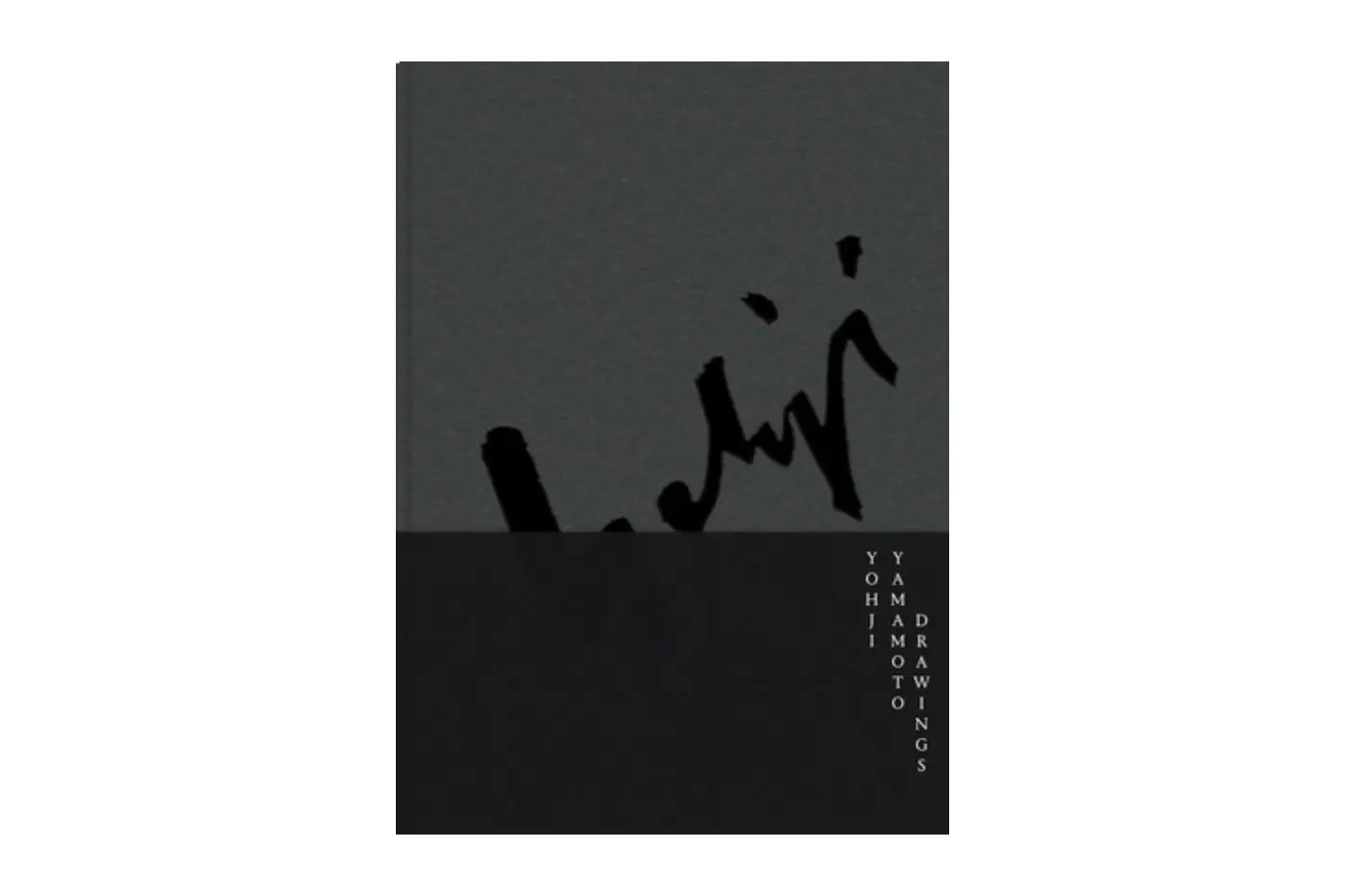
Yohji Yamamoto Drawings arrives from Thames & Hudson as a hardcover volume authored by Alexandre Samson, curator at Palais Galliera in Paris. Peter Saville handled the design. The images, chosen by Yamamoto himself, span menswear and womenswear, figures and silhouettes, studies that preceded garments and sketches that led nowhere at all.
The framing matters. Fashion monographs have traditionally treated sketches as prologue to the finished garment, documentation of process rather than objects in themselves. Saville and Samson reverse the hierarchy. The drawings are not presented as windows into collection development. They are presented as drawings.
This is a book about mark-making first and clothing second, and that inversion distinguishes it from the retrospective volumes that have accompanied major museum surveys. The 2011 Victoria & Albert exhibition, for instance, centered on garments and film. The 2018 Antwerp show foregrounded archives. Neither made the sketch the primary subject.
Yamamoto turns 83 this October. His label continues to show in Paris, but the creative conversation around him has shifted from anticipation to retrospection. A sketchbook monograph is a predictable move in that arc. What is less predictable is the decision to release drawings that were never intended for public view, images that do not correspond to known collections, fragments that exist outside the archive's organizing logic.
The book positions Yamamoto's hand as its own medium, distinct from the cutting room and the runway. It is fashion publishing that belongs on the art shelf.
Samson's authorship carries institutional weight that reinforces the reframing. As a Palais Galliera curator, he operates within a museum context that has historically validated fashion as cultural artifact rather than commercial product. His text does not approach Yamamoto as a brand to be documented but as an artist whose private notations warrant the same scholarly attention given to painters' sketchbooks. The collaboration with Saville, whose graphic work has long occupied the space between commercial design and gallery wall, compounds the effect: two figures whose careers have tested the boundary between applied and fine art now apply that sensibility to a third.
The selection process itself, led by Yamamoto rather than an archivist or publishing editor, removes the institutional filter that typically shapes retrospective volumes. Drawings that led nowhere receive equal placement alongside studies that became garments. The absence of chronological or thematic organization denies viewers the familiar narrative arc of creative development, forcing attention onto the line itself rather than its destination in fabric.
The category is design monograph; the register is fine art. Thames & Hudson has published both for decades, but the two rarely collapse into one another this cleanly. Yohji Yamamoto Drawings does not explain a designer's process. It canonizes his line.