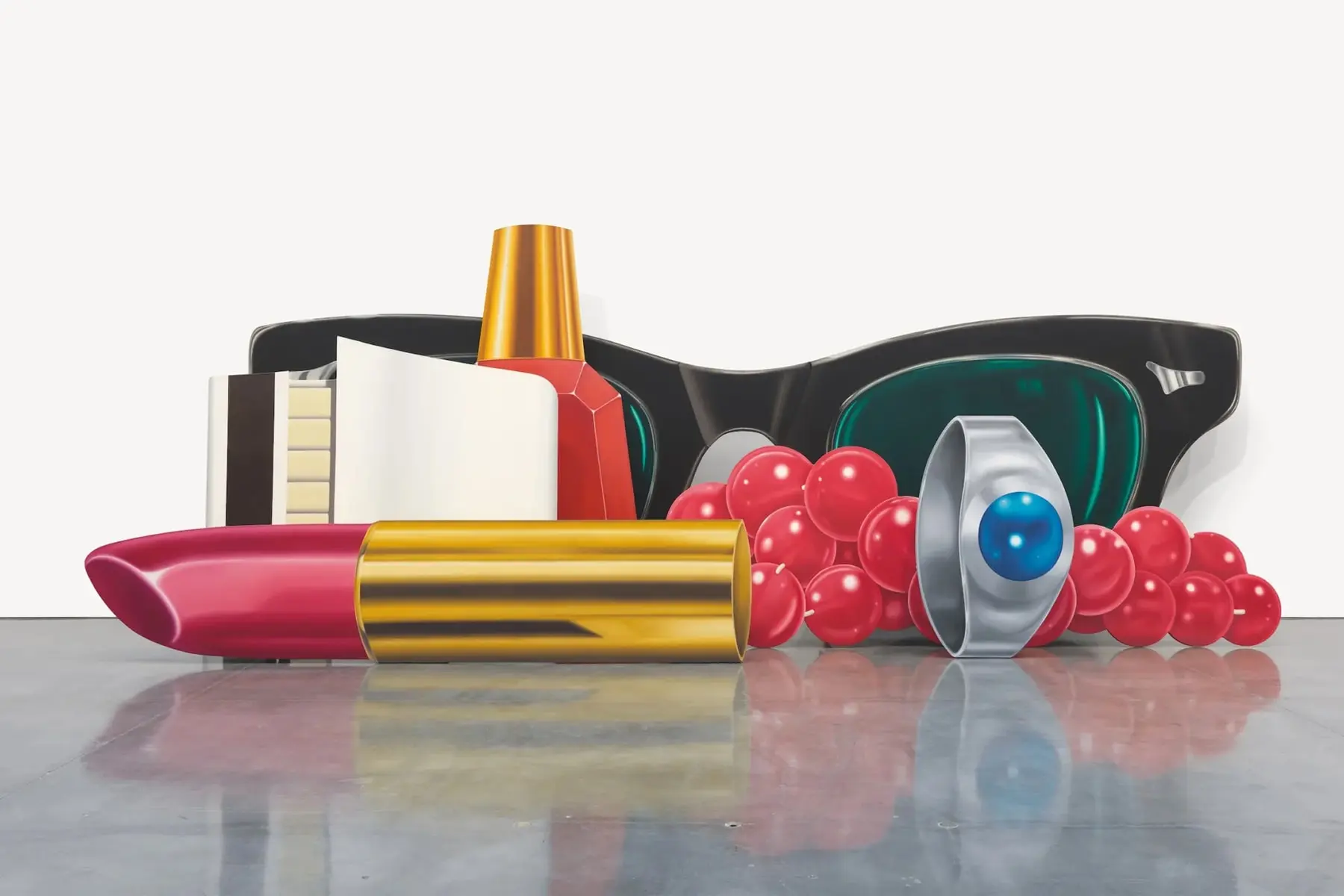
Twenty-two years. That is how long Tom Wesselmann's Cooper Square studio remained closed to the public after his death in 2004. The space opens September 19 through 26, 2026, during Armory Week, with timed visits coordinated by Almine Rech.
The gallery is pairing the studio opening with a duet exhibition: Wesselmann alongside Tomokazu Matsuyama, a Japanese-American painter whose work operates in a different register but shares the scale and color saturation of Wesselmann's late output. The exhibition runs concurrently at Almine Rech's New York location.
Studio openings are a specific category of estate activation. They convert a private workspace into a public site, typically during a fair week when collector traffic is highest. The timing here is precise: Armory Week concentrates buyers, advisors, and institutional curators in Manhattan. A studio visit during that window is not a memorial gesture. It is a sales event with curatorial framing.
The Wesselmann estate has been active since his death. Secondary market prices for his work have held steady, with major cut-outs and collages trading in the seven-figure range at auction. Opening the studio now, rather than earlier, suggests a calculation about market timing. The pop revival cycle has been running for several seasons, and Wesselmann's position within it has strengthened as collectors seek alternatives to the most heavily traded names.
The duet format is notable. Pairing a deceased artist with a living one is a gallery strategy for extending the reach of an estate while introducing a represented artist to a new audience. Matsuyama's inclusion is not arbitrary: his work shares formal territory with Wesselmann's later pieces, and the pairing invites collectors to read continuity where the market might otherwise see distance.
The studio itself is a document. Wesselmann worked at Cooper Square for decades, and the space contains the tools, materials, and unfinished pieces that define a working practice. Opening it to the public is a form of authentication, a way of anchoring the market in the physical reality of production.
The estate's decision to stage this opening more than two decades after Wesselmann's death, rather than in the immediate years following, reflects a deliberate pacing strategy. Activating a studio too early risks flooding a market still processing an artist's absence; waiting allows secondary prices to stabilize and collector appetite to mature. That Wesselmann's cut-outs and collages have sustained seven-figure auction results indicates the estate timed this activation to coincide with demonstrated, rather than speculative, demand.
Almine Rech's choreography of the event amplifies this logic. By confining studio access to a single week aligned with Armory, the gallery converts scarcity into urgency. The timed-visit structure rations entry, ensuring that each visitor experiences the space as privileged access rather than public amenity. Pairing the studio with a concurrent gallery exhibition featuring Matsuyama extends the commercial surface: collectors who visit Cooper Square are funneled toward purchasable work at the New York location, where the duet format positions the living artist as heir to the formal vocabulary on display in the studio itself.
September 19 is the earliest date visitors can enter. By September 26, the studio closes again.