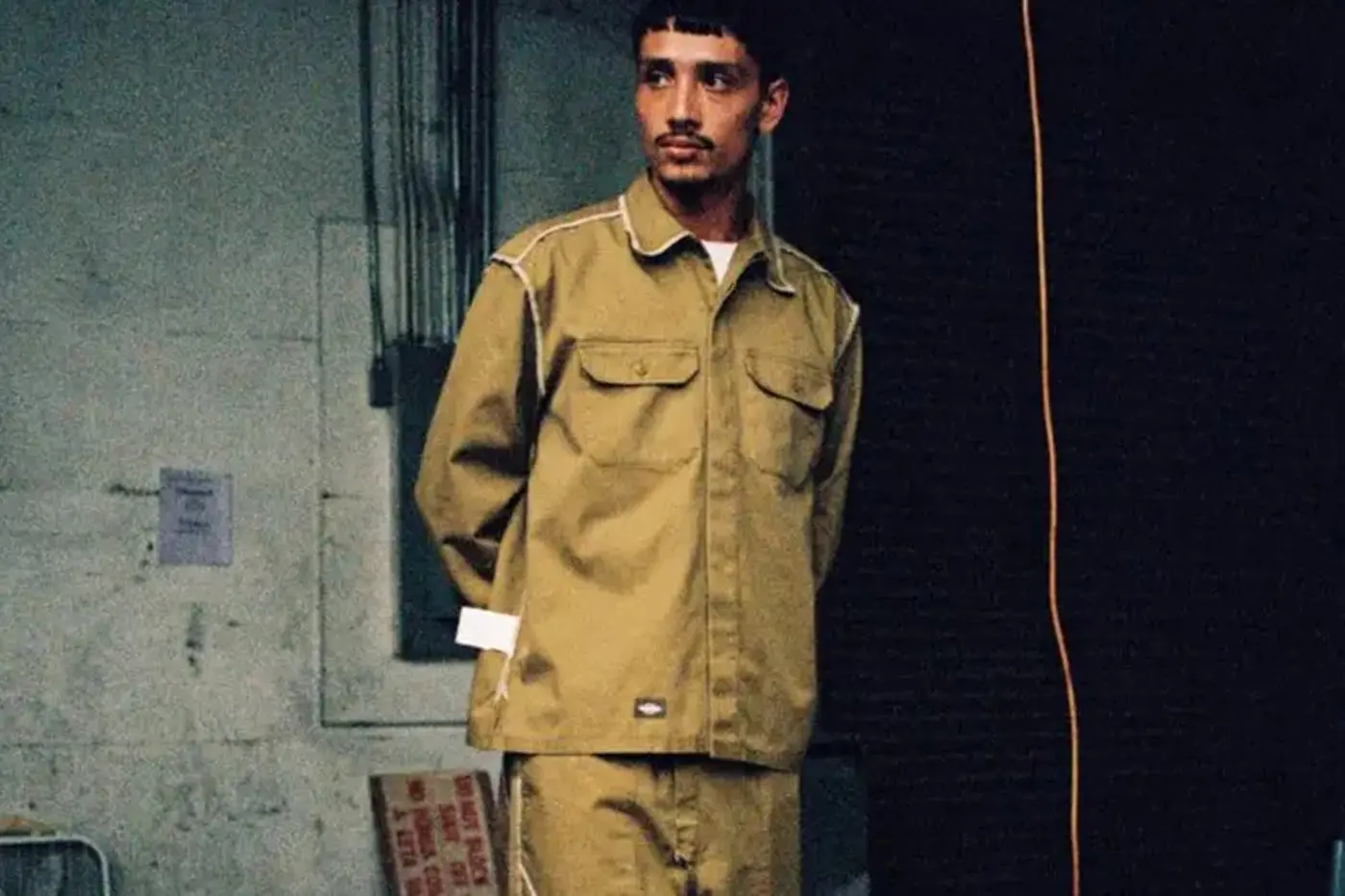
The chore jacket arrives with its stitching facing out, the double-knee work pant shows its reinforcement on the surface instead of buried underneath, and the whole capsule reads like a garment factory got interrupted mid-assembly and someone decided to sell it that way. UNION calls the collection INVERSE. Dickies calls it a Fall/Winter 2026 collaboration. Both descriptions undersell what is actually happening to a piece of clothing that has meant one specific thing, manual labor, since the 1920s.
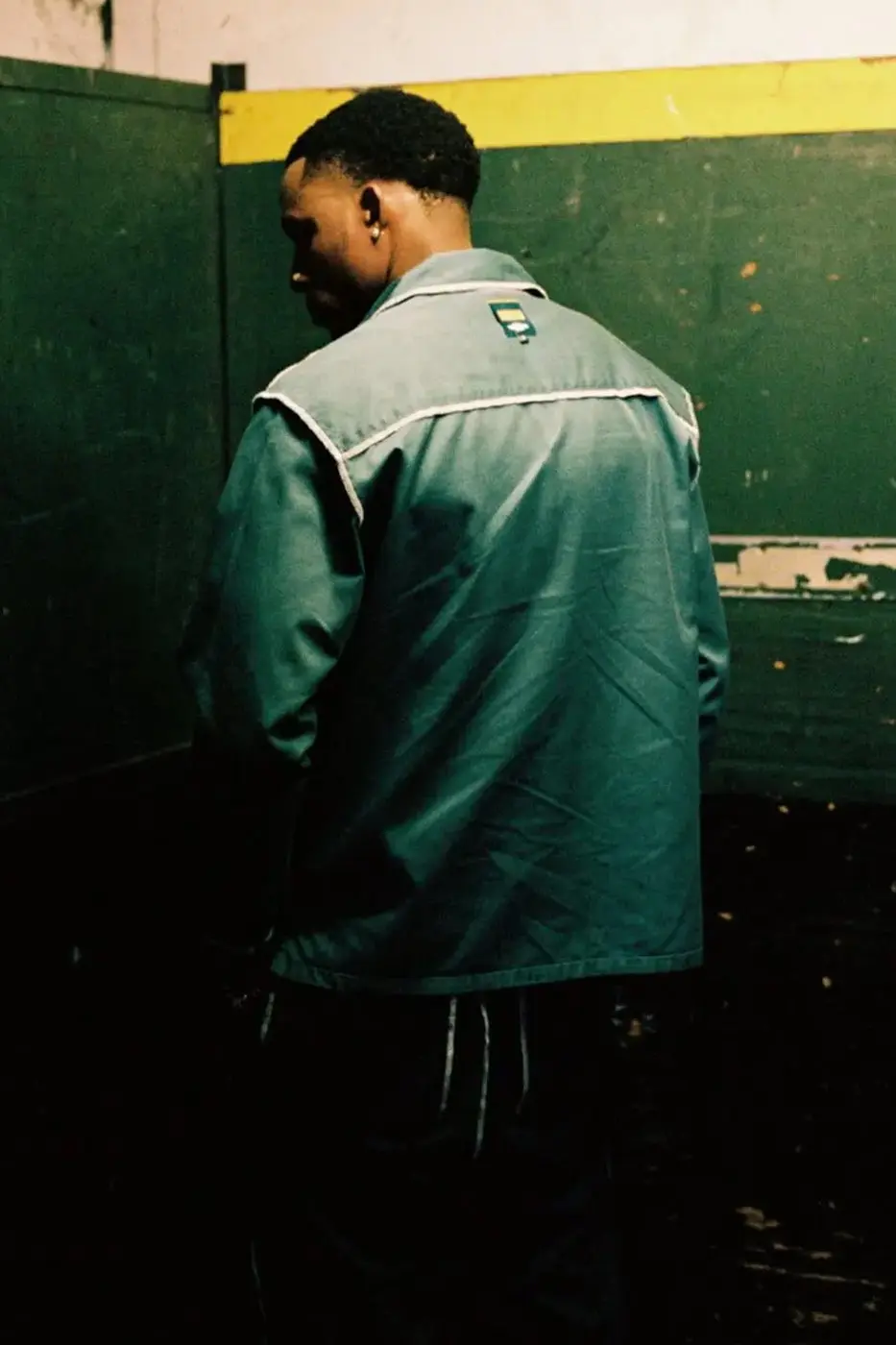
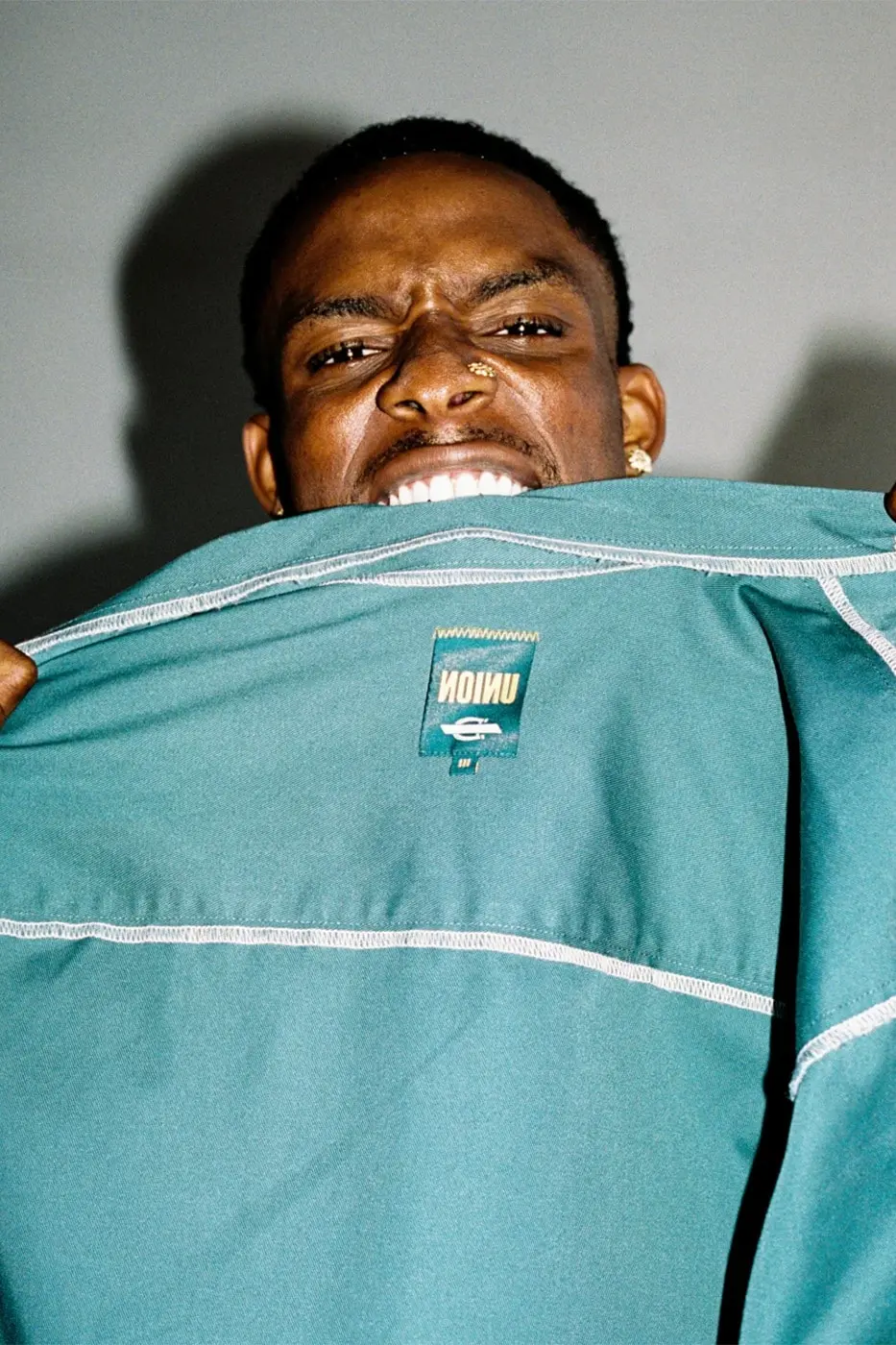

Dickies has spent decades as a supplier brand, the kind of label that shows up on a job site rather than a runway. The INVERSE capsule is not the first time streetwear has borrowed the vocabulary of workwear, Carhartt WIP built an entire commercial identity on exactly that borrowing. What UNION is doing here is different in kind, not degree: rather than keeping the workwear silhouette intact and shifting only the fabric or the fit, the collaboration exposes the internal construction of the garment as the design statement itself. The double-knee panel, the chore jacket's utility pocket, the Eisenhower jacket's military-adjacent cut, all of it gets flipped so the labor of assembly becomes the visible surface.
The collection ships today across UNION's Los Angeles and Tokyo flagships and online, a two-city retail footprint that treats the collaboration less like a regional drop and more like a coordinated global statement, the kind usually reserved for a brand's own mainline collection rather than a licensed capsule. Fifteen graphic T-shirts, jackets, and pants sit inside INVERSE, each one built to look unfinished in a way that took considerable finishing to achieve.
The distinction matters because Carhartt WIP's model depends on keeping the original garment legible. A chore jacket sold as WIP still reads as a chore jacket first and a fashion object second, the borrowing happens at the level of context and distribution rather than construction. UNION and Dickies have removed that legibility. A double-knee panel stops functioning as reinforcement once it becomes the point of the design, and an Eisenhower jacket's military-adjacent cut stops signaling utility once its stitching is arranged for display rather than durability.
That inversion also changes what the two flagship counters are actually selling. A job site never needed its labor made visible, the whole point of a work uniform was that the construction disappeared into function. UNION's Los Angeles and Tokyo counters are now offering the opposite proposition, a garment whose function has been set aside so its construction can be looked at. The chore jacket that once meant manual labor to one industry now means something closer to an argument about what clothing communicates when the labor of making it is placed where the labor of wearing it used to be.
This is garment construction treated as content, the interior of a Dickies uniform repackaged as the exterior of a UNION product. The workwear category has been raided for its surface signifiers for years. INVERSE raids its structure instead, and in doing so it turns a century-old labor uniform into something closer to conceptual fashion.