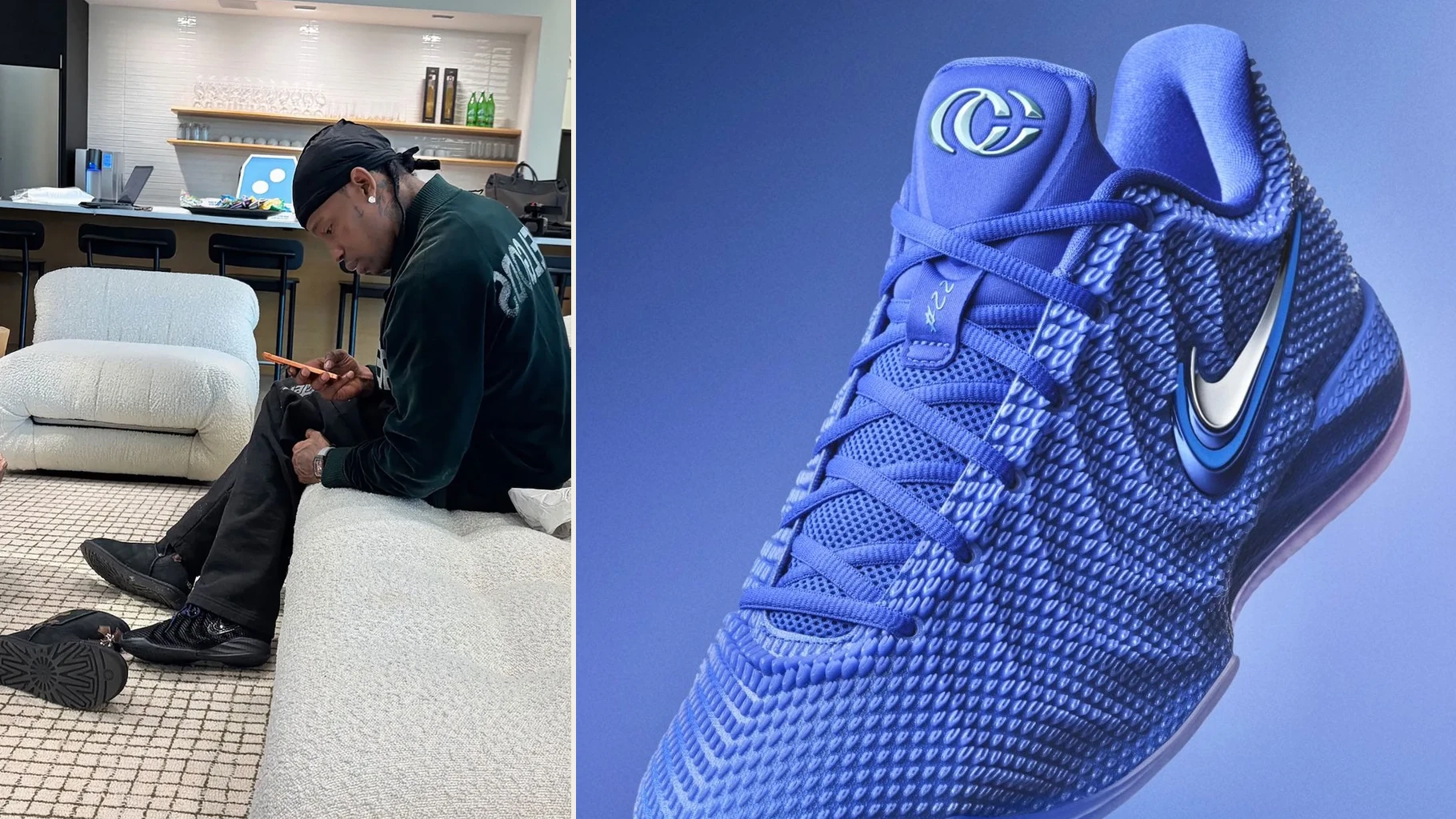
The standard playbook for a signature shoe launch is legible by now. The athlete wears it on court. The brand cuts a campaign film. A handful of lifestyle images circulate. Then, if the shoe is lucky, someone outside the sport picks it up months later, and the cultural conversation widens. Nike's rollout for the Caitlin 1, Caitlin Clark's debut signature silhouette, skips the waiting period entirely.

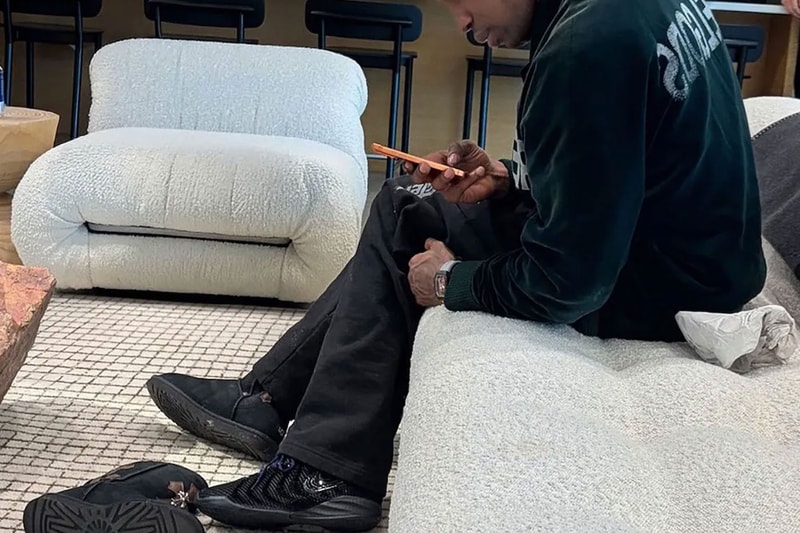
Travis Scott was photographed in an all-black pair during the shoe's initial social media reveal. Not after the fact. Not as a surprise paparazzi moment. The co-sign arrived as part of the announcement itself, folded into the first wave of imagery that introduced the shoe to the public.
The structural inversion is worth naming. In the usual hierarchy of sneaker endorsement, the signature athlete is the apex. Guest appearances from musicians, actors, or athletes from other sports arrive later, once the shoe has proven itself in its native context. The Caitlin 1 inverts this. Clark's silhouette is introduced to the market with Scott's presence already embedded in the launch, as though the menswear audience's attention is a precondition for the shoe's legitimacy rather than a downstream effect of its success.
Nike has done this before, but rarely so explicitly. Michael Jordan's signatures attracted celebrity co-signs, but those co-signs came after the shoe had established itself on court. LeBron James's line has been worn by rappers for two decades, but the initial campaigns centered the athlete. Here, the rollout treats Scott's presence as equal billing from the first frame.
The move indexes something about where Nike sees the Caitlin 1's audience. Clark is the most-watched player in WNBA history. Her games draw television numbers that rival or exceed many NBA regular-season broadcasts. But the sneaker market, particularly the resale and collector tier that drives cultural heat, remains dominated by menswear consumers. Scott's co-sign is a bridge: it signals to that audience that the Caitlin 1 is not a niche product, not a sidecar to the main Nike line, but a shoe they are expected to want.
Whether the audience receives it that way is a different question. The gap between presence and preference is the territory to watch. Clark is present everywhere: in broadcasts, in marketing, in the discourse. Whether that presence converts to preference, whether the Caitlin 1 becomes a shoe people actually buy and wear outside the context of fandom, depends on whether the product itself sustains attention once the novelty of the launch fades. The Scott co-sign is a bet that it will. The rollout assumes that if the right people are seen in the shoe early, the preference will follow. That assumption is the architecture of the entire campaign.