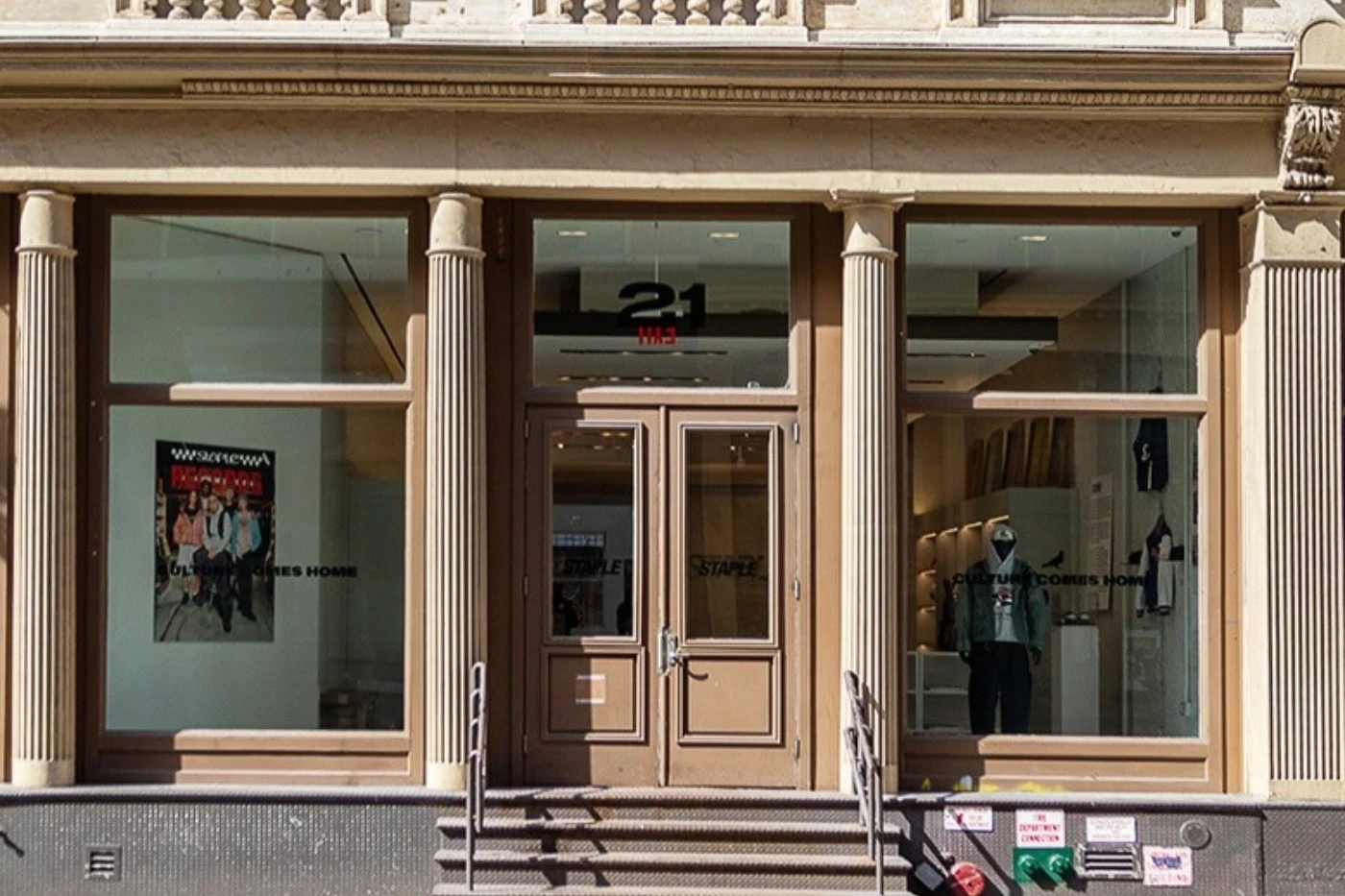
21 Mercer opened as a permanent flagship. It closes after 20 months. Jeff Staple took over the former NikeLab space in SoHo and ran it as what Hypebeast's own reporting described as a hub for music, art, sports, gaming and entrepreneurship. The final day of operation has now been announced. The space is done.
Staple's stated plan after the closure is pop-ups and experiential retail activations around the city. That is the opposite operating model from a flagship. A flagship is a fixed address, a long lease, a bet on permanence. A pop-up is a short lease, a rotating address, a bet on scarcity and timing. Staple spent 20 months running the first model and is exiting into the second.
20 months is short for a flagship lease cycle. Retail leases in SoHo typically run five to ten years. A brand that exits in under two years is not failing so much as testing a hypothesis and getting an early answer. The hypothesis was that a permanent cultural hub could do what a drop calendar does: keep a streetwear audience returning on a fixed cadence. The answer, on the clock Staple set, was no, or not at this scale.
The space itself carries its own prior signal. NikeLab occupied 21 Mercer before Staple did. Nike built that address as a lab format, a controlled environment for limited product and brand storytelling, and then moved on. Staple followed Nike into the same four walls with a different premise and is now making the same exit. Two brands, one address, two different retail theories, both retired inside a few years.
The lease length tells its own story. A short run inside a SoHo address that Nike itself treated as disposable suggests the neighborhood, or the format, has a shelf life regardless of who signs the lease. Staple did not break new ground by leaving early. Staple followed the same arc Nike already drew through that storefront.
The programming mix Hypebeast described, spanning music, art, sports, gaming and entrepreneurship, reads like an attempt to make a store function as a venue. Venues depend on turnout showing up on a schedule, which is closer to the pop-up logic Staple is now adopting outright than to the walk-in permanence a flagship is supposed to offer. Running both models inside the same closure suggests the shift was less a reversal than an admission of what the space was already becoming.
What happens next is the more testable claim. Staple says pop-ups and activations replace the fixed store. That format produces headlines but not a street address a customer can return to without checking a schedule. The flagship model promised durability. The pop-up model promises frequency. Staple picked frequency on 21 Nov 2026.