Anta Group signed a renewed agreement with the UN Refugee Agency on 25 November 2026. The pledge: 1.2 million items of sports kit, distributed to displaced children through organized sport programs. The company's own announcement, carried on its newsroom feed, states the aim is to reach another 300,000 young people over three years.
That is a kit-to-child ratio of four items per participant across a three-year window. Compare it to the volume Anta moves commercially: the company ships tens of millions of units annually across its China retail network alone. 1.2 million items is a rounding error in Anta's own production ledger, not a strain on it.
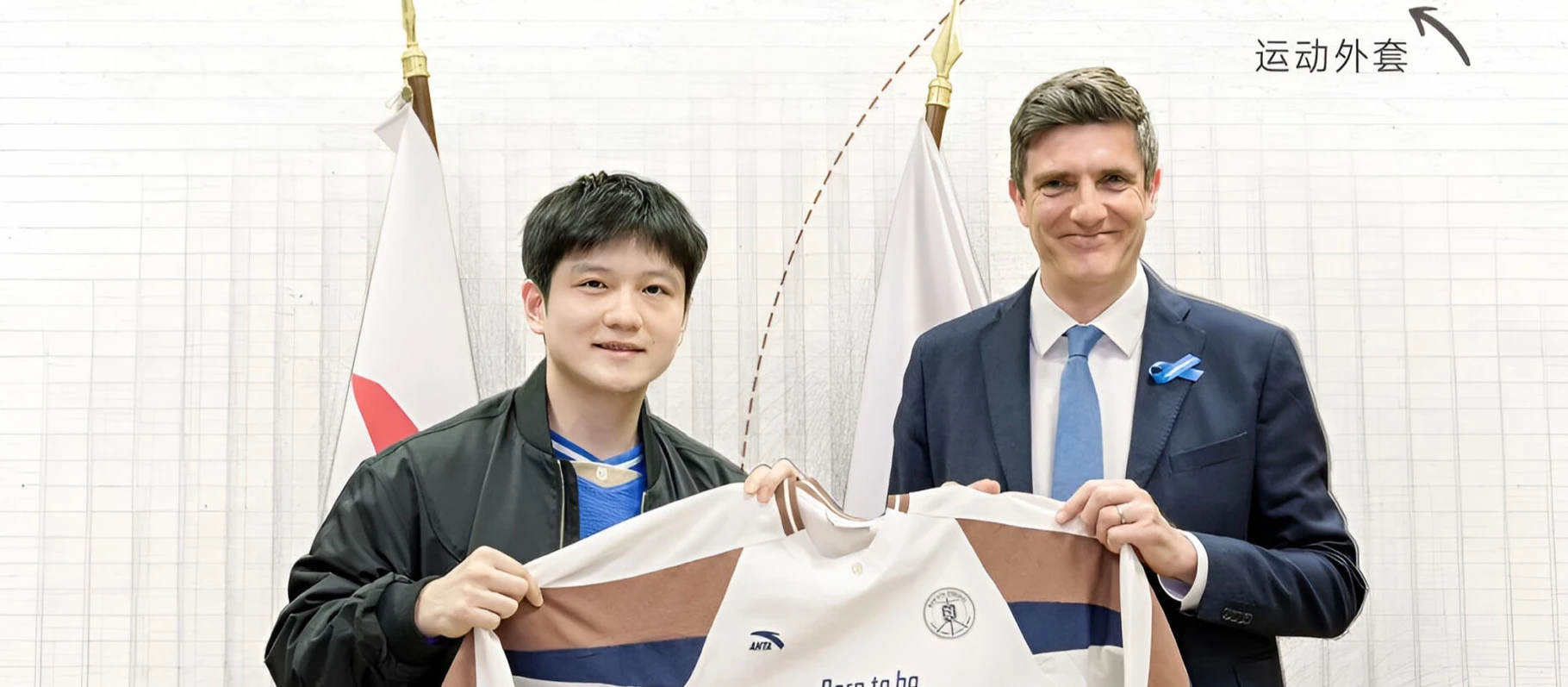
The renewal lands in the same month Anta's Puma stake keeps drawing scrutiny for wholesale pullback in Europe, a move covered on this desk as a contradiction between ownership ambition and distribution retreat. The UNHCR deal runs on a different clock entirely. It is not a response to that scrutiny. It is a program renewal that predates it, continuing on its own three-year cycle regardless of what else Anta's portfolio is doing in the same quarter.
That timing gap is the pattern worth naming plainly: Anta's humanitarian commitments and its commercial consolidation moves operate on separate tracks, announced through separate channels, read by separate audiences. A refugee agency deal gets covered by trade press focused on CSR. A European wholesale pullback gets covered by trade press focused on market strategy. Neither audience is shown the other number.
Anta's own newsroom frames the renewal as continuity, not escalation, since the figure matches prior cycles rather than growing from them. The company is not claiming a bigger commitment this year. It is claiming the same commitment, again, on schedule.
The separation holds up under scrutiny because it is structural, not accidental. Anta's newsroom publishes the refugee pledge through its own channel, framed entirely in terms of continuity with prior cycles. The trade press covering European wholesale retreat works from a different set of filings, a different set of sources, a different editorial lane. Nothing forces those two ledgers into the same room.
That is precisely why the kit-to-child ratio matters more than it first appears to. A pledge measured only against itself, against its own prior cycles, will always read as steady and responsible. It is only when set beside the commercial shipping volume Anta moves through its China retail network that the renewal shrinks to the rounding error it actually is. The company has every incentive to let the two numbers stay apart.
None of this makes the renewal false or the donation meaningless to the children it reaches. It makes the announcement incomplete by design. A company capable of citing a precise kit count and a precise child count across a precise three-year window is equally capable of citing its own production ledger. It chose not to.
1.2 million items, 300,000 children, three years. Those are the only numbers in the renewal. Anta's China retail volume sits outside the UNHCR announcement entirely, and that omission is the story: read the pledge next to the output it never mentions.