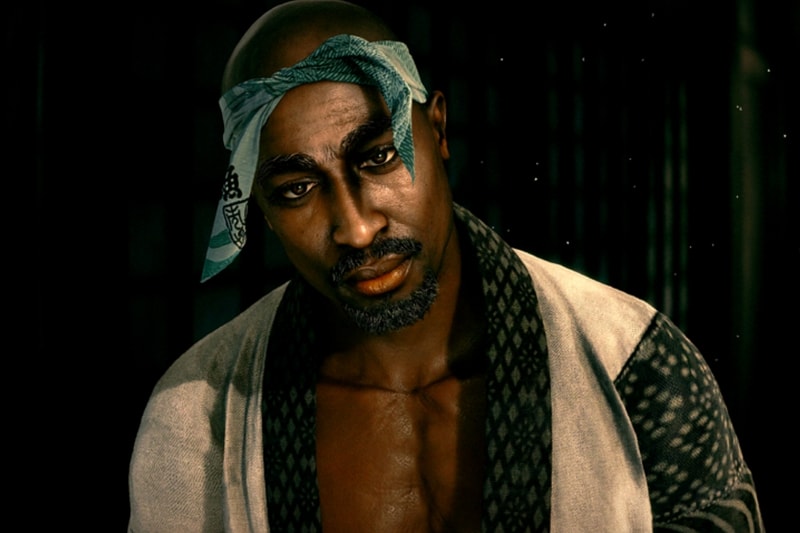
At Summer Game Fest 2026, SEGA and Ryu Ga Gotoku Studio dropped a cinematic teaser for Stranger Than Heaven, their multi-era Yakuza prequel slated for global release on January 15, 2027. The headline reveal was Amaru, a character modeled after the likeness of Tupac Shakur, rendered in the studio's signature hyperreal CGI. The estate, which controls Shakur's image rights, has signed off. The press cycle has treated the announcement as a casting coup. What it has not examined is the structural shift this represents in how deceased artists are deployed as narrative property.
Tupac Shakur died in September 1996. In the thirty years since, his likeness has appeared in documentaries, a Coachella hologram performance, and various posthumous album covers. Each of those uses operated within a frame the artist himself could have anticipated: archival footage, concert recreation, catalog packaging. Stranger Than Heaven is different. The game is not a biography. It is not a music vehicle. It is a fictional crime narrative set in the Japanese underworld, and Tupac's likeness has been written into it as a supporting character named Amaru, a reference to his stage name Makaveli and his given middle name.
The distinction matters. When a musician appears in a documentary, the audience understands they are seeing a record of the artist's own work. When that musician is rendered as a CGI character in a fictional story, the audience is watching the estate license the artist's face and voice for someone else's creative vision. The artist did not write the lines. The artist did not approve the narrative. The artist is, in the most literal sense, a costume worn by a script.
RGG Studio has built its reputation on cinematic storytelling and meticulous performance capture. The Yakuza franchise has featured real Japanese actors and musicians playing versions of themselves. That model at least involved the performer's consent. Amaru inverts the relationship: the performance is manufactured, and the consent belongs to the estate, not the artist.
This is not the first posthumous digital recreation in games. Chadwick Boseman's final voice performance in Marvel's Black Panther game was completed before his death and released after. The difference is temporal: Boseman recorded his lines. Tupac did not record lines for Stranger Than Heaven. Whatever Amaru says in the game will be generated, either through AI voice synthesis or a soundalike approved by the estate. The creative labor belongs to RGG Studio. The brand value belongs to the estate. The artist is absent from both transactions.
The press materials do not specify how Amaru's voice will be produced. The trailer shows the character but does not include dialogue. That gap is itself revealing. If the voice were Tupac's own archival recordings, the announcement would likely have said so. The silence suggests synthesis, and synthesis introduces a question the industry has not yet resolved: who owns the creative output when an AI generates speech in a deceased person's voice?
The Tupac estate has been active in licensing deals. A 2024 agreement with a streaming platform authorized a docuseries. A 2025 deal with a fashion label produced a capsule collection. Each of those kept the artist's work as the primary content: his music, his interviews, his image as documentation. Stranger Than Heaven treats the artist's likeness as raw material for new content. The estate may be comfortable with that distinction. The audience may not notice. But the structural precedent is set: a deceased musician can now be cast in a video game narrative they never read, playing a character they never approved, speaking lines they never wrote.
The game releases in January 2027. By then, the discourse will have moved on to gameplay mechanics and review scores. The question of what it means to resurrect an artist for someone else's story will remain unasked. The estate will collect its fee. The audience will play the game. And Tupac Shakur will say whatever RGG Studio wrote for him.