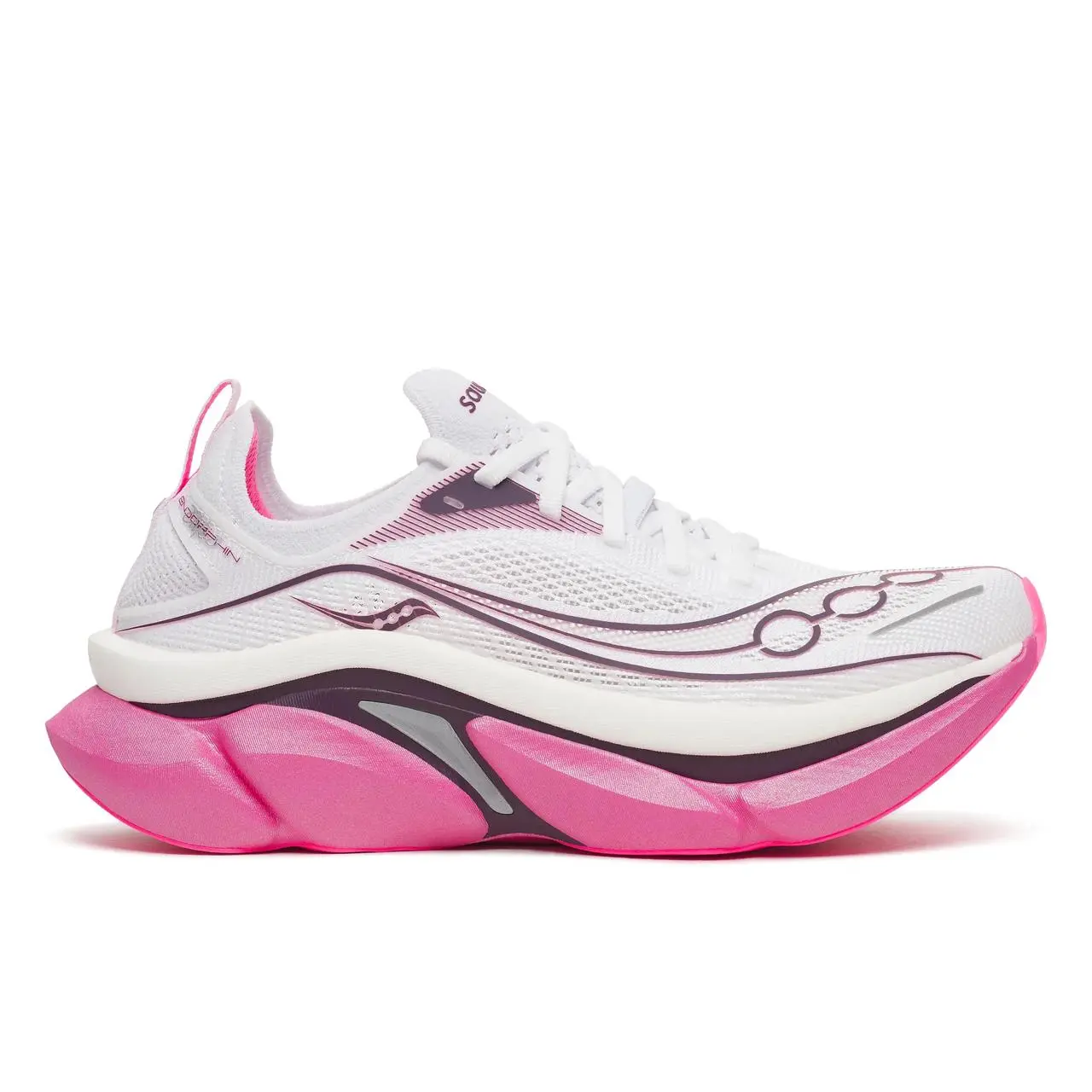
Five shoes, one paint job. Saucony's "Space Cowboy" collection, arriving October 2, puts the same burnt-orange, Western-inspired treatment across the ProGrid Triumph 4, ProGrid V2, 586i, Endorphin Elite 3, and Endorphin Azura. That list is not one category. The Triumph 4 and 586i are archival runners built for people who care about decade-specific tooling and midsole geometry. The Endorphin Elite 3 is a current racing flat, the kind of shoe elite marathoners actually race in. The Azura sits in lifestyle territory. Putting all five under a single aesthetic umbrella is the mechanism worth naming: a themed colorway collapses the distance between a competition shoe and a closet shoe, so the buyer cannot tell from the shelf which one was built to shave seconds and which was built to be seen.
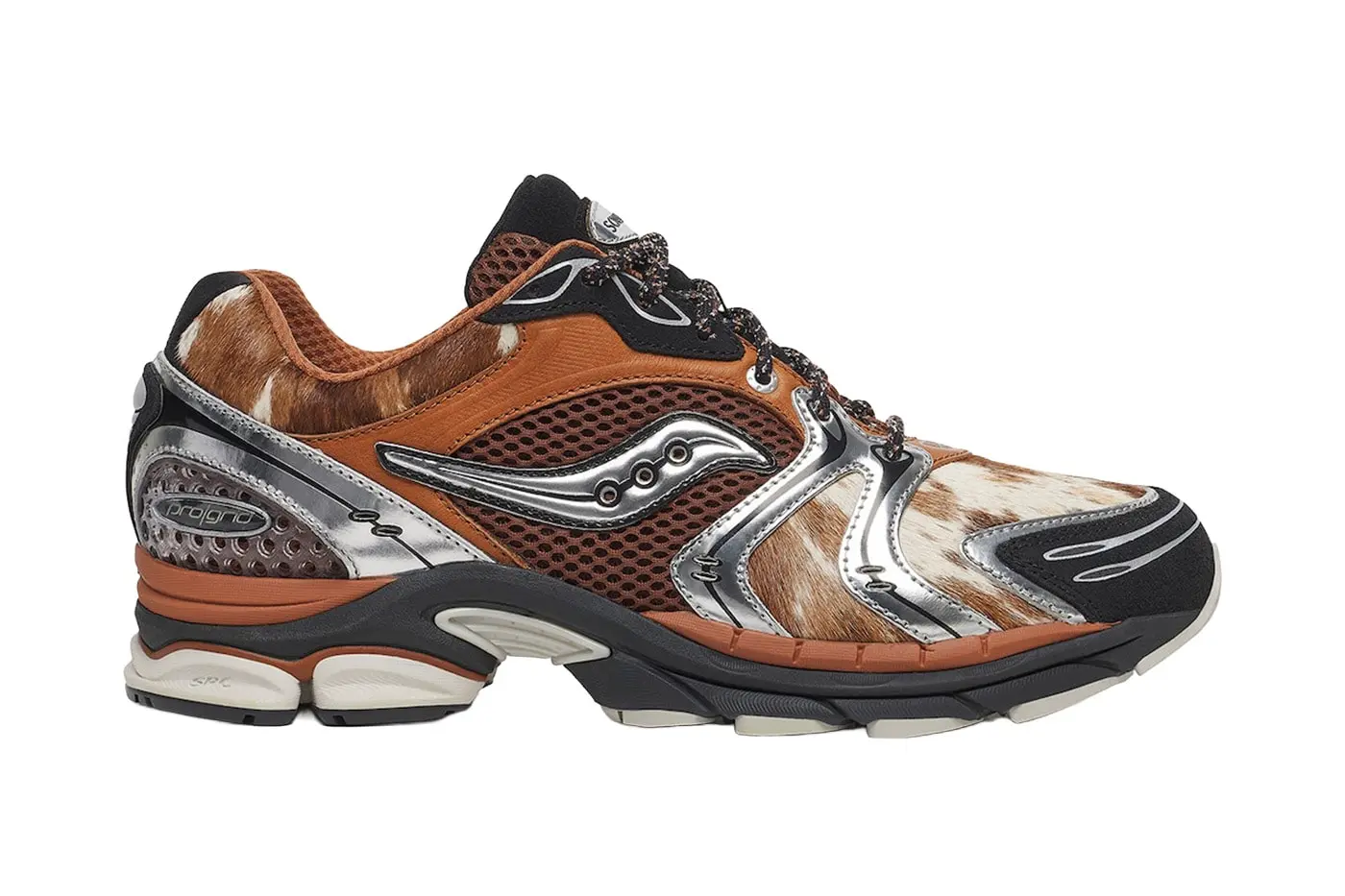
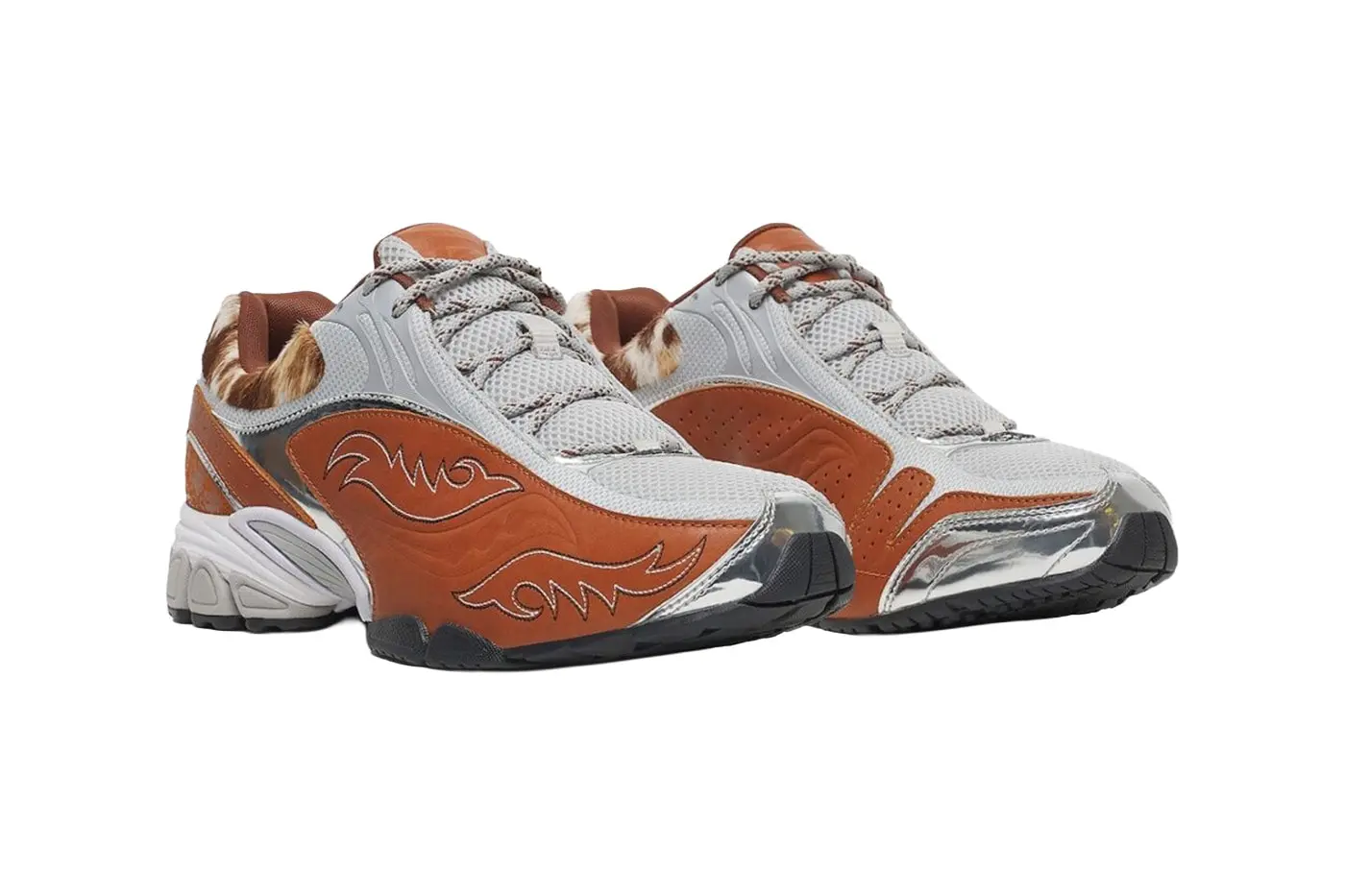
You have seen this shoe before, just not wearing this outfit. Performance running brands have spent the last several product cycles building genuine credibility in racing, the kind measured in podium finishes and shoe-plate patents, not vibes. That credibility is hard-won and slow to build. A themed lifestyle capsule spends none of that time. It borrows the racing flat's silhouette and the archival runner's collectibility, wraps both in the same seasonal aesthetic, and ships them together as a single release event. The specialist distinctions that took years to establish, between a shoe built for a marathon PR and a shoe built for a Saturday, disappear inside one drop.
The mechanism by which this converts to sales is straightforward: themed capsules sell on the strength of the aesthetic story, not the technical one, so a buyer picking the Elite 3 for its orange mesh is functionally the same customer as the one picking the 586i for its retro shape. Saucony is not making a claim that the Elite 3 is now a lifestyle shoe. It is making the shelf indifferent to the distinction. Five silhouettes, one release date, one story, sold as a set rather than five separate technical propositions.
Consider what the pairing actually does to each shoe's meaning. The Triumph and the 586i already trade on nostalgia, so a themed colorway is additive to their existing appeal, not a contradiction of it. The Elite 3 is different. Its value proposition has never been how it looks on a shelf but what it does under a racing foot strike. Folding it into a set defined by paint rather than plate quietly asks buyers to evaluate it the same way they evaluate the Azura, on aesthetic terms, which is a different test than the one the shoe was engineered to pass.
That is the quiet risk in bundling a racing flat with a lifestyle silhouette and two archival runners under a single seasonal story. The shelf does not distinguish, and increasingly neither does the buyer. If the collection sells through evenly across all five silhouettes, that will say less about who wants a racing flat and more about how easily a strong aesthetic story can stand in for the specialist distinctions performance brands worked hard to establish.
Watch what happens to resale pricing on the Endorphin Elite 3 colorway specifically. If it trades at a premium closer to the lifestyle-first Azura than to a standard performance colorway of the same shoe within 90 days of the October 2 release, that confirms the aesthetic, not the plate technology, is what moved the unit.