
The mechanism is simple and it works on a delay: elite performance buys a shoe brand credibility with a niche audience of coaches, physios and serious runners long before that credibility shows up as foot traffic in a mall store. On's seven-medal haul at this month's European Athletics Championships is the credibility half of that trade. The purchase half, the part where a recreational jogger actually reaches for an On shoe over a Nike or an Adidas on a store shelf, moves on a much slower clock.
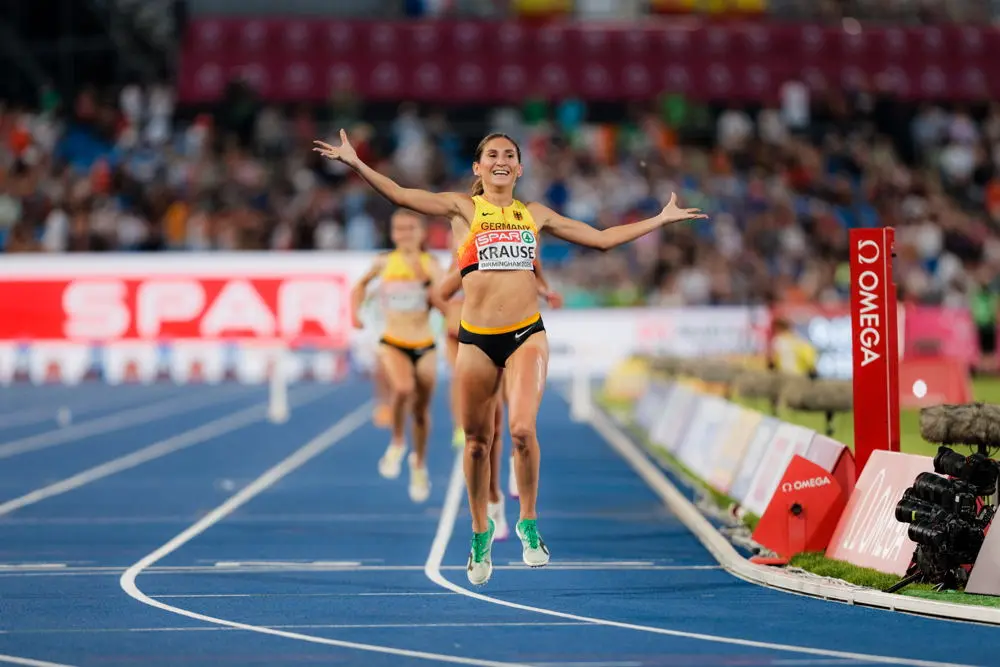

Seven medals across a single championship is a strong number for a brand that entered performance running seriously only in the last several years, competing against Nike and Adidas rosters built over decades. You have seen this shoe on a podium before you have seen it on your own feet, and that ordering is not an accident. On's sponsorship strategy has consistently prioritized visible, credentialed performance moments, marathon majors, national teams, now a full European championship medal count, over the slower work of building habitual purchase behavior among casual runners who make up the actual volume of the running shoe market.
The company's own Q2 2026 earnings, covered elsewhere this year, already flagged margin pressure even as revenue climbed, a sign that the brand is spending heavily to manufacture exactly these validation moments while the retail conversion has not fully caught up to the marketing spend. Seven medals is a strong input into brand equity. It is not the same thing as seven medals' worth of market share, and On knows the difference better than most challengers in this category: it has built an entire go-to-market strategy on the assumption that elite proof precedes mass preference by a measurable stretch of time.
The Q2 margin pressure already covered elsewhere this year is the clearest evidence that On is paying a real cost to keep the credibility pipeline full. Spending heavily on sponsorship while revenue climbs but margins tighten is not a company coasting on brand equity, it is a company actively buying it, meet after meet, before that spending has fully shown up as retail share.
That pattern also explains why On's roster strategy leans so hard on marathon majors and national teams rather than smaller, cheaper endorsements. A challenger racing against Nike and Adidas rosters built over decades cannot win the slow habitual-purchase game on the same timeline as those incumbents, so it competes instead on visible, credentialed moments where a European championship medal count can move faster than shelf placement ever could.
The risk in that approach is exactly the gap this piece keeps returning to. Coaches, physios and serious runners can be convinced by a podium finish almost immediately, but the recreational jogger choosing between brands in a mall store is not reading championship results, and that mismatch is what turns a strong medal haul into a marketing win without a matching retail one.
The number to watch is not the medal count itself but the next two quarterly reports. If On's running-category retail share moves noticeably in the 90 days following this championship, the credibility-to-preference pipeline is closing faster than it has in prior cycles. If share stays flat while medal counts climb again at the next major meet, the gap between who wins in On shoes and who buys them is widening, not narrowing, and that is the number that will actually tell the story by mid-November 2026.