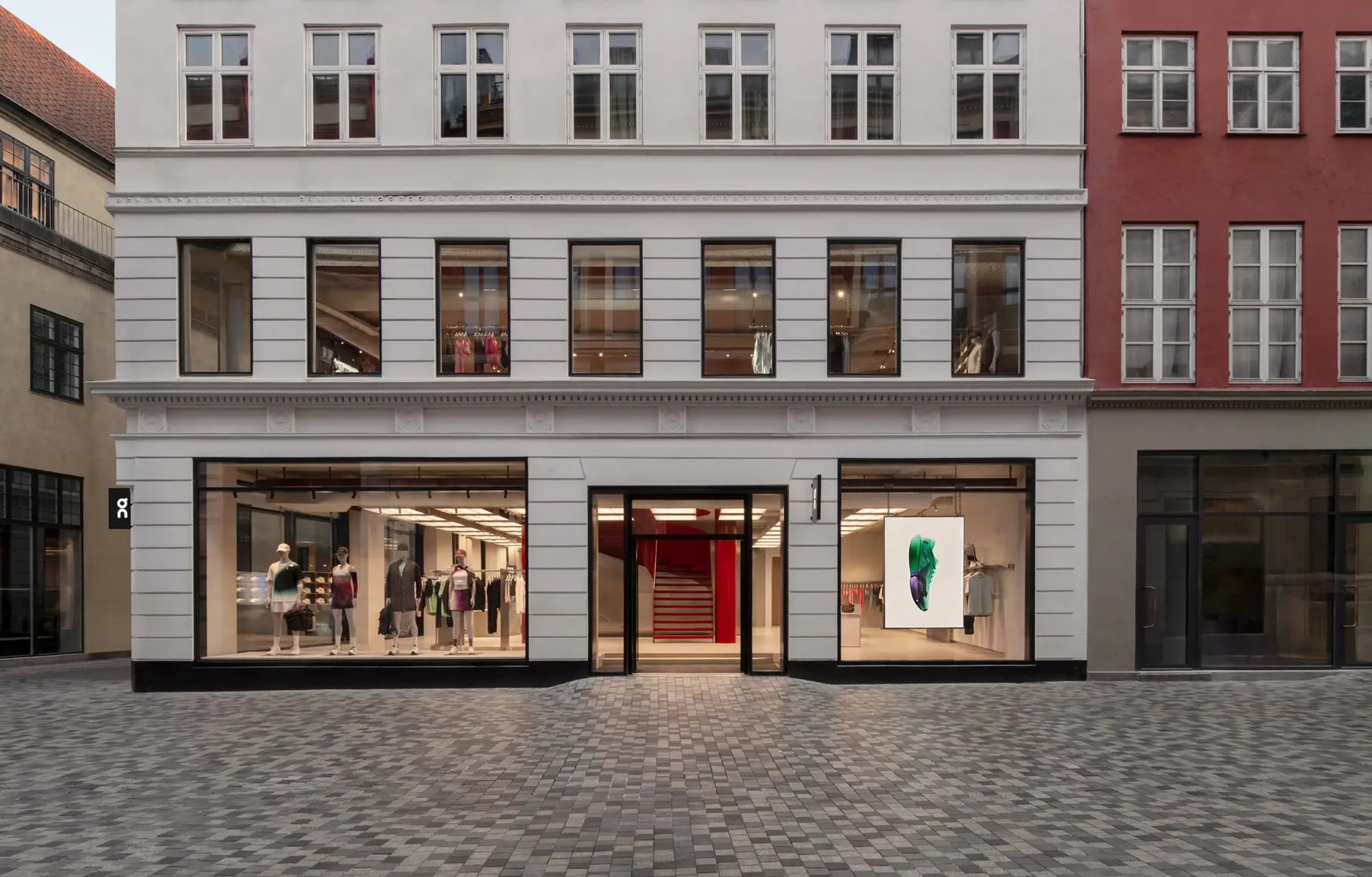
The new store sits on a Copenhagen street lined with the kind of pale brick facades that make the city look permanently overcast even in August, and the interior photographs On has released show the same restrained palette the brand uses everywhere: birch shelving, a single wall of the brand's Cloud silhouette in rows, nothing that reads as a sneaker shop in the traditional sense. This is athletic retail dressed as a design showroom, and Copenhagen is a city that will notice the difference immediately, because Danish retail culture already runs on that vocabulary.


What makes the opening worth pausing on is not the design language, which On has now repeated across dozens of stores worldwide, but the choice of city. Copenhagen has one of the highest per-capita rates of organized running clubs in Europe, a culture built around Strøget morning laps and DHL Relay participation numbers that outpace most European capitals. On did not need to build brand awareness here. Danish runners already know the shoe, wear the shoe, and in many cases have opinions about the shoe's midsole stack height that would embarrass most retail employees. The store is not an introduction. It is an attempt to convert a market that already prefers the product into a market that also buys the accessories, the apparel, the full range that a single running specialty retailer carrying On alongside six competitors never pushes as hard.
This is the same logic On has applied in São Paulo and across its recent California expansion: pick cities where the running culture is already dense and the brand already has quiet market share, then convert proximity into full-catalog spend. The strategy assumes that a runner who already owns three pairs of Cloudmonsters is more persuadable on a $140 wind jacket if the jacket is sold by the same brand, in a space designed by the same hand, than if it sits on a rack next to four competitors. Copenhagen is not a test of whether On can be liked. It is a test of whether presence can be turned into a wider basket.
The store opened Thursday. The wider basket will show up first in accessory attach rates, not in foot traffic, and On's own retail team will know the answer well before the public does. Copenhagen becomes another data point in a pattern that now spans three continents: On is no longer opening stores to be discovered. It is opening stores to be spent on more completely.