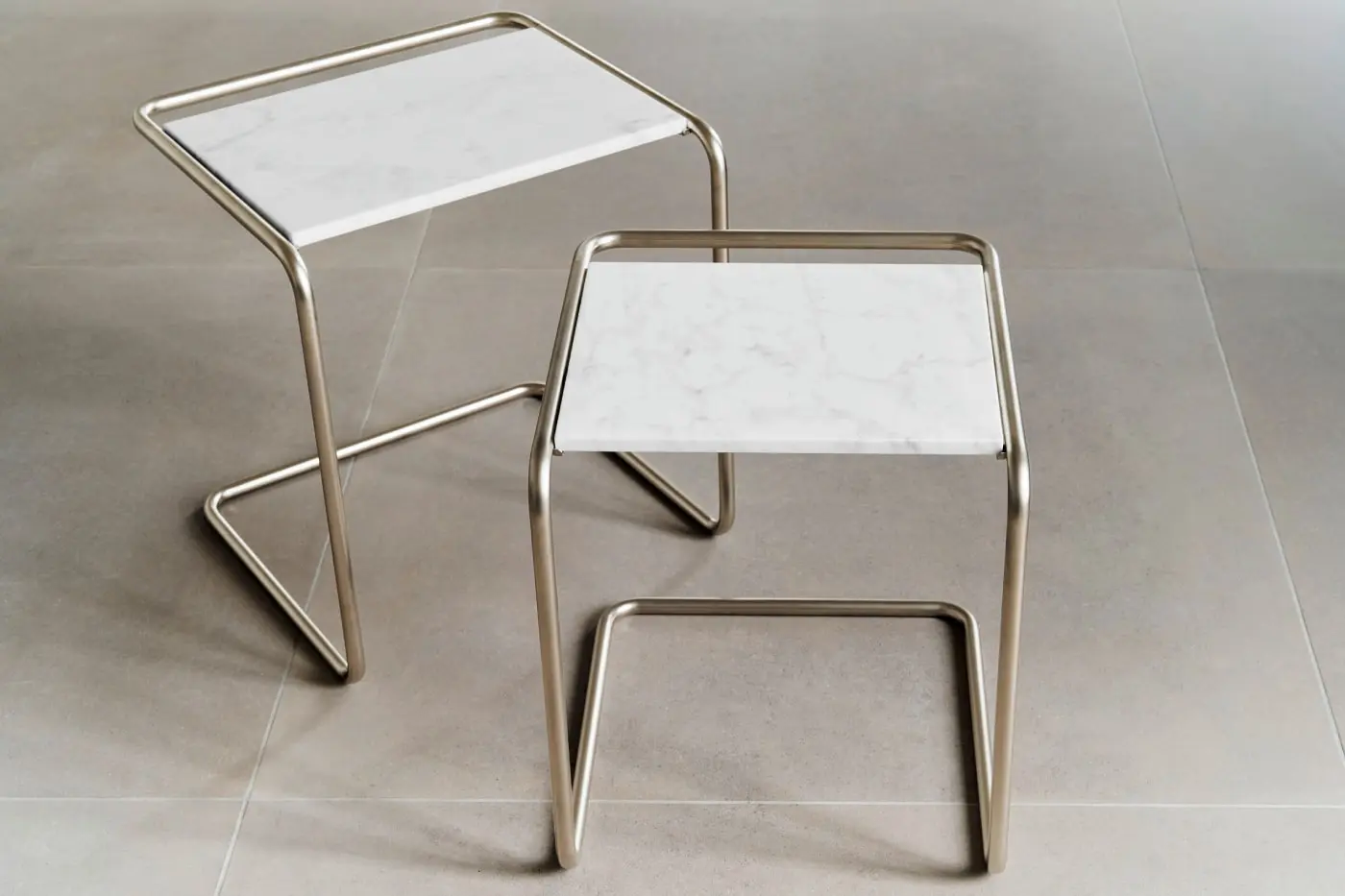
The S 411 lounge chair sits low, its tubular steel frame bent into the same curve Marcel Breuer drew for Thonet in the late 1920s, except now the seat pan carries a leather that has been treated to feel almost soft to the touch before you sit in it, the kind of tactile decision that a furniture historian would call an anachronism and a fashion house would call the point. Jil Sander and Thonet built their first JS. THONET collection two years ago on that same tension, steel against skin, industrial against personal, and the 2026 expansion does not resolve the tension so much as split it into two clean answers: a SERIOUS line and a NORDIC line, each engraved for authenticity, each aimed at a slightly different collector.
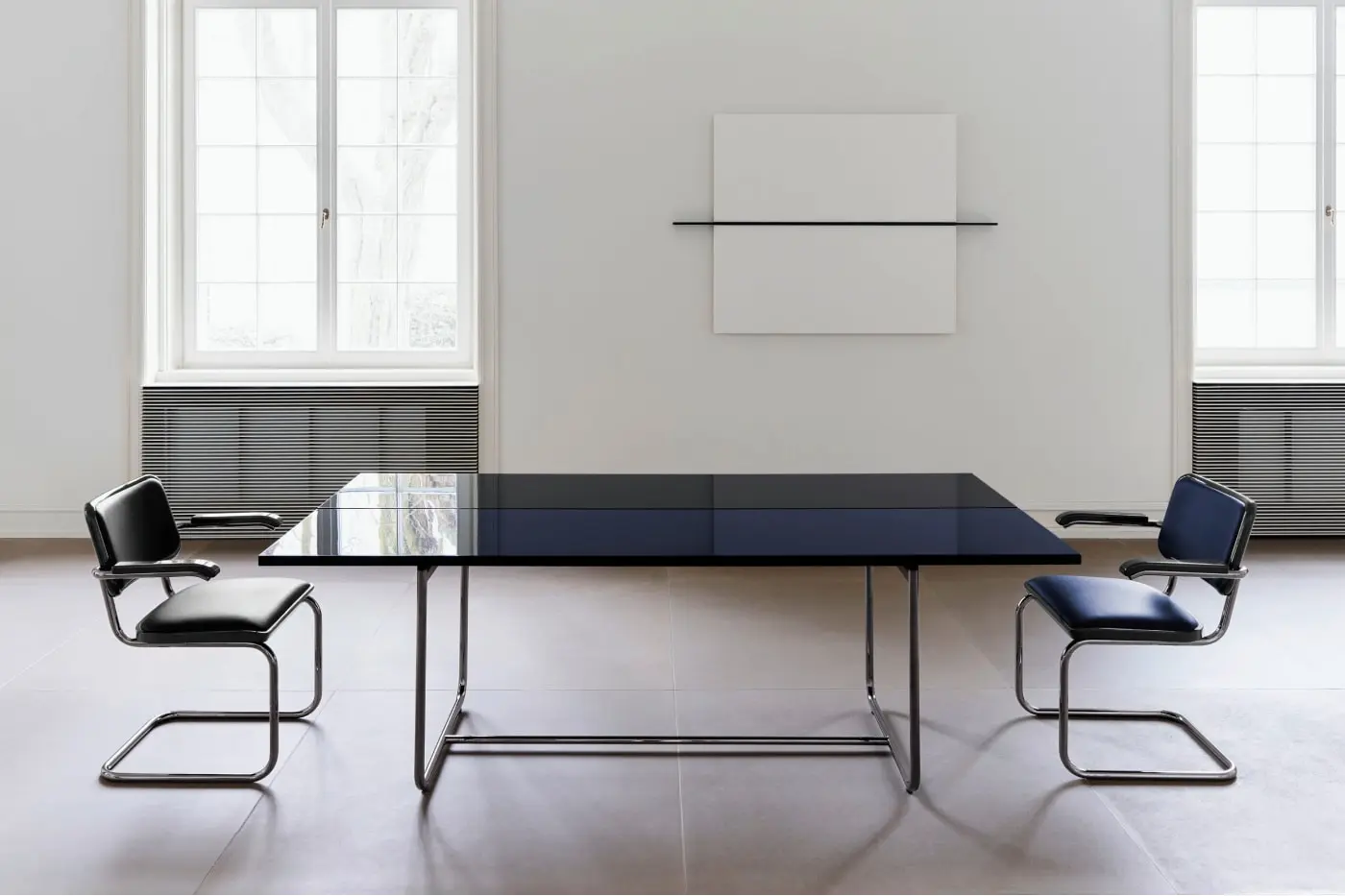
This is furniture retail behaving like fashion retail. The engraving for authenticity, the naming of two lines instead of one collection, the decision to expand rather than simply reissue: these are the moves of a house managing a wardrobe, not a catalog. Thonet has spent nearly two centuries as a manufacturer whose name means bent wood and steel to people who have never bought a garment from Jil Sander in their lives. Jil Sander has spent decades building a customer who reads restraint as luxury. The 2026 expansion is the point where those two audiences are asked to become one audience, buying furniture the way they might buy a second-season colorway.
What makes the expansion legible is the return of the Bauhaus reference, stated plainly in the brand's own language rather than left implicit. Thonet's tubular steel heritage was never a secret, but pairing it explicitly with a fashion house's seasonal release rhythm, complete with two named lines instead of one running catalog, moves the chair out of the design-history section of a showroom and into something closer to a drop calendar. The S 411 has been in continuous production for nearly a century. What has not existed until now is a version of it engraved with a fashion house's name, released on a schedule that mimics apparel rather than furniture.
The split into SERIOUS and NORDIC is itself a piece of fashion logic applied to a catalog that never needed it before. A manufacturer selling bent wood and steel on its own terms does not need two named lines pointed at two collector types, because the manufacturer is selling a chair. A house selling restraint as luxury does need that split, because the house is selling belonging to one aesthetic camp or the other, table by table, chair by chair. Thonet has the chair. Jil Sander has supplied the camps.
None of this required altering the bend of the tube or the pitch of the seat pan. The Breuer curve is untouched. What changed is the frame around it: the engraving, the naming, the date attached to the release. A chair that spent nearly a century being bought because it worked is now also a chair bought because it arrived on a specific day with a specific line name stamped into the steel. The joinery did not need fashion's help. The calendar did.
The category this belongs to now is not furniture and it is not fashion. It is collectible object with a seasonal release date, and the chair has quietly joined it.