Four years. That is the gap between Virgil Abloh's death in November 2021 and Ib Kamara's exit from Off-White, confirmed 4 September 2026. Two creative directors have now led the house in the four years since its founder died. Neither tenure matched the length of Abloh's own run, which spanned 2013 to 2021, eight years, one continuous design language.
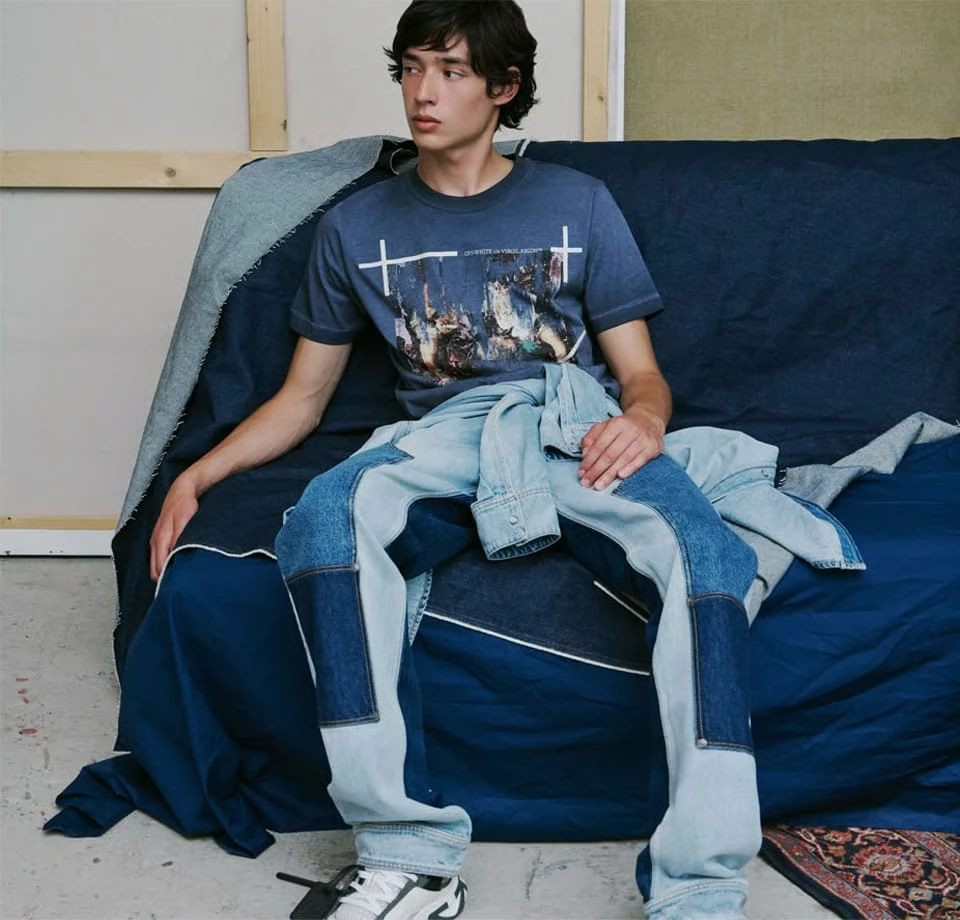
Off-White's statement described the parting as mutual. Hypebeast reported the exit directly, noting the timing coincided with a wider reshuffle across the industry this week, including the Met's cancellation of a planned John Galliano exhibition. The Off-White announcement did not name a successor. The role has now been vacant, or in transition, for a cumulative stretch approaching one full year across both handoffs.
Kamara took over in 2022 with a background in styling and editorial direction at magazines including i-D. His collections retained the diagonal stripes, the quotation marks, the zip ties, all elements Abloh introduced as a designer working from streetwear logic into luxury runway formats. The house's commercial identity, its retail signage, its price architecture, its licensing deals, all continued to run on the visual system one person built in a single decade at the label.
This is the second time in four years that Off-White has had to answer the question of what the brand is without the person who defined it. The first answer, delivered by Kamara, was continuity: keep the codes, change the execution. Whether the third creative director inherits the same brief is now an open operational question for a house whose entire retail footprint, from flagship signage to hangtag typography, still reads as Abloh's design, five years after he stopped drawing it.
Consider what actually changed hands at each handoff. Not the diagonal stripes, not the quotation marks, not the zip ties. Those stayed put, inherited like fixtures in a leased building. What changed was the name on the door and, evidently, the tenure of whoever occupied the office behind it. Kamara arrived from styling and editorial work, a different discipline entirely from the streetwear-into-luxury logic Abloh built the house on, yet the brief he accepted was not to originate a language but to administer one already fully formed.
That arrangement explains why the retail footprint never wavered even as leadership did. Flagship signage, hangtag typography, licensing deals, price architecture, all of it continued to run on a system designed by one person and maintained since by others. A creative director who inherits codes rather than invents them occupies a different job than the one Abloh held, and the brevity of both post-Abloh tenures, neither approaching his own run, may simply reflect how strange that job is: stewardship dressed as authorship.
The Hypebeast report's framing, situating this exit inside a wider industry reshuffle alongside the Met's Galliano cancellation, suggests the pattern is not unique to Off-White. Houses built around a singular founding vision keep discovering that the vision outlasts whoever is hired to carry it. The unnamed successor will inherit the same stripes, the same quotation marks, the same zip ties, and very likely the same short leash.
Off-White has changed creative directors twice since 2021. It has changed its visual language zero times in the same period. That ratio is the fact worth sitting with.