The sole comes first: a rocker shape so exaggerated it reads more like sculpture furniture than footwear, propping the foot at an angle no ordinary sneaker would attempt. The upper is crackled, fissured like dried mud, wrapped around Nike's tabi-toe last, the split-hoof shape that has become shorthand for anyone signaling avant-garde intent without saying the words. This is the Rift Rocker, Melitta Baumeister's third collaboration with Nike, and it did not launch at a sneaker convention or a retail activation. It launched at Seoul Art Week, with a public viewing planned for September 5 and 6 in Jongno-gu, a neighborhood better known for palace walls and gallery density than footwear drops.
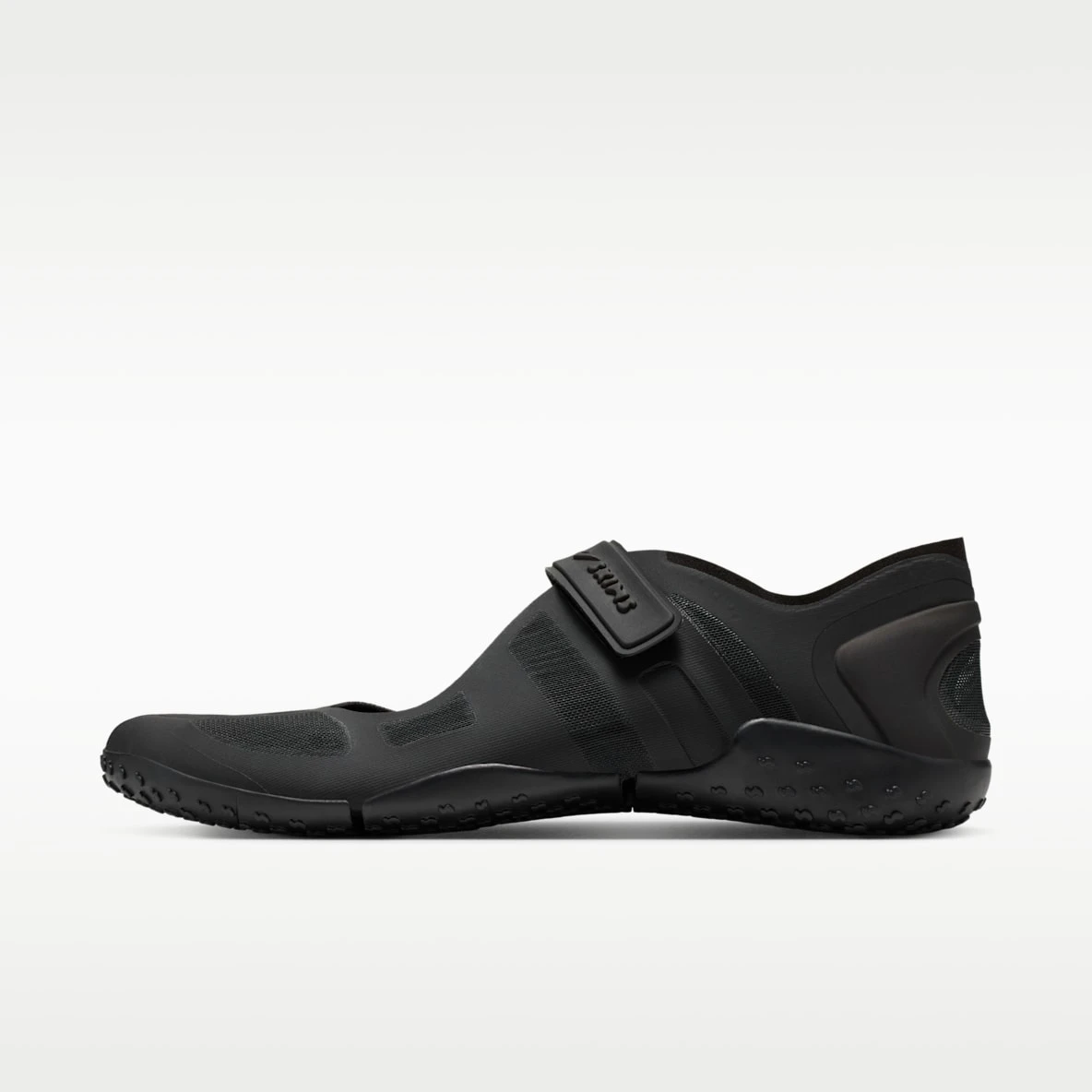
Baumeister's design vocabulary is not new to Nike's roster. She has already reworked the Vomero Premium and the Pegasus Premium, both mainline running shapes, into surreal, amorphous objects that keep the technical bones of a performance shoe while discarding every visual convention that makes a performance shoe legible as one. The Rift itself already carries specialist weight: it is the tabi silhouette Nike introduced in the 1990s for a niche audience that wanted the construction logic of Japanese split-toe footwear inside a Western sportswear brand. Baumeister's move takes a shape that was already a compressed reference to Margiela-adjacent tabi construction and compresses it again, running it through rocker-sole exaggeration until the original reference point is barely legible under the surface treatment.
What makes the venue choice pointed is what it withholds. A retail drop announces a price, a release date, a line. Seoul Art Week announces a viewing, an experience, an audience expected to look rather than queue. Nike has run this play before with designer collaborators who occupy the specialist end of footwear, staging unveilings in spaces coded as art rather than commerce, then letting the retail mechanics follow weeks or months later once the image has circulated. The gap between the Seoul unveiling and any confirmed sale date has not been closed yet, and Nike's own materials do not name one.
The pattern across three collaborations is now visible in a way a single release could not show: Baumeister is not being brought in for a one-off capsule, she is functioning as a recurring lab that takes Nike's most legible mainline shapes and Nike's most niche archival shapes and runs both through the same crackled, amorphous treatment until they resemble each other more than they resemble their own product lines. The specialist tabi reference and the mass-market running shoe are converging on a single house aesthetic, and that aesthetic now has three data points behind it rather than one.
Baumeister's Nike output has stopped being a collaboration in the traditional sense and started functioning as a standing design category inside the brand, one that treats its own archive and its own performance line as equally available raw material.