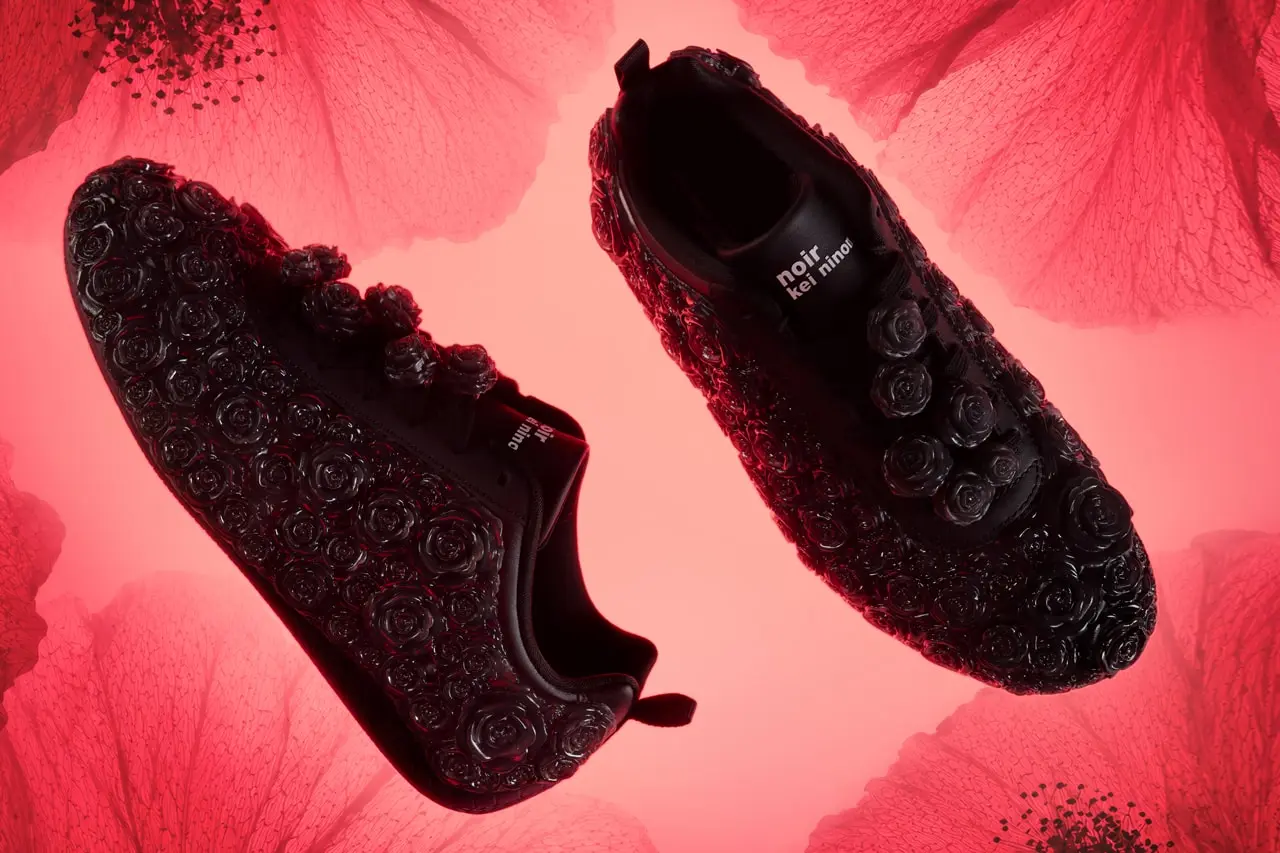
The translucent petals sit stacked in rows across the toe box, each one catching light differently depending on the angle, so that a shoe built from a racing silhouette reads at first glance as something closer to a corsage than a sneaker. This is footwear design, but it is also flower arranging, and the Noir Kei Ninomiya x PUMA Speedcat does not let you forget either half of that sentence for long.
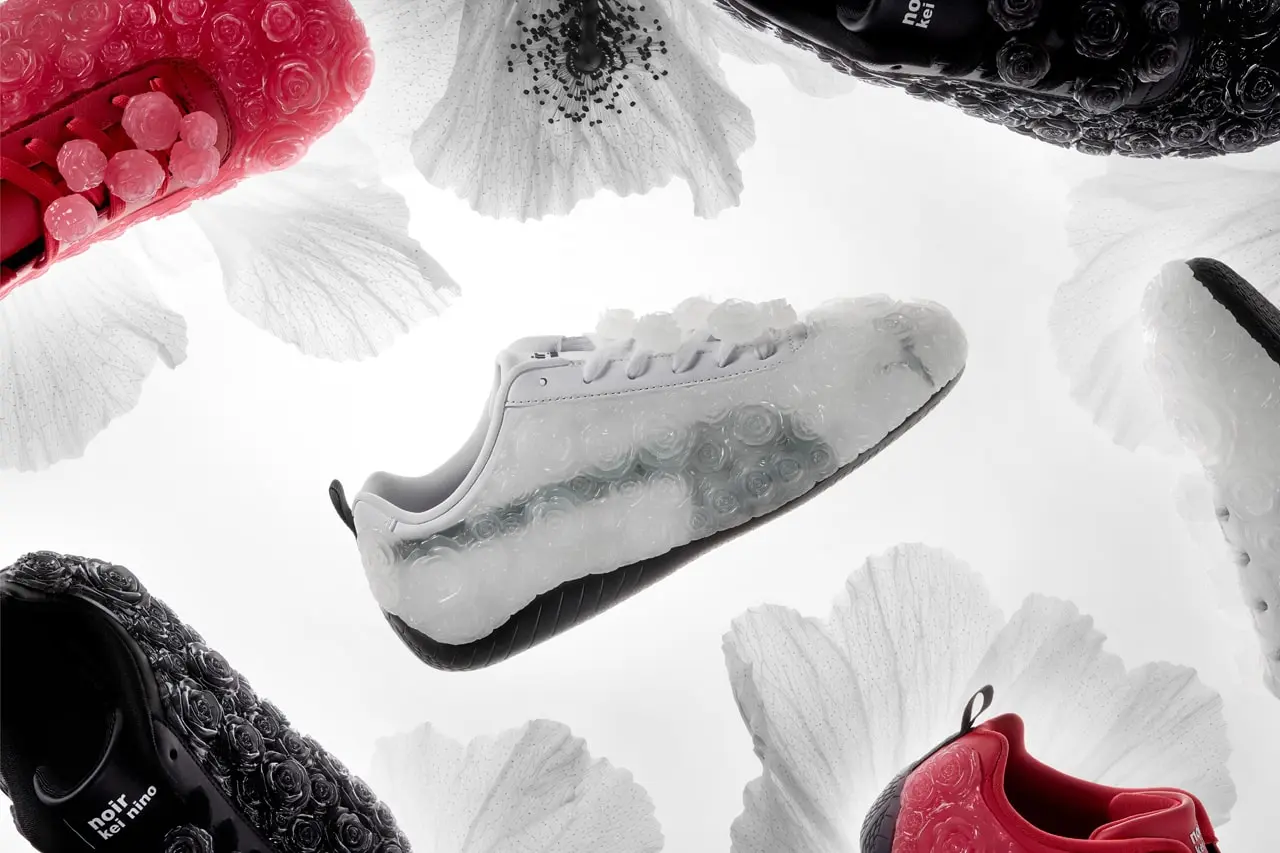
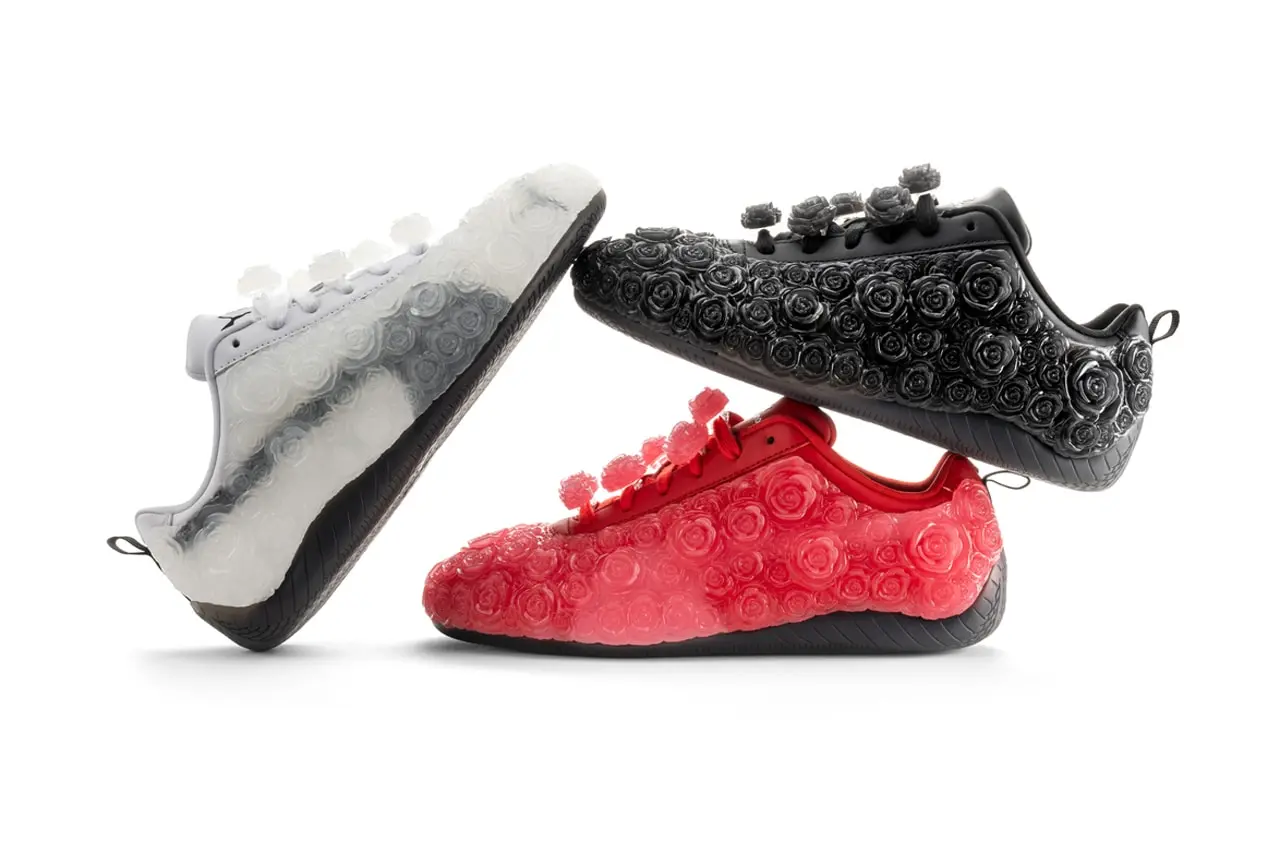
The collaboration first appeared on the runway during Noir Kei Ninomiya's FW26 Paris Fashion Week show, where the Speedcat's low profile and racing-inspired last were still legible underneath the floral overlay, structural bones showing through decorative skin. The August 2026 release brings that runway piece to general retail in three colorways: monochromatic black, white, and red, each rendered with the same rose appliqués that made the runway version a talking point months earlier.
Noir Kei Ninomiya operates as the protégé line under Rei Kawakubo's Comme des Garçons umbrella, a lineage built on sculptural silhouettes and material experimentation rather than wearability. PUMA's Speedcat, by contrast, exists as a mass performance shoe with a specific job: low to the ground, built for motorsport-adjacent speed, priced and distributed for volume. Putting the two together does not resolve the tension between them so much as put it on display. The shoe underneath the roses is still recognizably a Speedcat, still built on the same last PUMA sells at scale, and the floral treatment sits on top of that mass-market form rather than replacing it.
The three colorways matter here in a way they might not for a typical seasonal drop. Monochromatic black, white, and red are not experimental hues pulled from a runway palette; they are the kind of foundational options a mass retailer stocks precisely because they sell steadily and broadly. Applying the rose treatment across exactly this trio, rather than reserving it for a single statement piece, reinforces the idea that Noir Kei Ninomiya wants the design circulating at the register, not preserved behind glass.
The runway-to-retail arc also matters. The rose appliqués were legible during the FW26 Paris show as couture ornamentation layered over an obviously commercial last, and nothing about the construction changed on the way to general release. PUMA did not simplify the floral treatment or scale it back for mass production; the shoe arriving in stores is the same structural bones and decorative skin seen on the runway months earlier. That continuity, rather than any dilution between show and shelf, is the real signal of intent.
What makes this pairing worth watching is not the roses themselves but the vehicle they are riding on. Avant-garde Japanese design houses have long treated performance footwear as raw material, but the choice of the Speedcat specifically, a shoe built for accessible everyday retail rather than a technical or premium tier, signals that the sculptural treatment is meant to circulate widely rather than sit in limited runs. This is a couture gesture delivered through a mass distribution shoe, and it belongs now to both categories at once.