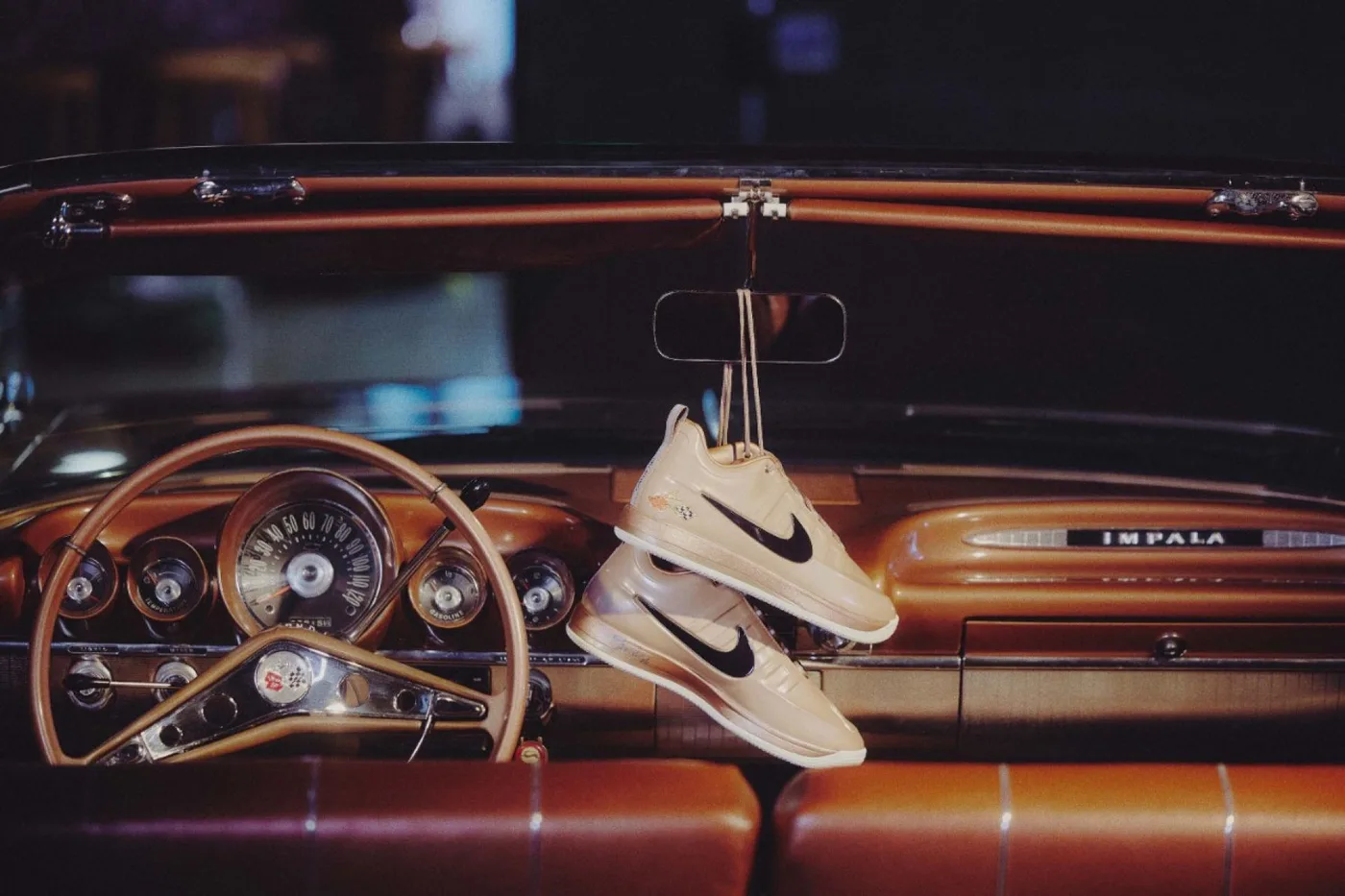
Four sneakers. One Impala. A second year running. Nike and Chevrolet's Book 2 collection, unveiled this week with Phoenix Suns guard Devin Booker, pulls its palette straight from Booker's own 1959 Chevrolet Impala convertible, the same way last year's Book 1 collection was built around a Chevy Blazer. The pattern that mattered in year one, an athlete's personal car collection converted into a shoe line, is now a pattern in year two. That is the mechanism worth naming.
The conversion mechanism here is specific: automotive nostalgia as a proxy for authenticity that a generic colorway cannot manufacture on its own. You have seen this shoe before, in spirit if not in exact form, whenever a brand needed to make a signature athlete's product line feel personal rather than manufactured. What Nike and Chevrolet are doing differently is treating the athlete's actual garage as the intellectual property, not just his name. Booker did not lend his likeness to a car brand. He lent his car to a shoe brand, and the shoe brand made that the headline.
The test for whether a collaboration like this converts presence into preference is whether the second installment outperforms, undersells, or merely repeats the first. Book 1's Blazer pack reportedly sold out, which is presence converting to preference in the most literal retail sense. Book 2 arrives with a more deliberate staging: a local debut in Detroit, the historical home of Chevrolet, on August 15, a week ahead of the global release on August 26. That sequencing is not incidental. Detroit gets the story before the world gets the shoe, which means the brand is betting that place-based storytelling drives enough regional demand to set the narrative before national retail even opens.
What the initial coverage of the drop does not flag is that this year-over-year format, athlete car, athlete shoe, repeated annually, is now a retained line extension rather than a one-time marketing stunt. Once a collaboration format repeats on a fixed annual cadence, it stops being a moment and becomes a product calendar entry, the same shift that turned Air Jordan retros from surprises into a release schedule. Booker and Chevrolet are two years into building exactly that kind of calendar.
The 90-day marker: track Nike's move on a third Book x Chevrolet release timed to next year's Detroit auto show cycle. A repeat on a fixed annual date closes the case. That is the mark of a retained franchise, not a collaboration.