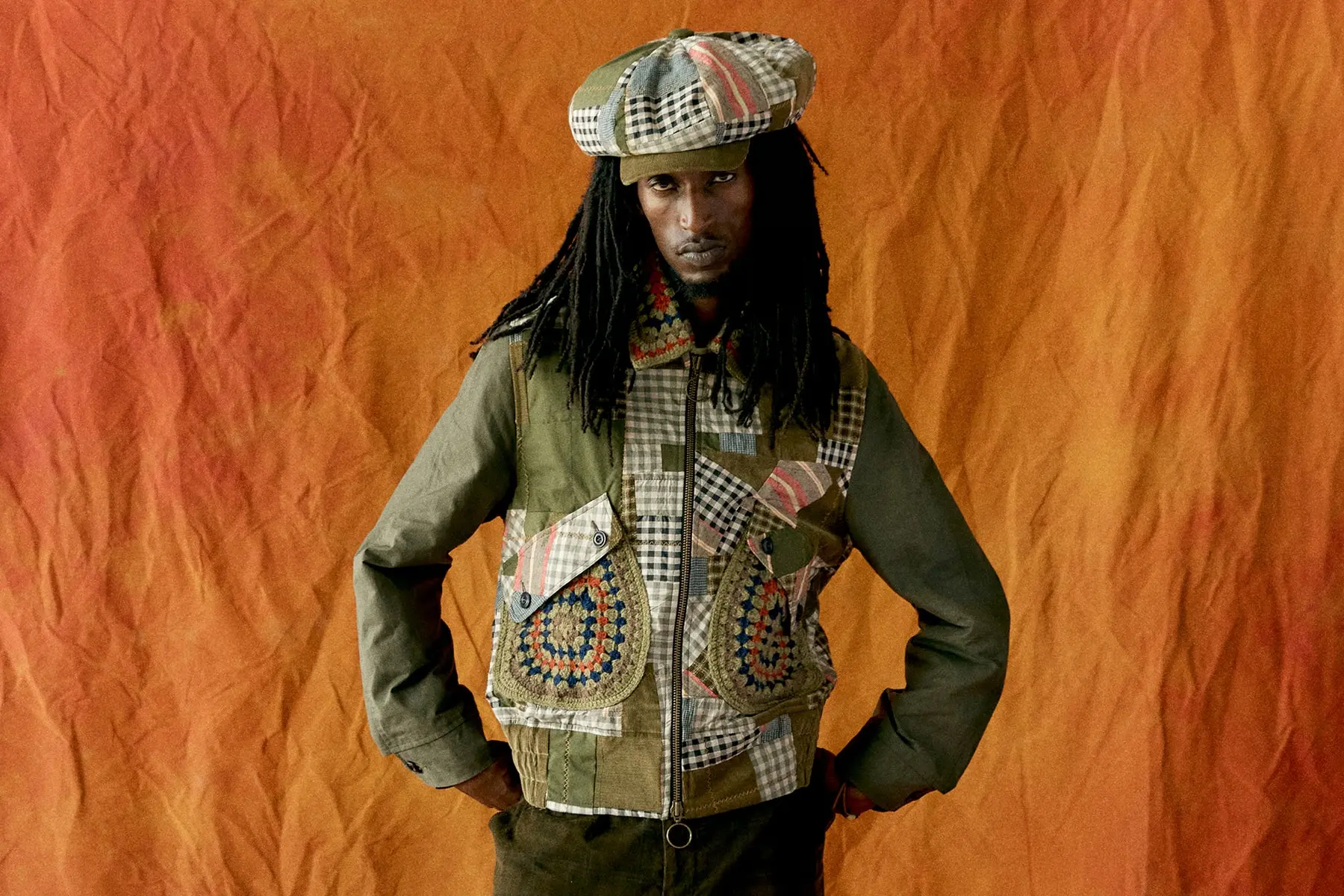
The jacket is a deep rust color, woven on a handloom, the texture uneven in a way that catches light at different angles. It sits next to a photograph of Don Cherry holding a pocket trumpet, his eyes closed, mid-phrase. The connection is not metaphor. Nicholas Daley built the garment to sound like something.
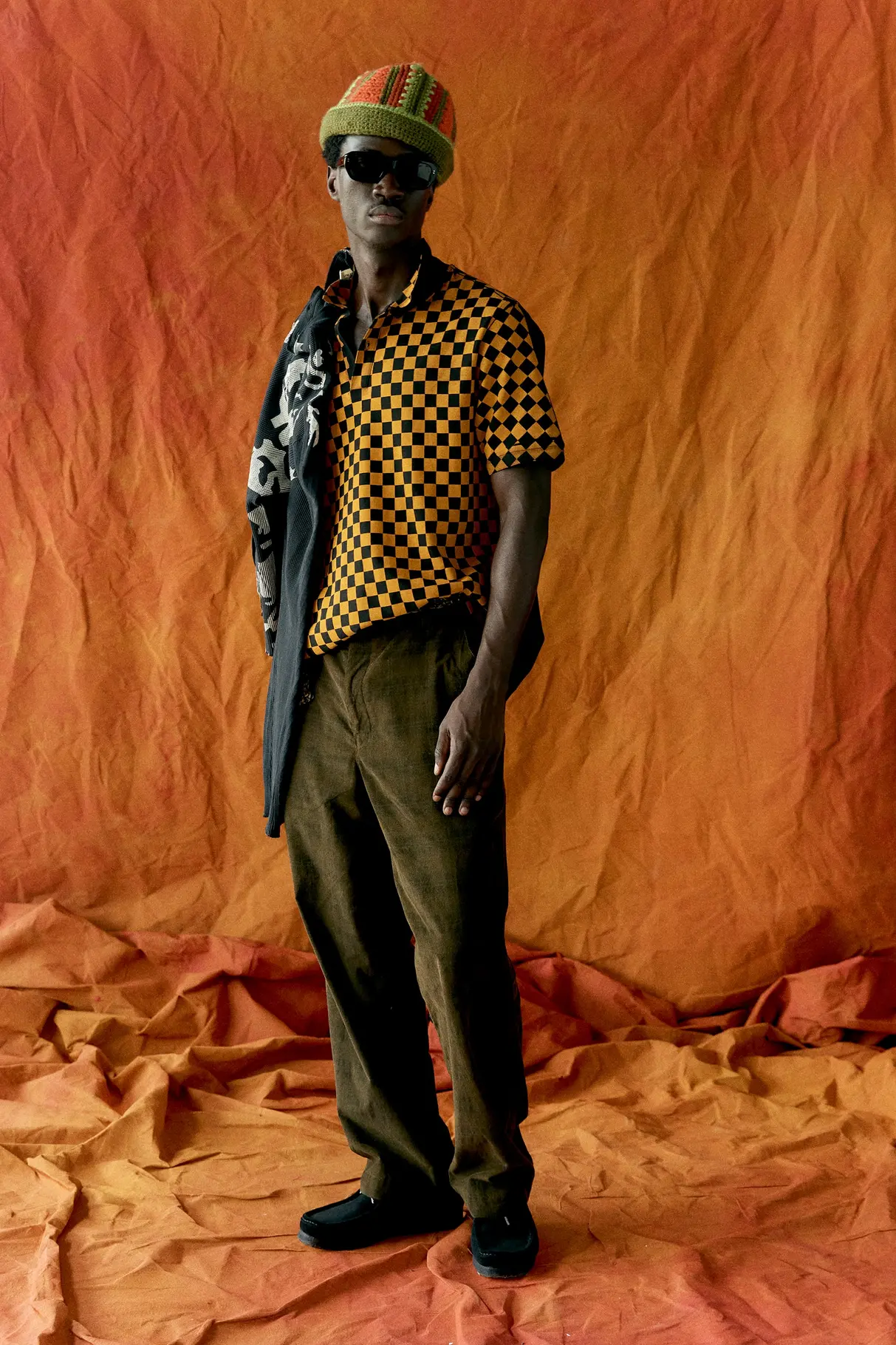
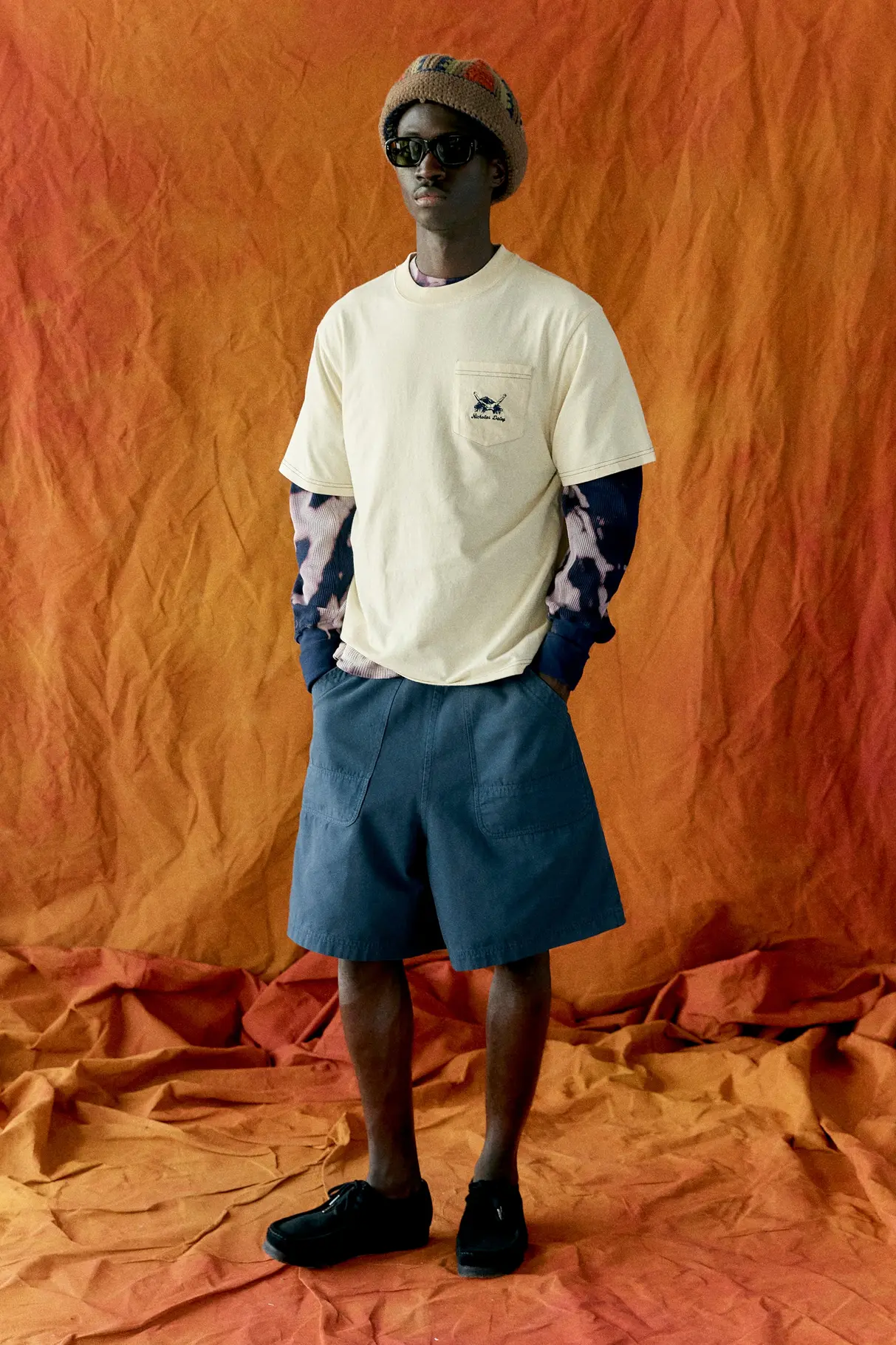
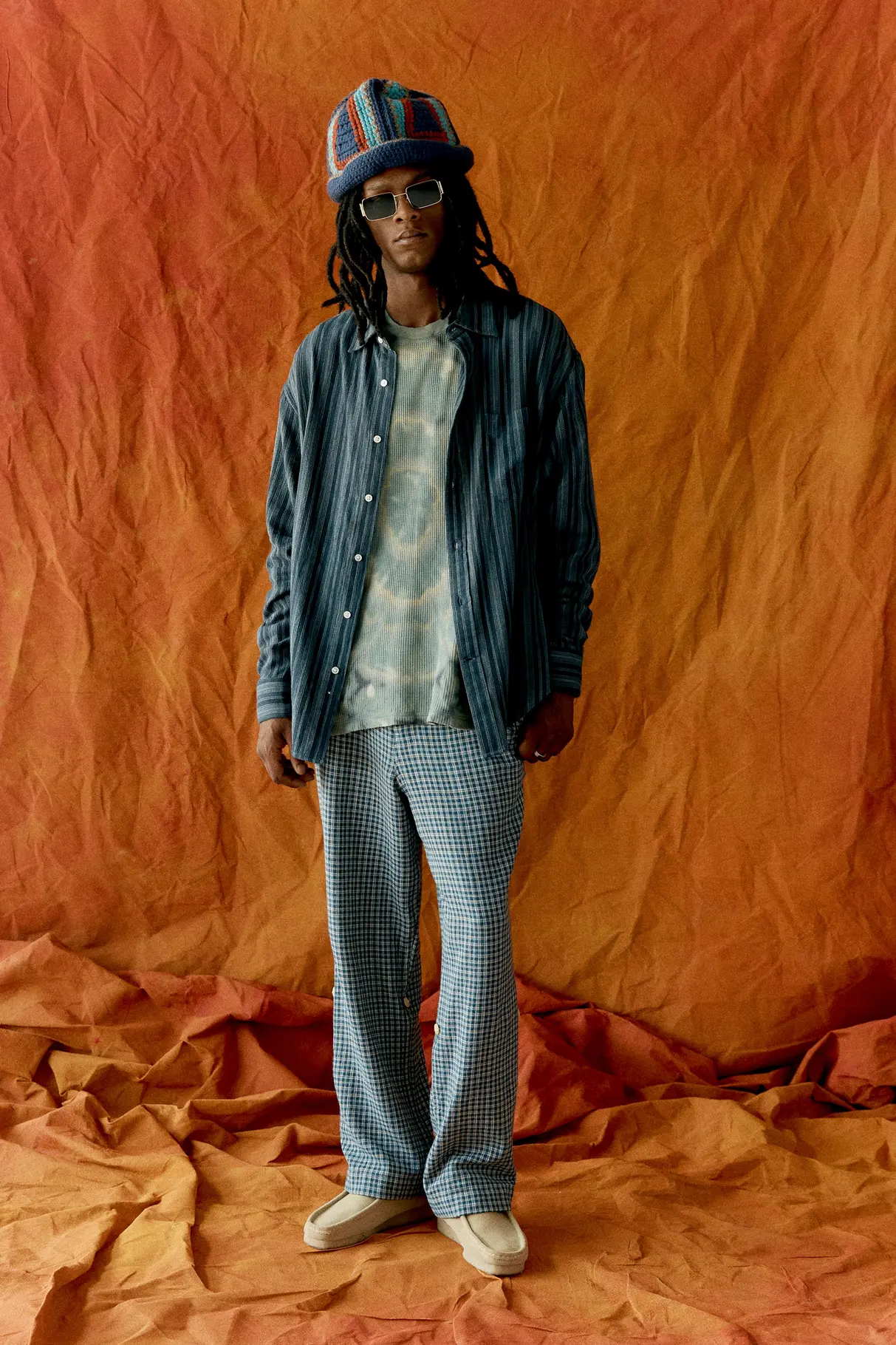
Sonic Tapestry is the title of Daley's Spring/Summer 2027 collection, released this week. The reference point is Spiritual Jazz, the improvisational movement that emerged in the 1960s and 1970s through artists like Cherry, Laraaji, Gary Bartz, and Kahil El'Zabar. Daley has drawn from music before. His previous collections have referenced reggae, punk, and jazz in various modes. This time the source is more specific: a genre defined by openness, by instruments wandering away from fixed structure and returning to it, by texture over resolution.
The garments themselves are tactile. Oversized rugby shirts in muted earth tones, lightweight outerwear with visible stitching, accessories that look hand-finished rather than machined. The palette runs through browns, creams, deep greens, the occasional flash of orange. Nothing shouts. The interest is in the surface, the weave, the weight of the fabric against the body.
Daley has always worked at the intersection of fashion and music, treating clothing as a form of cultural annotation. His studio in London sits between the two industries, drawing collaborators from both. The risk of that approach is that the clothes become illustration, secondary to the concept. The strength of this collection is that the garments hold their own. You do not need to know who Laraaji is to want to wear the coat.
The collection also continues Daley's emphasis on craft provenance. He names his makers, credits the looms, documents the process. That transparency has become more common in independent fashion over the past five years, but Daley was doing it earlier, and he does it with more specificity than most. The weavers are named. The dye sources are listed. The garment carries its own archive.
Spiritual Jazz was, among other things, a music of refusal: refusal of commercial structure, refusal of the three-minute single, refusal of easy resolution. Daley's translation of that refusal into clothing is subtle. The silhouettes are relaxed but not shapeless. The construction is careful but not rigid. The pieces work together or apart, in sequence or out of it, the way a set list might rearrange depending on the room.
The collection is now available through Nicholas Daley's own channels and select stockists. The price points sit at the upper end of independent designer range, which is to say they are not impulse purchases but also not inaccessible. A jacket in this collection costs what a jacket built on a handloom by named artisans should cost.
Daley has been building this practice for nearly a decade now, collection by collection, each one rooted in a specific musical or cultural reference, each one executed with visible care. Sonic Tapestry continues that line. The category Daley occupies, designer as cultural archivist, remains small.