
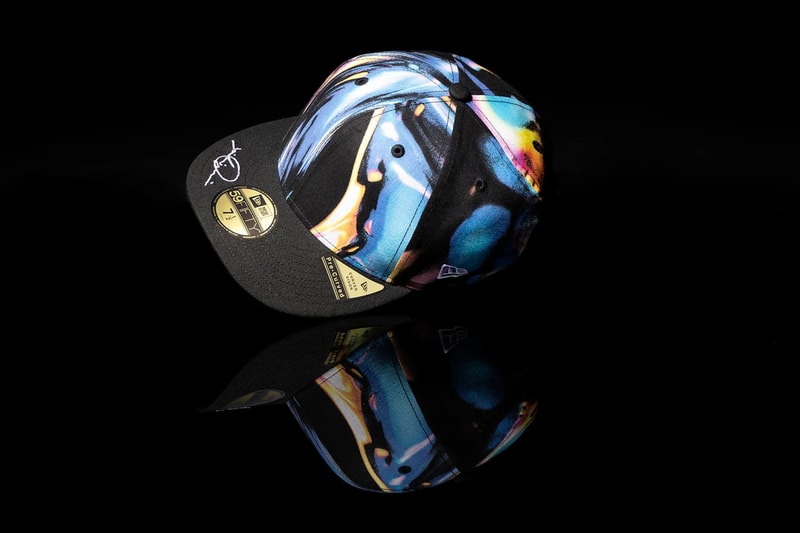
New Era's collaboration announcement this week reads like a timeline collision. On one side: Eirakuya, a Kyoto-founded cotton cloth merchant established in the early Edo period, whose tenugui fabrics carry four centuries of pattern lineage. On the other: Yoichi Ochiai, the University of Tsukuba researcher and media artist whose work orbits what he calls "Digital Nature," algorithmic systems designed to blur the line between computation and organic material. The drop, arriving May 13, consists of a 59FIFTY cap and an oversized tee. Both feature Eirakuya's traditionally dyed tenugui fabric, overprinted with Ochiai's visual language.
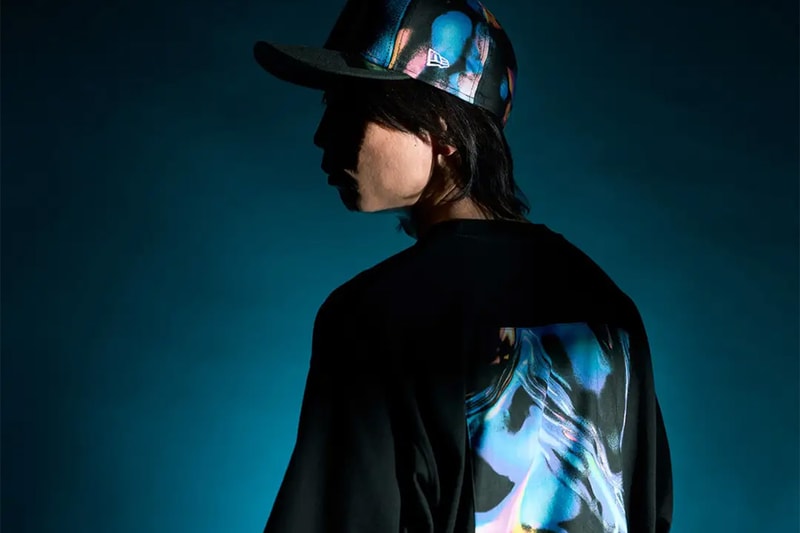
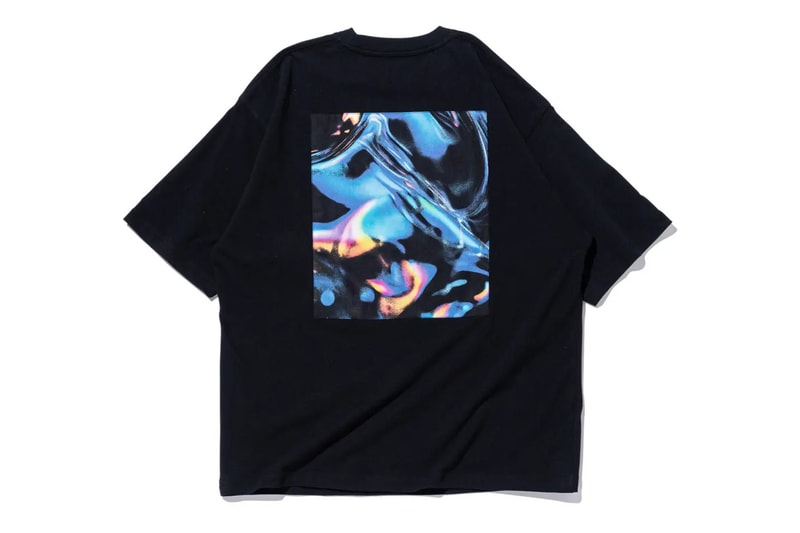
The pairing is worth pausing on. New Era's Japanese arm has, for years, operated at a different register than its American parent, curating limited runs with local makers as a way to position the 59FIFTY as a platform rather than just a silhouette. But this collaboration layers two creative fields that do not obviously touch. Eirakuya's craft centres on indigo dyeing, katazome stencils, the slow accumulation of motif across generations. Ochiai's practice centres on computational biology, digital fabrication, projections that make physical objects seem to behave as software. His term "Digital Nature" proposes that these categories have already merged.
What lands on the cap is, by necessity, static: a physical textile, hand-dyed then printed. But the framing aims higher. Ochiai has described his vision as one where "nature as computation" and "computation as nature" become indistinguishable. Applied to a baseball cap, the claim is necessarily decorative. Still, the collaboration matters because of where it positions New Era. American headwear brands often treat Japan as a licensing opportunity; New Era Japan is treating its own cultural archive as primary source material. Eirakuya's patterns predate the United States by a century and a half. Placing them on a 59FIFTY, mediated by a digital-native artist, suggests the cap can hold contradictions the rest of the industry has not tried to stage.
Whether this is category drift or cultural production dressed as product drop depends on where you stand. The pieces themselves are limited: two SKUs, a short run, no announced global distribution. But the logic is portable. If heritage can be rendered through algorithmic language, and if that rendering can live on sportswear basics, then the 59FIFTY becomes a surface for arguments that used to belong to galleries or academic journals. New Era is not claiming that territory outright. It is staging a collision and letting the cap hold the frame.