
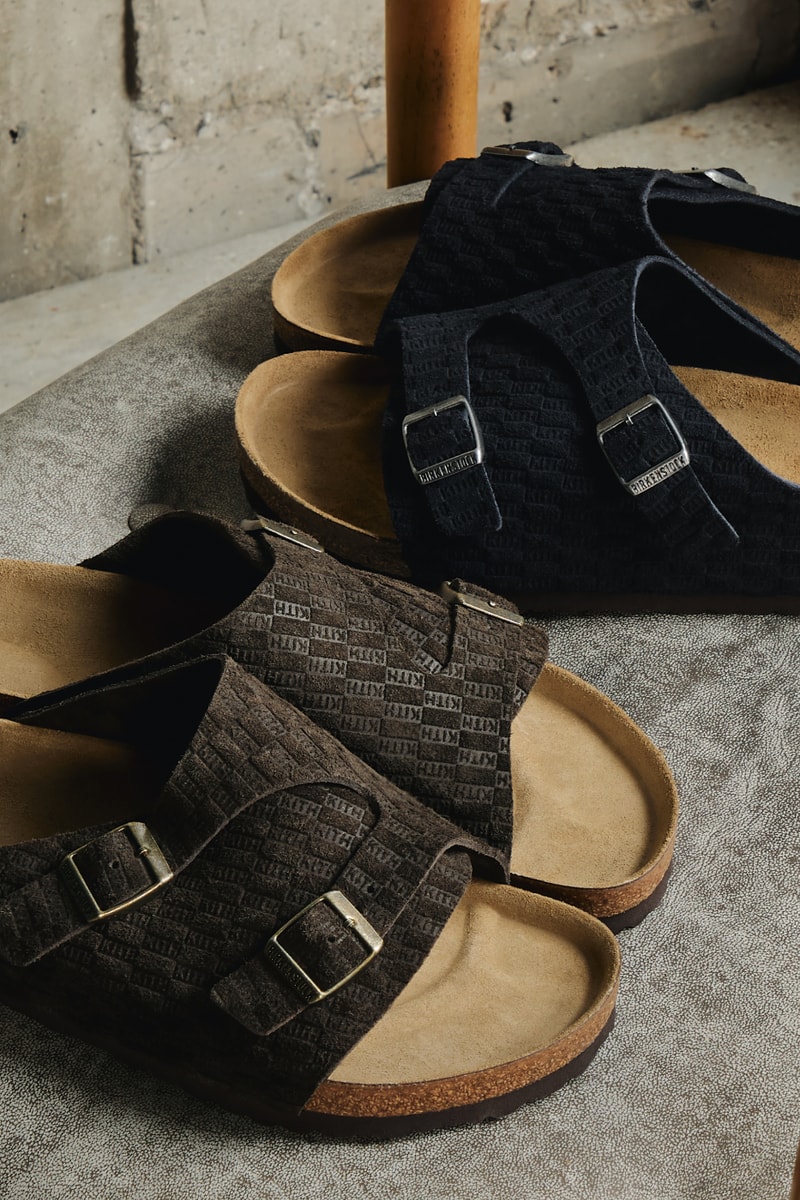
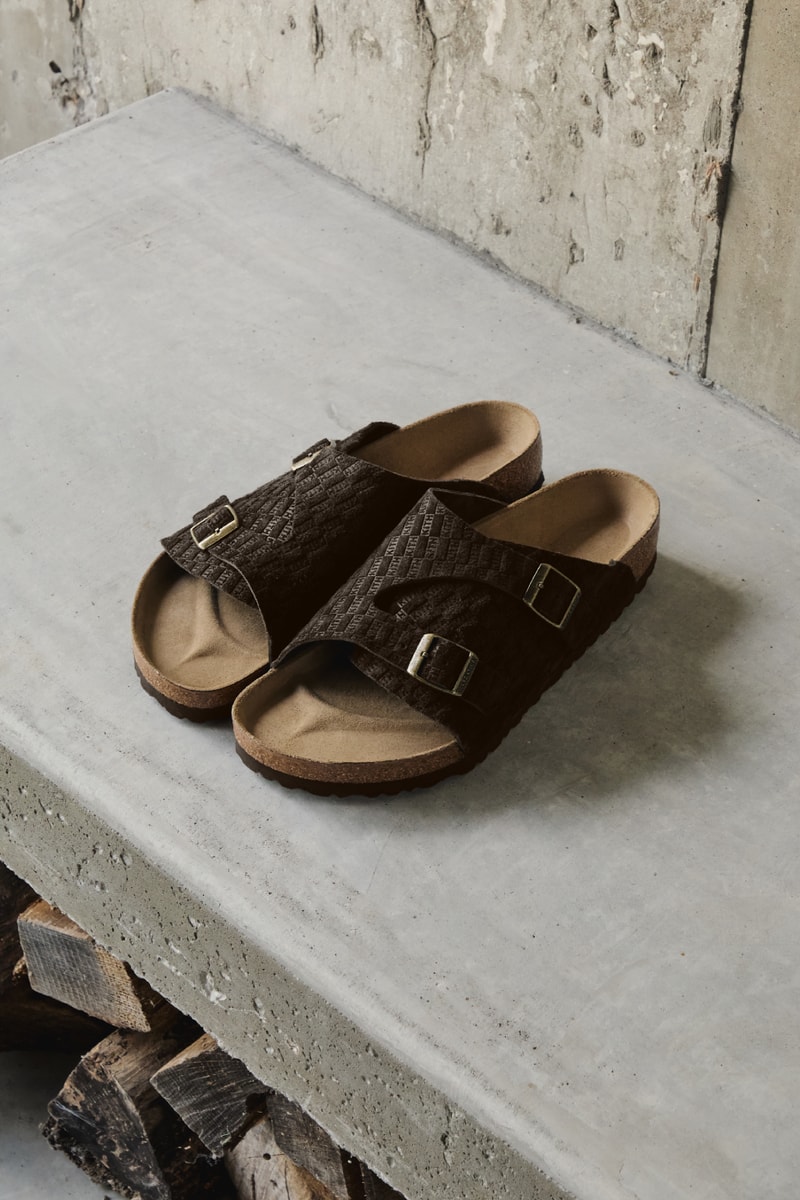
Kith and Birkenstock have been doing this for years now. The partnership began in 2017, and the two have returned to each other with the regularity of a calendar fixture rather than the fanfare of a one-off. The Summer 26 installment, releasing today, follows the same script: two silhouettes, the Zurich sandal and the Amsterdam clog, rendered in premium suede with an all-over debossed Kith monogram and finished with steel or brass buckles. Price sits between $200 and $250. The colorways are named Espresso and Midnight. Nothing about this is engineered for a viral moment.

That restraint is the point. When Ronnie Fieg first started building collaborations in the early 2010s, the playbook was noise: limited runs, cryptic teasers, queue culture. A decade later, the most durable streetwear-adjacent partnerships have drifted somewhere else entirely. Kith's Birkenstock work now functions less like a drop and more like a seasonal replenishment, a product line that returns because people actually wear it, not because scarcity manufactured demand.
The shift is visible in the details. The debossed monogram is a texture, not a logo slap. It reads from inches away, not across a room. The cork footbed is Birkenstock's signature contoured construction, unchanged from the version the German company has been producing since the 1960s. What Kith adds is finish and colorway, not structural reinvention. The Amsterdam clog, a closed-toe silhouette originally designed for indoor wear, is positioned here as a warm-weather slip-on, extending its use case without announcing it.
This is where the category has drifted. Birkenstock spent decades as a functional sandal brand, associated with health-food stores and German engineering pragmatism. Its move into fashion consciousness began around 2012, accelerated through a Phoebe Philo-era Céline co-sign, and eventually landed at the point where the company could IPO in 2023 at a valuation above $8 billion. Along the way, collaborations with Rick Owens, Jil Sander, and Stüssy established a template: luxury or streetwear brands could touch the silhouette without altering its orthopedic DNA.
Kith's approach has been quieter than most. There are no celebrity unveilings, no scarcity mechanics, no performance content. The partnership simply recurs, season after season, with incremental material upgrades. The monogram debossing on this release is new. The silhouettes are not. The retail channel is dual: available at both Kith and Birkenstock, which means neither brand is treating this as an exclusive.
The cultural read is that this kind of collaboration has migrated from hype infrastructure to wardrobe infrastructure. The Zurich and Amsterdam are sandals that people who already own Birkenstocks might want in a slightly more considered execution. They are not entry points into a brand universe or status markers for a secondary market. They are summer footwear with a monogram you have to be close enough to touch before you notice.
That is a specific kind of drift: from event to utility, from heat to steady state. Kith has built a business on both modes, but the Birkenstock partnership sits firmly in the second. It does not need the opening ceremony or the Instagram story. It needs the closet floor in July.