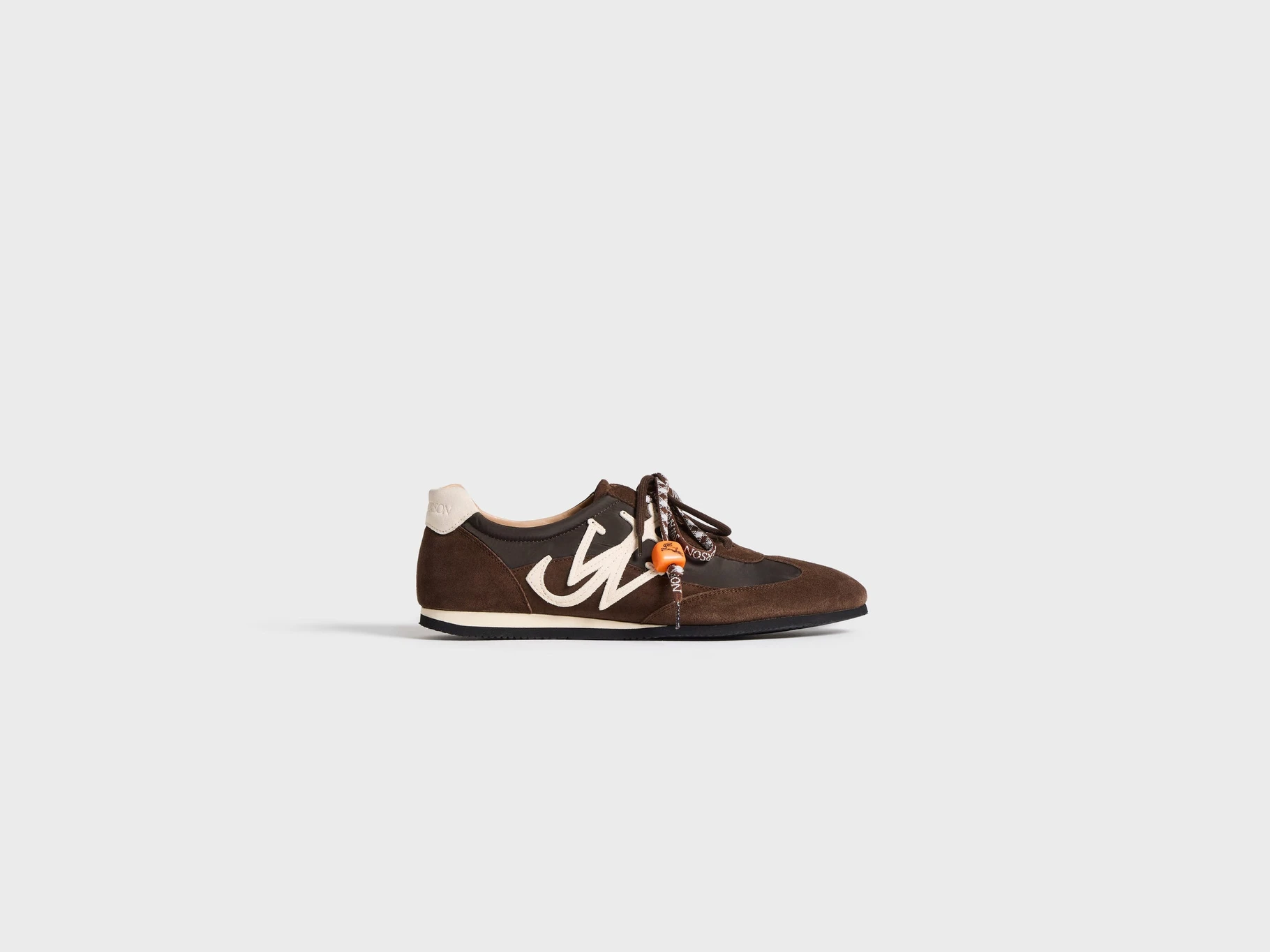
The Anchor sits low and narrow, with a suede toe box the color of a manila folder and a nylon upper gathered at the ankle like a running shoe pulled from a 1979 catalogue. The anchor motif is stitched small, almost apologetically, on the lateral side, next to a second, stranger graphic: a running rabbit lifted from an old athletic crest nobody asked for back. This is footwear retail now, four colorways, made in Italy, priced at $595, sold through the brand's own site starting November 26.
Jonathan Anderson has spent two decades building a label on tailoring logic: deconstructed blazers, asymmetric knitwear, the kind of silhouette play that gets written up in fashion criticism rather than sneaker blogs. The house has done footwear before, loafers and boots mostly, pieces that extended the tailoring vocabulary downward. The Anchor does something different. It borrows the proportions of a vintage running shoe, the kind collectors chase on resale sites for the shape alone, and renders them in the brand's own materials rather than licensing a sneaker company's last.

What makes this a category entry rather than a seasonal footwear update is the absence of a performance partner. Loewe, under the same designer's prior tenure, built its sneaker credibility slowly through years of low-top leather trainers that never pretended to be running shoes. Anderson's own label has taken the opposite route: no gradual approach through tennis-inspired courts or minimal leather trainers, straight to a shape coded specifically as athletic, specifically as a runner, without a technical justification like a midsole partnership or a performance brief.
The rabbit graphic does the quiet work here. An anchor stitched small and apologetic reads as restraint, but a running rabbit lifted from an old athletic crest signals that the shoe knows exactly what register it is borrowing from: the crest language of sportswear brands that built their names on speed, not suede. Placing both marks on the lateral side treats the shoe as a canvas for house signifiers rather than a technical object with a story to tell about cushioning or grip.
That absence of a performance partner is the real departure from the Loewe model. A slow build through tennis-inspired courts and leather trainers lets a fashion house earn sneaker credibility shape by shape, without ever claiming the specific athletic coding of a runner. Anderson skipped that step. Going straight to a running silhouette, in suede and nylon, made in Italy, sold only through the brand's own site, is a bet that the house's tailoring reputation can carry a shape it never had to earn through sportswear logic.
The running shoe silhouette has become one of fashion's most borrowed shapes this decade, stripped of its original performance context and redeployed as a vintage reference, worn by people who have never once used one to run. Anderson is not inventing that compression. He is arriving at a shape that sportswear brands spent fifty years engineering for speed and now treating it purely as a surface for suede and brand mark, the way a trench coat gets treated as a silhouette long after anyone cares if it keeps out rain. The Anchor belongs to sneaker culture now, not running culture, and that is the category it will be judged in.