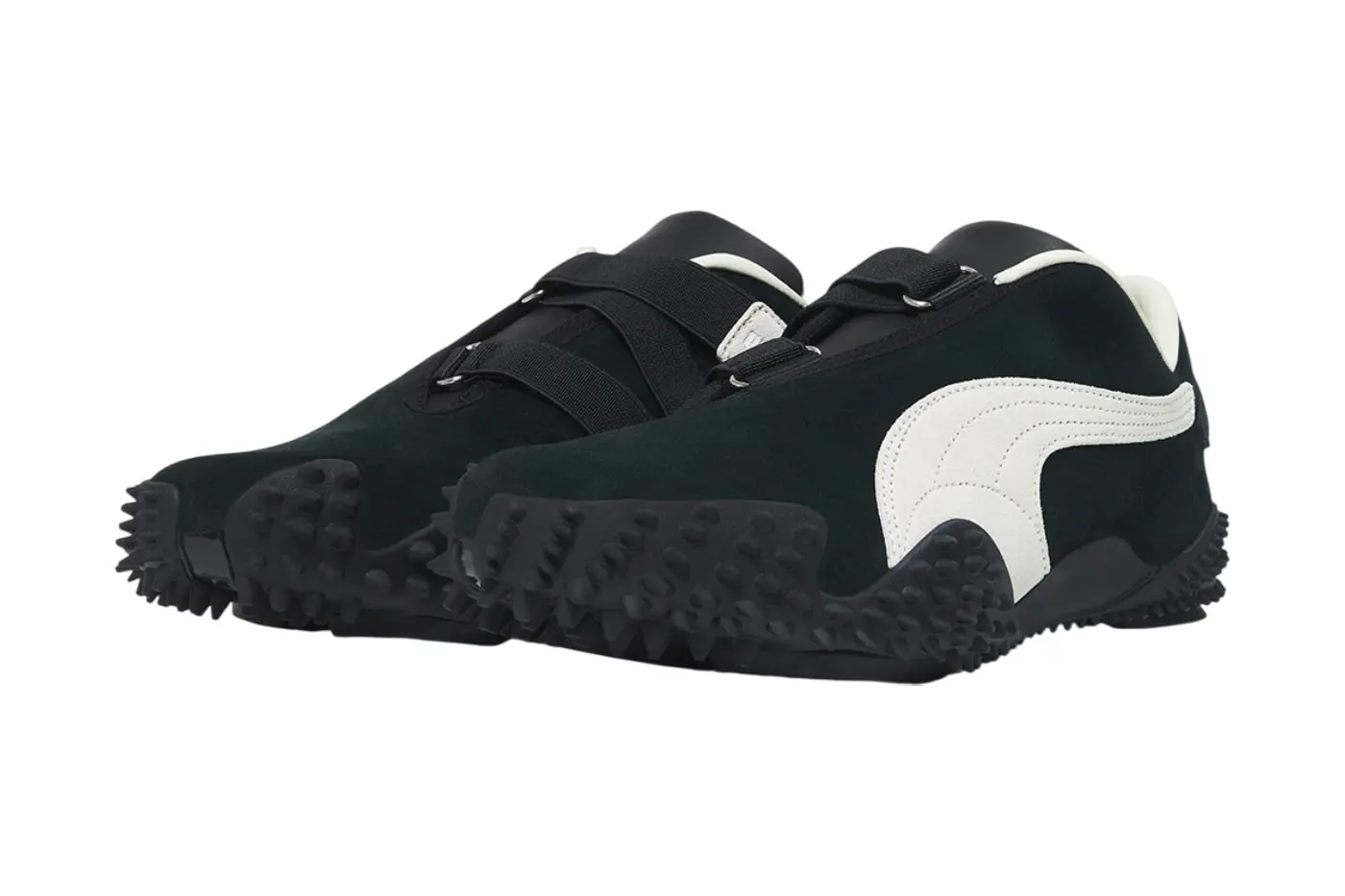
The shoe is black and white. The upper is leather and nubuck, the sole is rubber, the lacing system runs through the Mostro's signature cage. There is nothing about the materials that could not have been produced for general release from the start. What kept this particular colorway out of retail was a decision, not a constraint.
JJJJound, the Montreal studio that has spent a decade building collaborations around restraint, produced this Mostro as a friends-and-family piece. The designation is familiar in sneaker culture: a small run made for the brand's inner circle, occasionally surfacing on resale platforms at prices that reflect scarcity rather than craftsmanship. The practice creates a hierarchy of access that flatters the recipient and frustrates the collector who learns about the shoe only after it appears on someone else's feet.
Now, the hierarchy is collapsing. On August 1, PORTER Omotesando in Tokyo will open a raffle for the same grayscale Mostro that circulated privately for months, possibly years. The mechanism is still exclusive by design: a single retail location, a lottery system, a presumed limit on pairs per entrant. But the principle has shifted. The shoe that was given is now being sold, which means the currency of access is no longer relationship but luck.
JJJJound's earlier Mostro releases, a navy and a camel, both went to general retail through broader distribution. This black and white pair follows the inverse path, from closed to open, from gift to commodity. The studio is not abandoning its position. It is extending the product's lifespan by staging access in reverse chronological order: insiders first, public second, with the gap between the two groups measured in time rather than permanent exclusion.
PUMA benefits either way. The Mostro silhouette, a design from 1998 that spent years out of production, has returned as a platform for collaborations precisely because its original audience aged into disposable income while its younger audience discovered it through archival accounts. JJJJound's treatment, which strips the shoe to near-anonymity and relies on material quality to do the talking, positions the Mostro as furniture rather than statement. The kind of sneaker that sits in a rotation for years rather than weeks.
The raffle opens August 1 at PORTER Omotesando. No global release date has been announced. This remains, for now, a Japan-only door, and the shoe remains what JJJJound has always made: a quiet object that generates noise by refusing to shout.