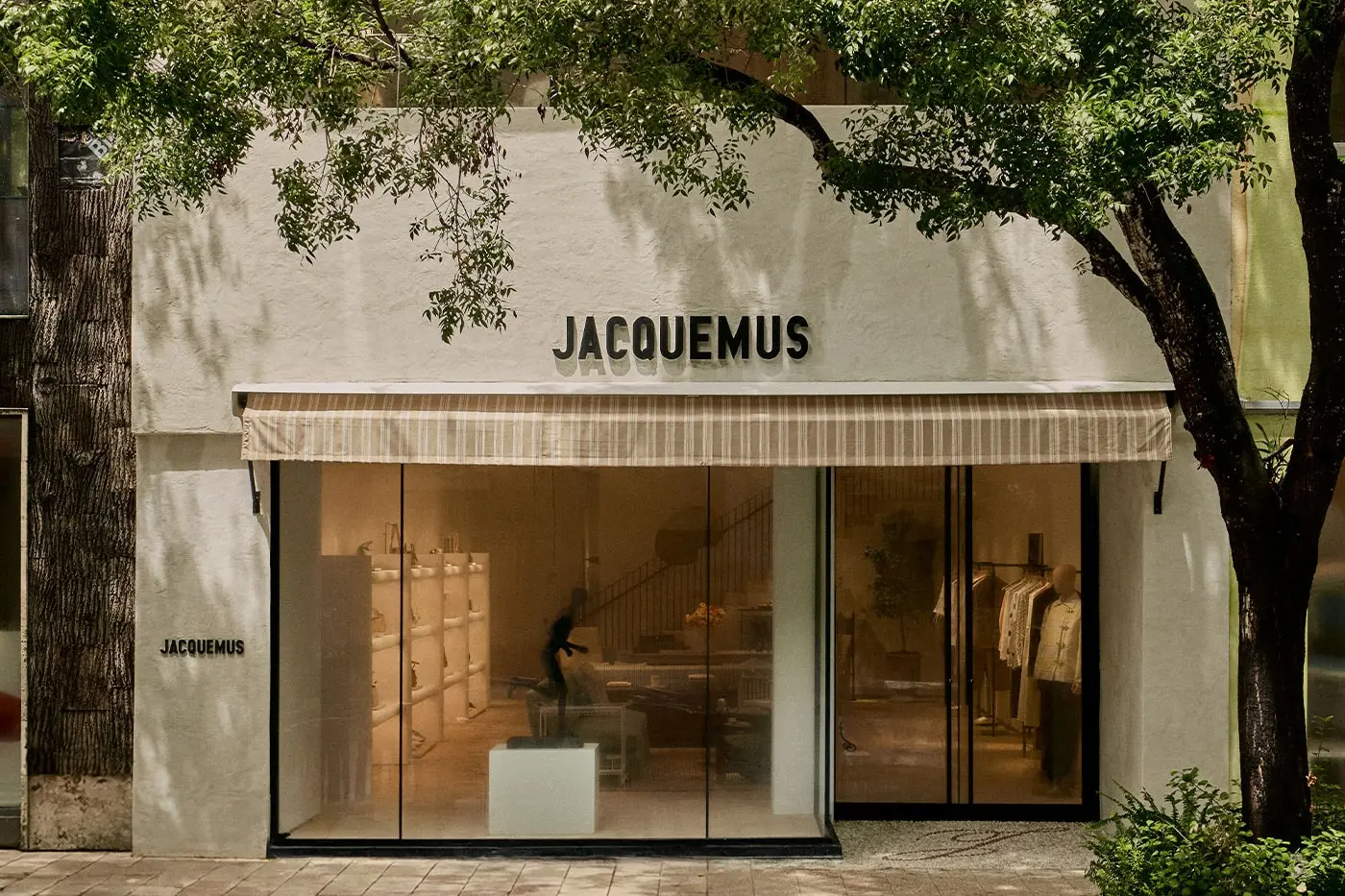
The facade sits low and pale against the Design District's usual glass towers, a two-story volume clad in the kind of stone that reads more villa than storefront. Inside, the 270 square meters unfold across curated artwork, custom furniture, a dedicated shoe salon and a private VIP room, the vocabulary of a house that has decided retail is not a backdrop for product but a piece of architecture in its own right.
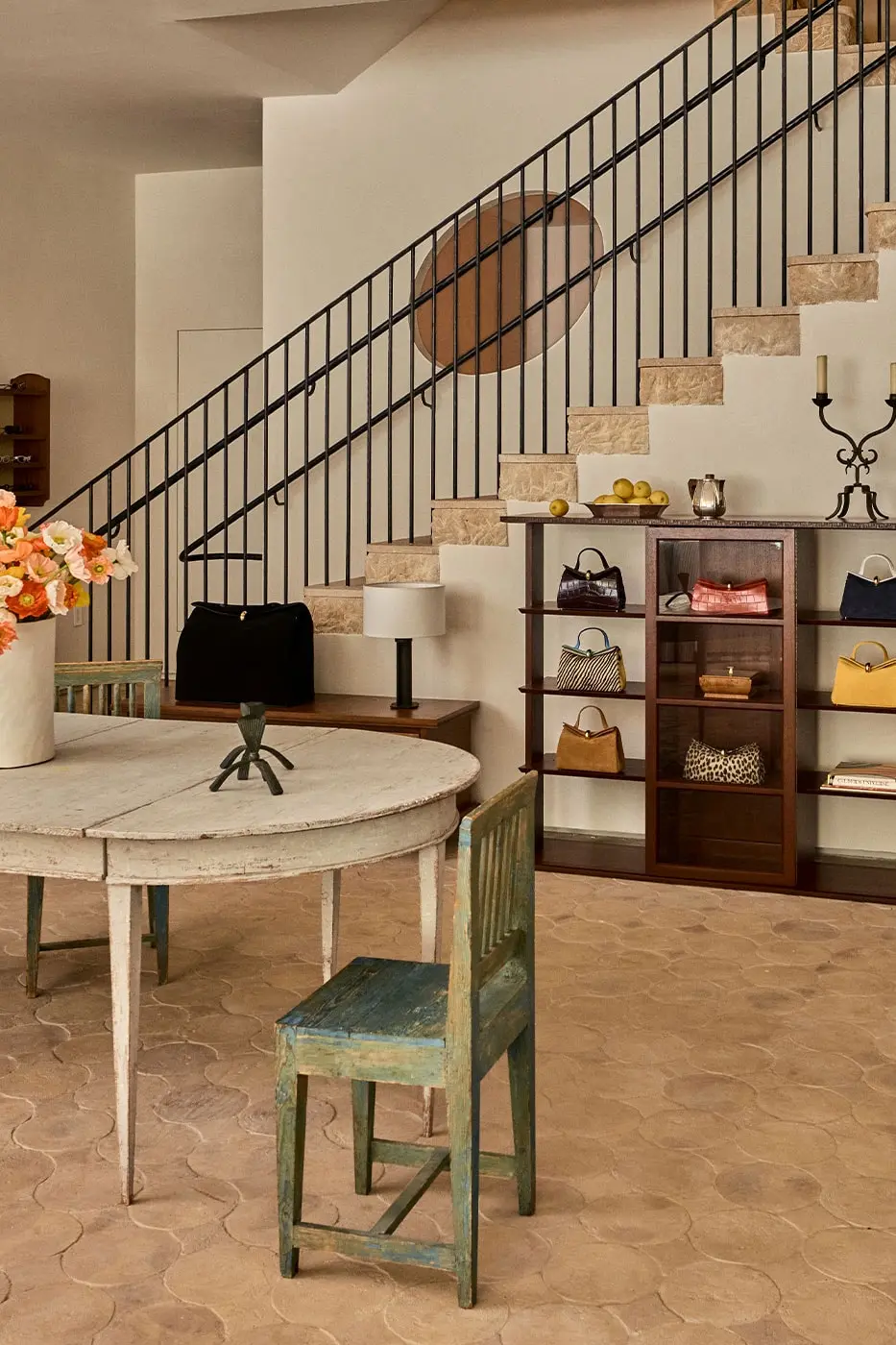
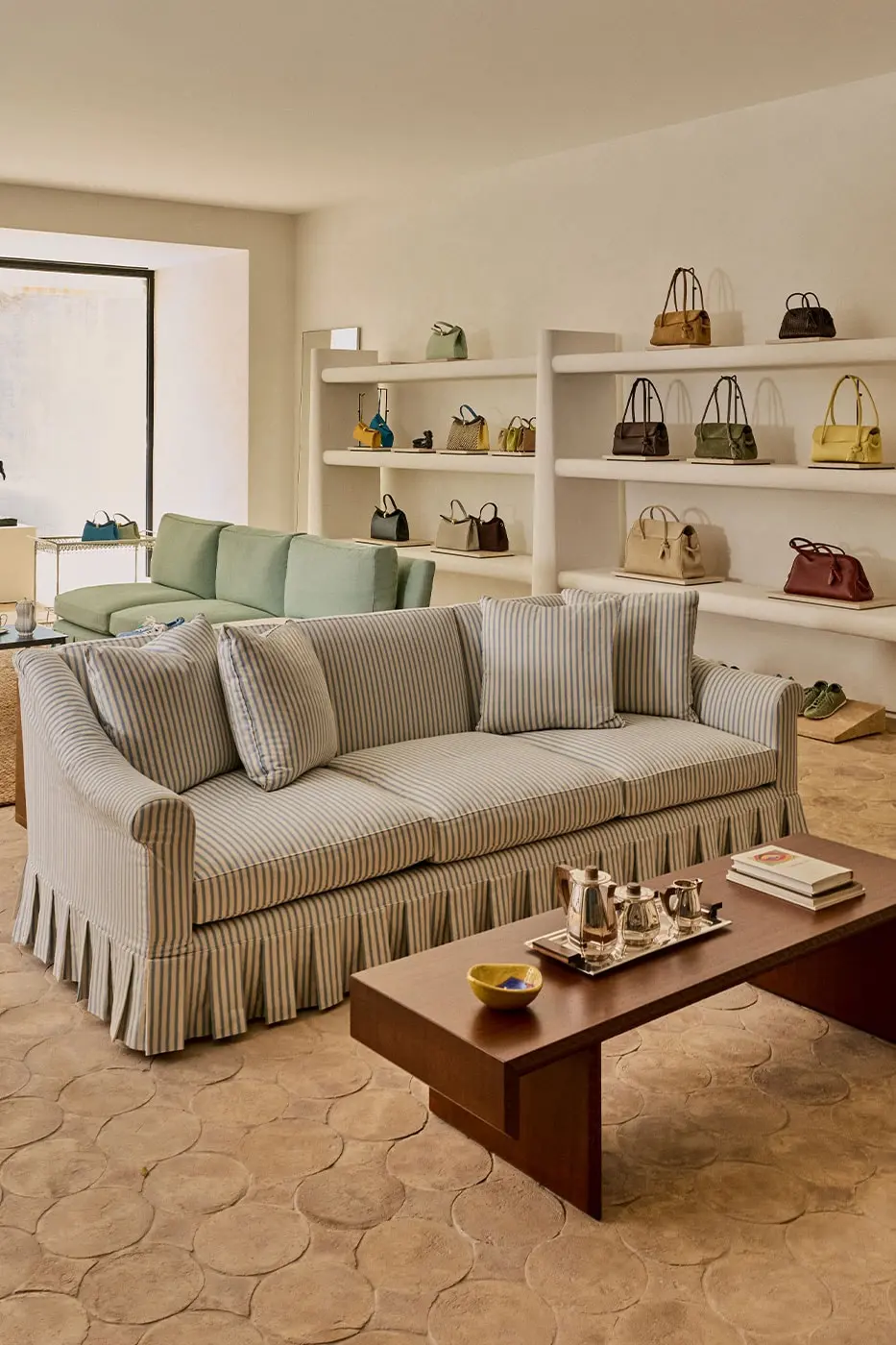
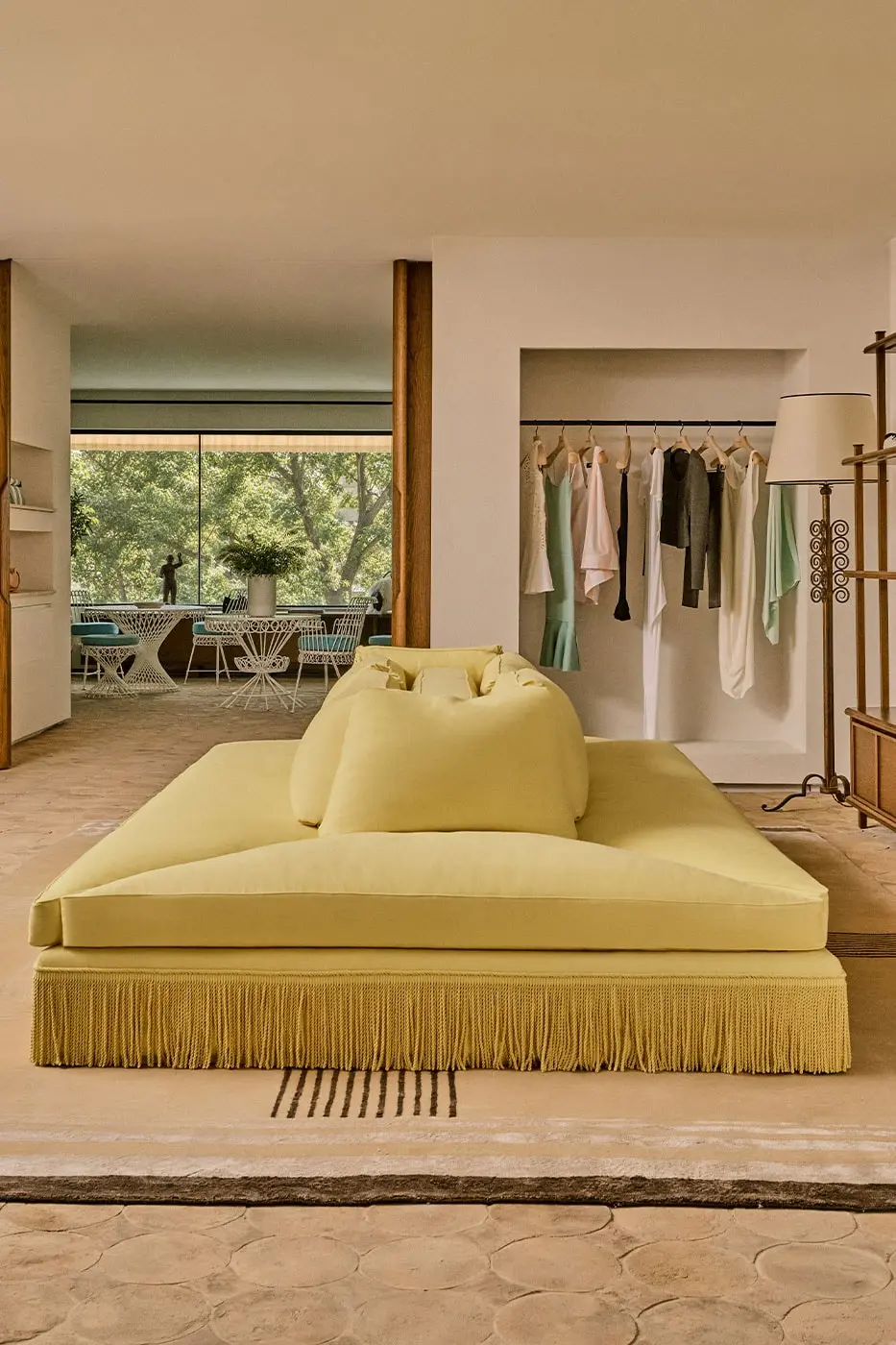
Jacquemus built this with OMA, the firm behind Prada's Rem Koolhaas era and a run of museums and civic buildings that have nothing to do with fashion at all, and that pairing is the detail worth sitting with, because it tells you what kind of store this is not: it is not a pop-up shell, not a seasonal activation, not a seasonal pop that a brand strips out in eighteen months when the lease or the trend cycle turns. Architecture firms of OMA's tier do not typically take briefs that get demolished. They take briefs meant to become landmarks, the kind of commission a city references decades later the way Milan still talks about the Prada Epicenter.
This is category drift in the most literal sense: a fashion label commissioning a firm whose primary client list is museums, cultural institutions and corporate headquarters, then asking that firm to solve the much smaller problem of selling handbags. The Mediterranean sensibility Simon Porte Jacquemus built his name on, the sun-bleached, pared-back visual language of the brand's runway sets and campaign imagery, gets translated here into a building rather than a photograph. Miami has seen plenty of fashion flagships treat Florida as a climate cue, palm trees on the invitation, pastel signage. Few have handed the actual architecture to a firm this decorated.
What separates this from a fashion store dressed up as a design object is the shoe salon and VIP room, spaces built for repeat, private commerce rather than one-time spectacle. A store engineered for return visits behaves like hospitality, not merchandising. Jacquemus has spent several years positioning itself as a lifestyle house rather than a runway label, expanding into home goods and dining collaborations elsewhere, and this building reads as the physical proof of that ambition rather than another seasonal extension of it.
The Design District has absorbed fashion flagships for a decade now. What it has not absorbed, until this one, is a house treating the building itself as inventory. Jacquemus just made the case that in this category, architecture is the collection.