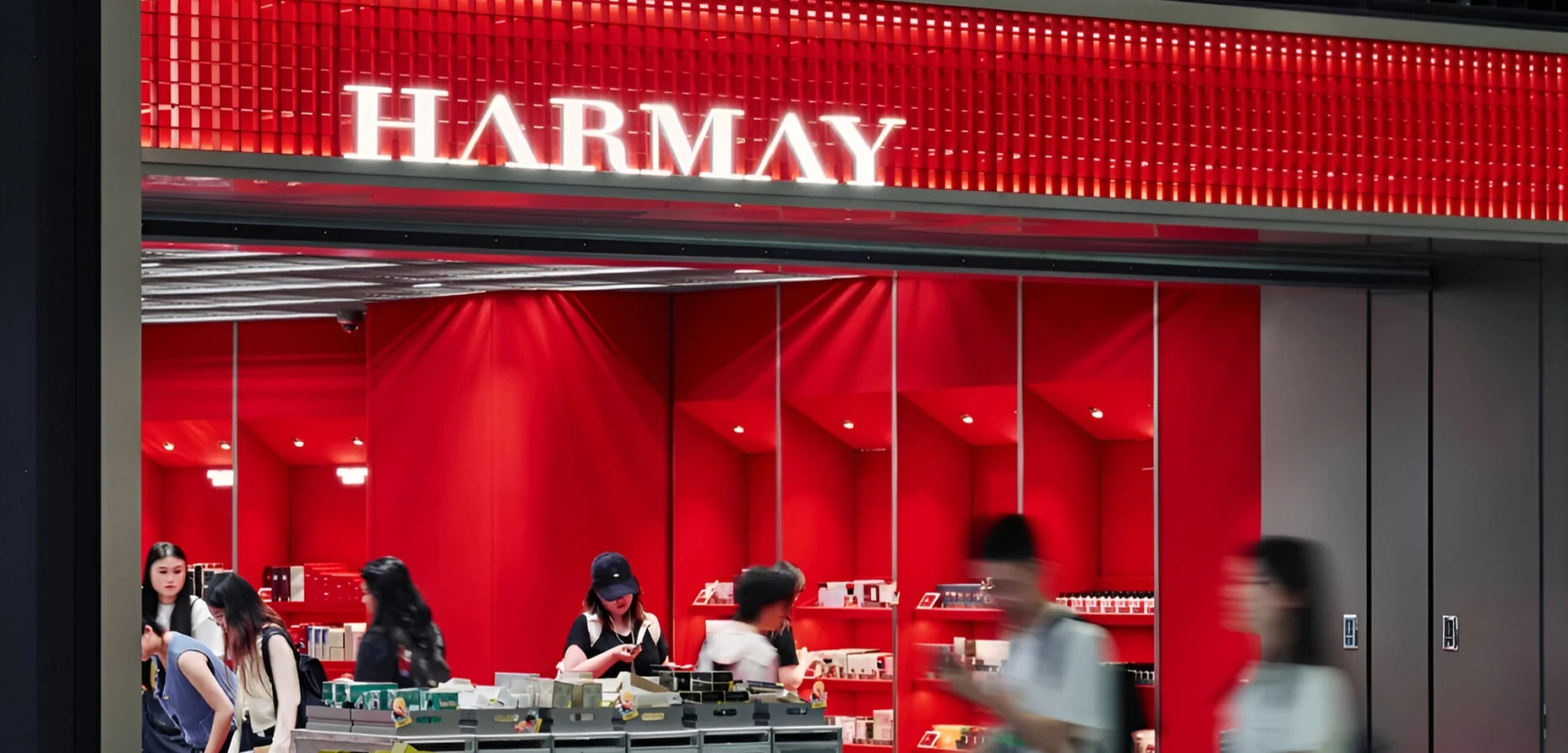
HARMAY built its reputation on dwell time. The format is theatrical beauty retail, dim lighting, curated shelving, product you are meant to linger over and sample before buying. The mechanism by which that model converts browsing into purchase is friction removal: nobody is rushing you, so you end up holding more than you came for.

An airport terminal runs on the opposite mechanism. A boarding call is a hard deadline, and every retailer inside security knows it is competing with a clock the customer did not set. HARMAY's decision to put its slow-browse format at Hangzhou Xiaoshan Airport's Terminal 4, alongside a separate first store in Anhui at Hefei MixC, tests whether the theatrical format survives when the dwell time that built it gets cut to the length of a layover.

HARMAY recently landed a fragrance partnership tied to a Kardashian-family launch, a deal that leans on name recognition rather than the browsing experience that made the brand's flagship stores a destination in the first place. The airport store is the inverse bet: it keeps the theatrical design language intact and asks whether recognition alone, without the browse time, still produces a sale. You have seen this tension before in duty-free beauty counters, where brand presence is total and brand preference gets decided in under ten minutes.
The two formats HARMAY is running at once, a flagship built on dwell time and an airport counter built on a deadline, are not really the same business wearing the same red cabin design. One sells the experience of lingering. The other sells recognition under time pressure, the same mechanism duty-free counters have relied on for decades. HARMAY is effectively testing both halves of its own value proposition in the same stretch of months, in two different provinces, under two different clocks.
The Kardashian-family fragrance deal and the Hangzhou airport store point in the same direction even though they look unrelated. Both trade on the idea that a shopper already knows what HARMAY is before they ever touch a shelf. That assumption was never fully tested at the flagship stores, where the design itself did the work of building preference in real time. Strip out the browsing and what is left is whatever recognition the brand has banked elsewhere, through partnerships, through word of mouth, through the Hefei MixC store now serving as a second data point in Anhui.
That is why the same-store comparison matters more than either launch on its own. A basket size at the airport location that approaches flagship averages would say recognition alone can substitute for dwell time. A basket size that settles into ordinary impulse-buy territory would say the theatrical format was never separable from the minutes it asks shoppers to spend inside it.
Watch same-store HARMAY sales data out of Hangzhou by late January 2027. If the airport location's basket size approaches flagship-store averages, the theatrical format travels. If it settles closer to typical airport impulse-buy ranges, the format needed the time it was built around all along.