A blogger in China mentioned online that her dishwasher had broken. The appliance was a Haier Little Seashell model from 1997, nearly thirty years old. Haier saw the post, shipped the unit back to the factory, and repaired it. Then it turned the whole sequence into a piece of branded content.
The mechanism here is simple: durability becomes marketing only when someone documents it happening. A thirty-year-old appliance sitting quietly in a kitchen proves nothing to anyone outside that kitchen. The same appliance, photographed mid-repair and narrated as a comeback story, proves brand loyalty to everyone watching the feed. Haier did not invent longevity. It invented the moment where longevity becomes visible and shareable, which is a different problem with a different solution: customer service staged as content, not customer service performed quietly and left unannounced.
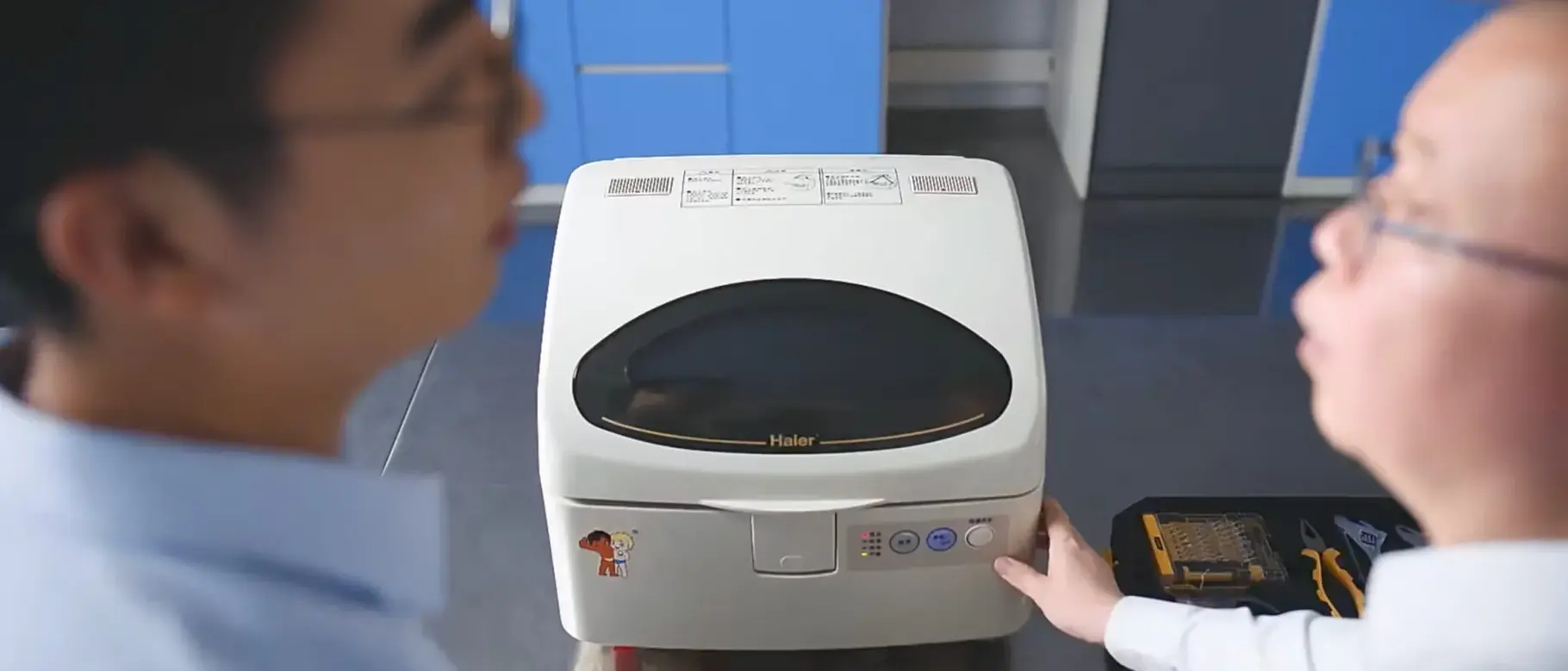
You have seen this shoe before in other categories: the brand that publicizes a repair, a replacement, a refund, precisely because the gesture costs little and reads as generosity at scale. What differs in the Haier case is the object itself. A dishwasher is not a sneaker or a jacket. It has no resale market, no collector culture, no secondary attention economy built around scarcity. Its only claim to relevance is that it still works. That claim, on its own, is not content. Haier had to manufacture the occasion, which means the real product being marketed is not the appliance. It is the company's willingness to notice a single customer's throwaway comment and respond at brand scale.
This is where presence and preference start to separate. Being seen fixing one dishwasher does not mean Haier's repair infrastructure, spare parts pipeline, or service network for millions of other appliances functions the same way. The story generalizes an individual act of attention into an implied claim about the whole company's reliability, and the gap between those two things is exactly where marketing lives. Nobody can audit whether Haier would do the same for a customer who did not post online first, and that asymmetry is the quiet cost of doing service as spectacle.
Set a 90-day window against this launch date. If Haier repeats the format in another product category, an air conditioner or a washing machine from a similarly distant decade, the tactic is a pipeline that turns customer complaints into raw material on a predictable cadence. If no second case appears, the dishwasher was a one-off seized on opportunity. Track the next repair story Haier tells, and count how many follow it.