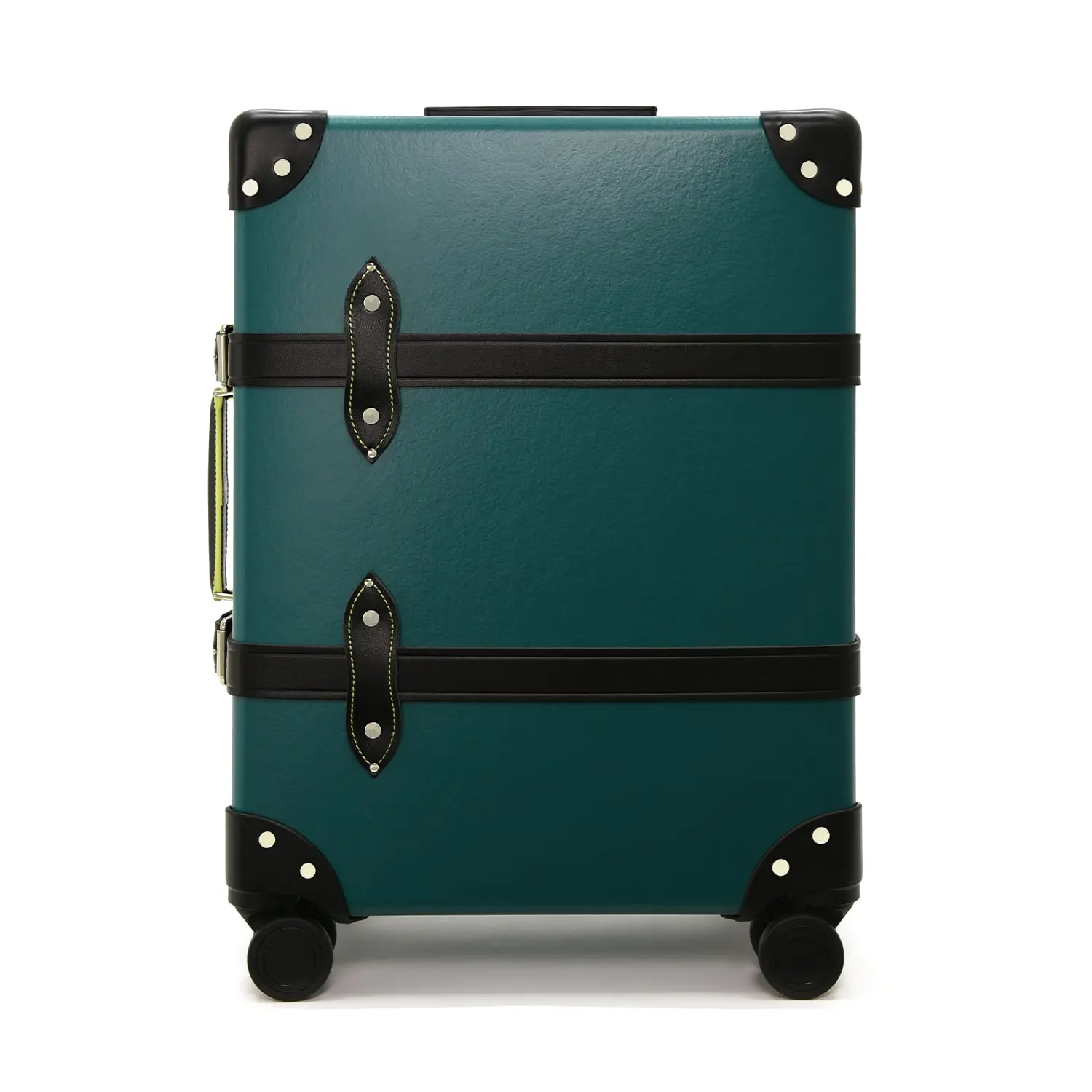
One hundred pieces, sold globally, across a flagship and select stockists. That is the entire inventory for Globe-Trotter's newest Aston Martin Aramco Formula One collection, a partnership the British trunk maker has now run long enough that the collaboration itself has become the product, not the car.
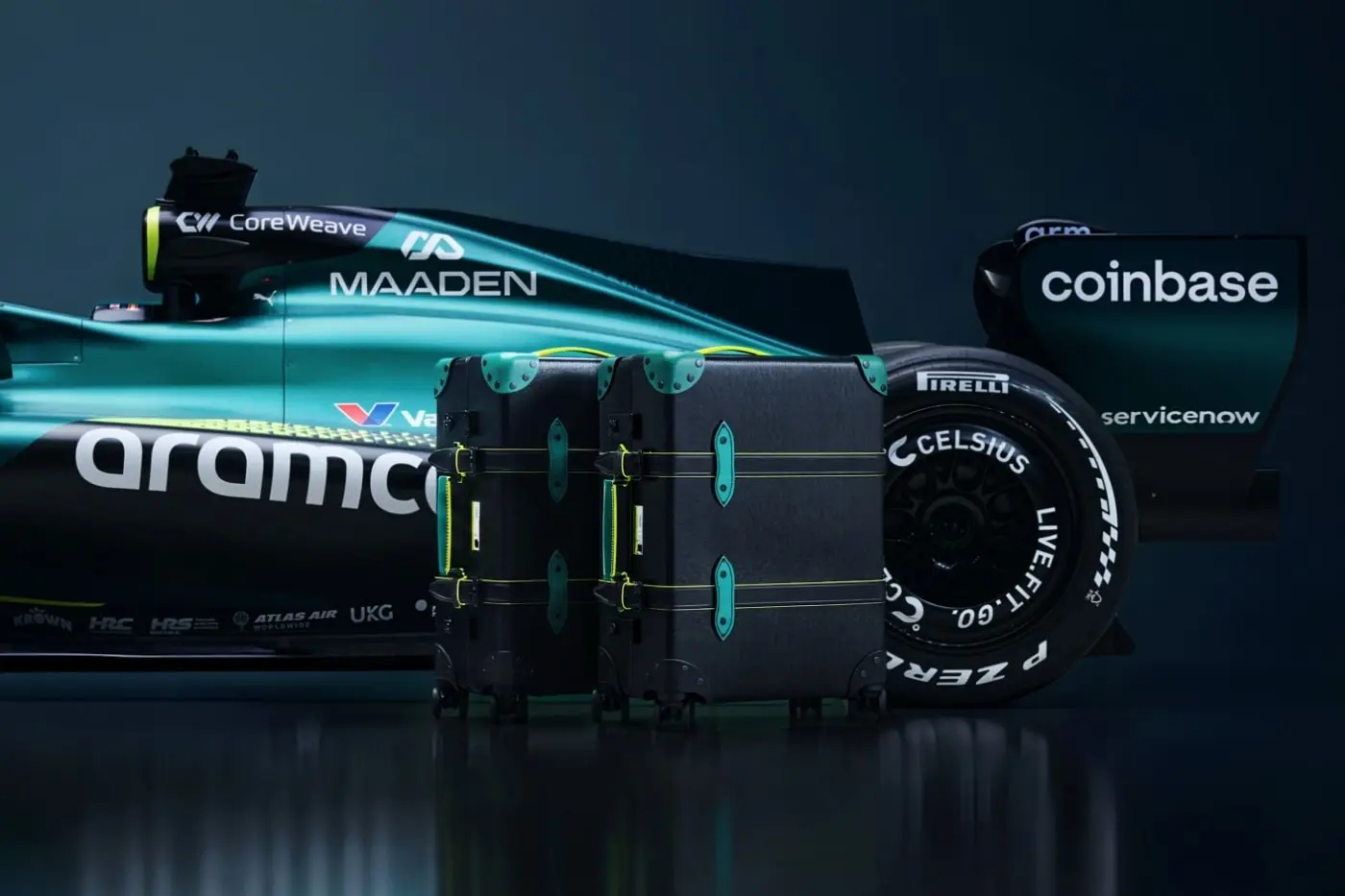
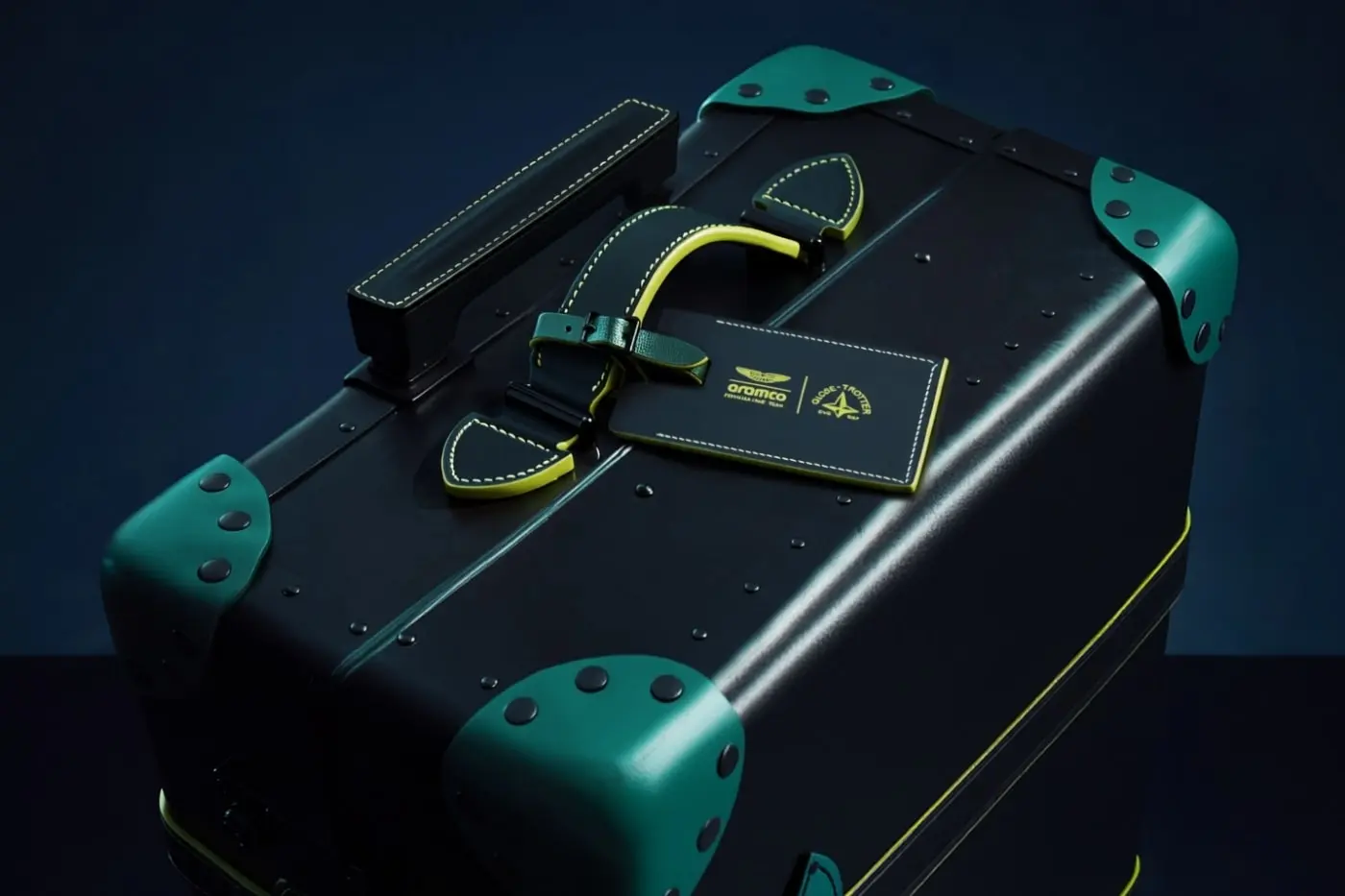
Hypebeast covered the release directly: the brand "continuing its partnership with the motorsport brand through a collection that merges British craftsmanship with racing performance," built on black Vulcanised Fibreboard with Aston Martin Green accents, lime stitching, and houndstooth nylon lining. None of that is new information for anyone who has followed the earlier drops. What is new is the number: 100 units, a scarcity math that motorsport merchandise almost never runs on.
The mechanism here is straightforward: team merchandise usually converts fandom into volume, cheap replica kits and keychains sold by the tens of thousands to capture as much of a fanbase as possible. Globe-Trotter is doing the opposite. It is using an F1 team's presence, watched by hundreds of millions across a season, to sell a hard-shell case that costs more than most fans will spend on a single race weekend, and it is deliberately capping supply below what casual demand could absorb. You have seen this shoe before in sneaker culture, where limited runs create desire precisely by refusing to meet it. Luggage brands rarely borrow that playbook because luggage is not usually a hype category.
What makes the case interesting rather than incidental is the pattern across the partnership's life. This is not Globe-Trotter's first Aston Martin release, and each prior drop has leaned harder on race-day visuals, paddock photography, cars in motion. This one leans on stitching and fibreboard. The car is present in the marketing copy but absent from the hero imagery. That is a brand betting that the audience which already wants this object no longer needs to see the car to want it.
The shift from paddock photography to product photography is itself a claim about who the buyer is. Race-day visuals sell the sport. Stitching and fibreboard sell the object. A brand only makes that swap when it believes the audience has already transferred its loyalty from the spectacle to the case, and no longer needs the car in frame to recognize what it is looking at.
That belief is testable precisely because the earlier drops set the baseline. Each prior release leaned on the car in motion to do the selling. This one asks the stitching and the houndstooth lining to do it instead, with the Aston Martin name reduced to marketing copy rather than hero imagery. If the fanbase built by three prior collaborations has hardened into something closer to a luggage clientele than a motorsport audience, the object sells on craft alone. If it has not, the absence of the car in the imagery removes the one lever that reliably worked before.
Capping supply below what casual demand could absorb only sharpens that test. A brand chasing volume would keep the car in frame and print more units. Globe-Trotter did neither, which means the partnership is no longer being asked to prove it can move merchandise. It is being asked to prove it can move an idea.
If that bet is right, the 100 units sell out within days of listing, not weeks, a pace observable by mid-October. If it is wrong, the case lingers at retail past the next Grand Prix weekend, and the partnership's fourth outing becomes the one where scarcity was assumed rather than earned.