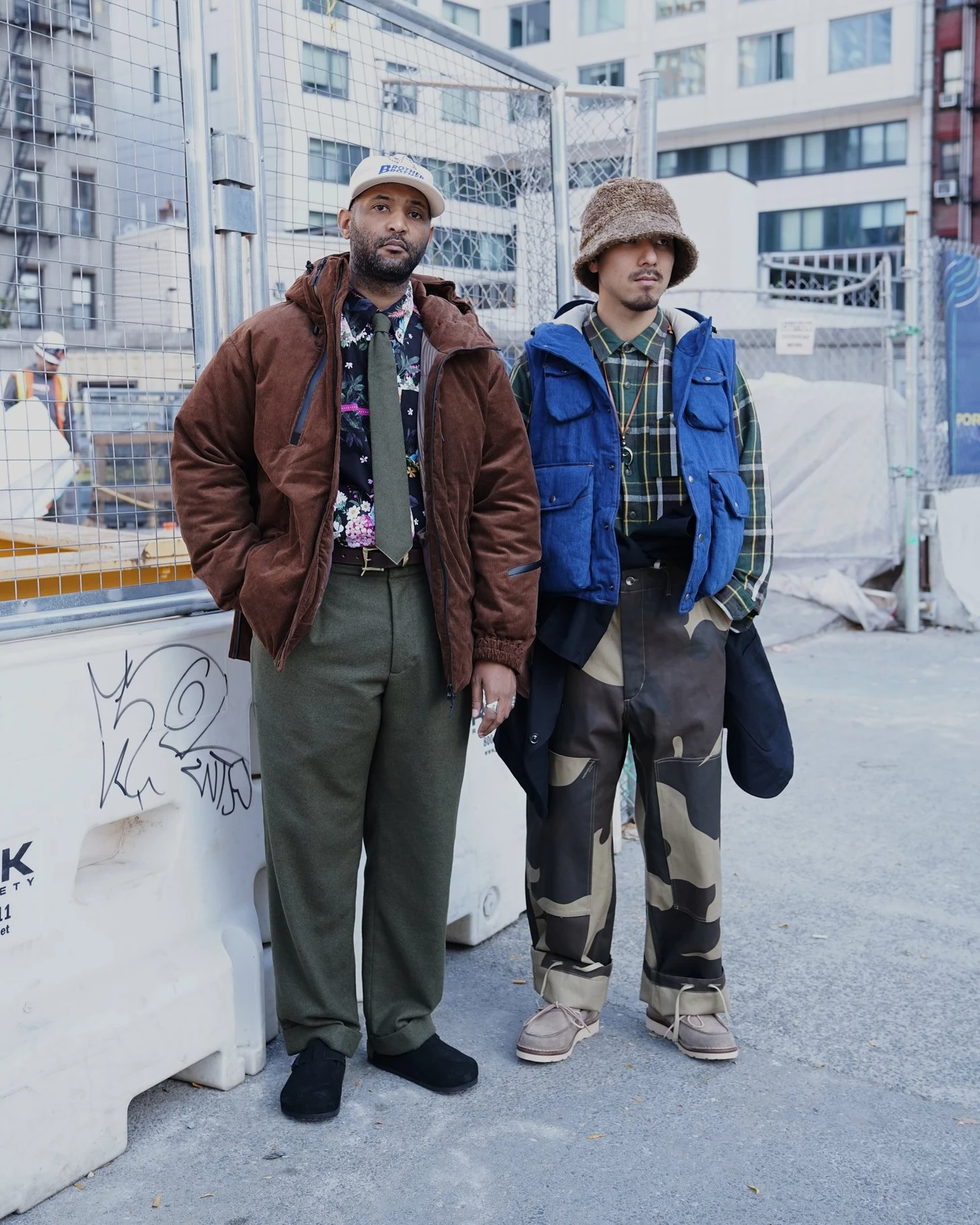
Two product pages go live on the Engineered Garments site within twenty-four hours of each other this week, and neither one announces the other. The first is a zip jacket and down field vest made with Nanga, the Japanese sleeping-bag and outerwear maker, cut this time in Engineered Garments' own house fabrics rather than Nanga's. The second is a run of three hat shapes made with Cableami, the headwear specialist out of Japan, each offered in three colorways. Both are described on the brand's own pages as capsule collections. Both ship as quiet product drops, no show, no campaign film, no single lead image meant to carry a season.
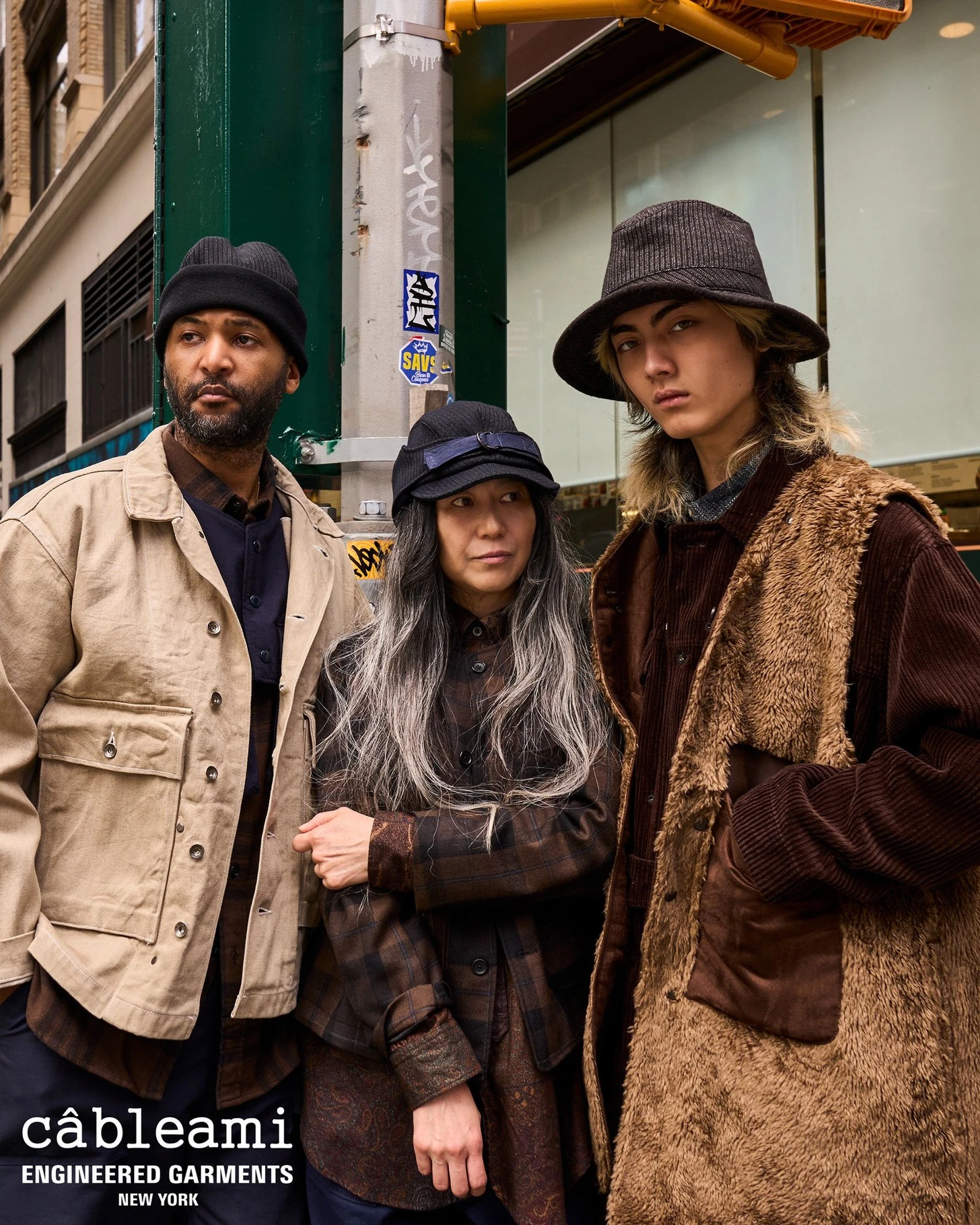
This is the fourth outing with Nanga specifically, a detail the brand's own copy states plainly rather than markets. A collaboration that has run four seasons is not a collaboration anymore in the ordinary sense of the word: it is closer to a standing order between two workrooms that happen to publish under separate names. The Cableami hats carry no such counter attached to them in the copy, which makes the contrast useful. One partnership has aged into a recurring fixture on the calendar. The other reads, for now, as a one-off accessory exercise dressed in the same restrained product photography.
What is notable is the compression happening inside a single brand's output rather than across the category. Engineered Garments built its name on archival military and workwear research, a genuinely narrow interest that required real study to track a decade ago. Now the brand runs two parallel collaboration programs simultaneously, each targeting a different adjacent craft tradition, Japanese outdoor gear on one hand and Japanese headwear manufacturing on the other, and ships them in the same calendar week without treating either as an event. The specialist territory has not shrunk. It has multiplied into a production schedule.
The Nanga relationship started as a genuine crossover between two distinct design philosophies. Four seasons in, the fabric swap, Nanga's technical shells now rendered in Engineered Garments' own house cloth, suggests the two houses have settled into something closer to a shared production line than a creative dialogue. The hats with Cableami, by contrast, still carry the texture of a first meeting: three shapes, three colors, no fabric substitution, no history to point back to. One relationship has become infrastructure. The other is still a guest. Engineered Garments ships both anyway, back to back, treating a fourth-season standing order and a first-season meeting as the same kind of news. The two capsules sit on the same site shelf, priced the same way, photographed the same way, and only the Nanga copy bothers to count how many times they have done this before.
A brand built on archival specificity now runs its collaboration slate like a product calendar, and the only signal of which partnership has outlasted novelty is a number buried in its own press copy.