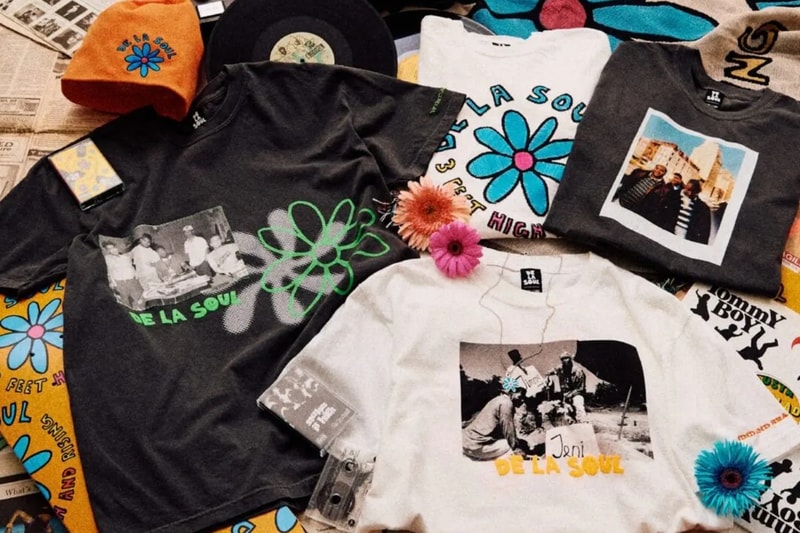
For most of their career, De La Soul existed in a strange sonic limbo. Sample clearance disputes kept the trio's first six albums off streaming platforms until March 2023, when a renegotiated deal with Reservoir Media finally unlocked the catalog. Within weeks, 3 Feet High and Rising had logged over 100 million streams. The music was suddenly everywhere again, but the visual identity that accompanied it, the daisy-age iconography, the Polaroid warmth, the D.A.I.S.Y. acronym, remained trapped in vintage T-shirt resale markets and bootleg reprints.
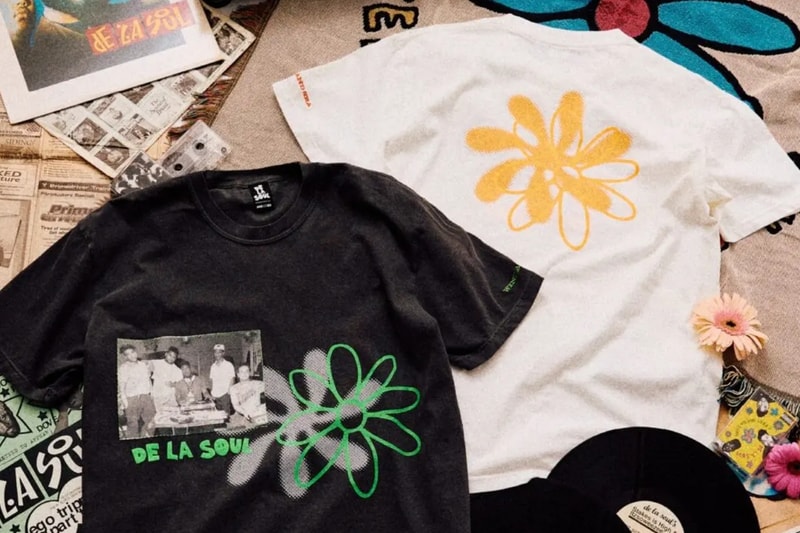
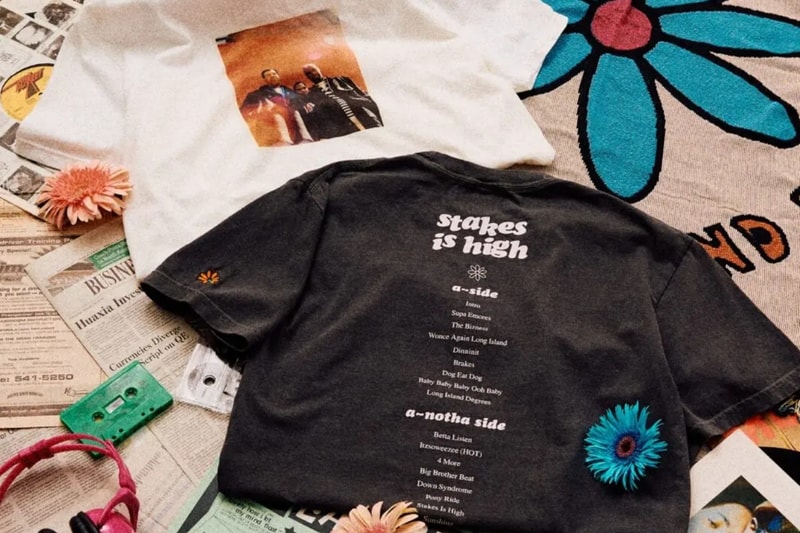
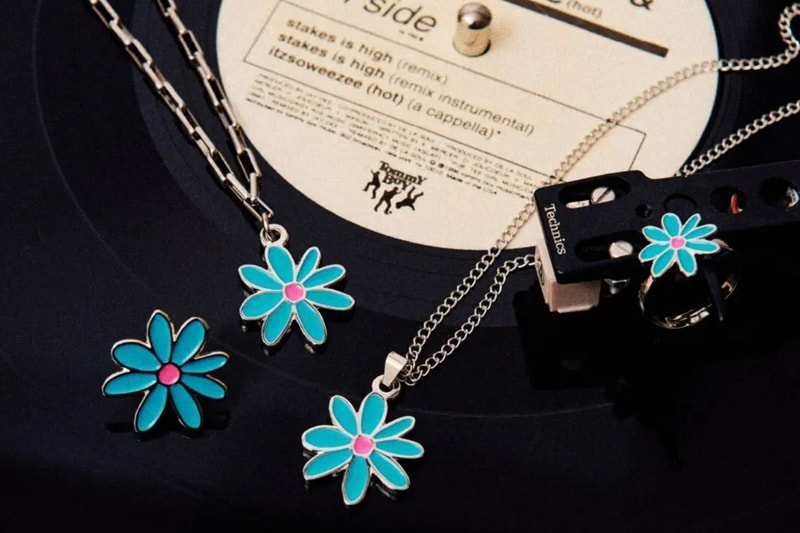
This week, that gap narrows. Tokyo-based WIND AND SEA, the label founded by designer Takeshi Komatsu in 2017, has released a seven-piece capsule built around De La Soul's album artwork and graphic motifs. The range spans hoodies, tees, shorts, a bucket hat, and a tote, priced between roughly $62 and $125 USD. It launched June 7 on the brand's webstore.
The timing is not accidental. De La Soul has spent the past three years touring the catalog they could finally promote, headlining festival slots from Coachella to Primavera Sound. Streaming unlocked access; touring rebuilt presence. But presence without product creates a vacuum. A legacy act can sell out a 10,000-capacity room and still have no capsule in the lobby beyond whatever a local bootlegger printed that morning. The WIND AND SEA collaboration addresses this directly: it is the first officially licensed De La Soul apparel line released through a contemporary streetwear channel since the catalog's return.
WIND AND SEA is a deliberate partner. The label has built its reputation on limited-run collaborations with legacy properties, from Coca-Cola to Snoopy to the estate of Jean-Michel Basquiat. The approach is always the same: archival material, loose silhouettes, short windows. The De La Soul capsule follows the template. Album covers from 3 Feet High and Rising and De La Soul Is Dead appear as all-over prints; the D.A.I.S.Y. acronym (Da Inner Sound, Y'all) runs across chest panels.
What the press releases do not mention is where this positions the group relative to their peers. A Tribe Called Quest, whose catalog never faced the same streaming exile, has been licensing apparel through Urban Outfitters and Stüssy for over a decade. The Beastie Boys have an entire Grand Royal archive brand. De La Soul, despite being foundational to the same era, has had no equivalent pipeline. The WIND AND SEA capsule is less a collaboration than a correction: the group's visual language finally entering the same distribution channel their music rejoined three years ago.
The lag between sonic access and physical presence is a pattern across legacy hip-hop. When a catalog returns to streaming, the assumption is that merch will follow. In practice, the clearance infrastructure for apparel is entirely separate from the licensing deals that govern audio. Artists can spend years rebuilding one pipeline while the other remains dormant. De La Soul's trajectory is the clearest example: 100 million streams in 2023, official streetwear in 2026.
WIND AND SEA's drop is already listed as low stock on several SKUs. Whether the capsule restocks or remains a one-off will determine if this is a correction or a moment. For now, the daisy is finally for sale.