The canvas is white, the rubber toe cap is white, and across the upper a heron stands mid-stride in the kind of loose, confident brushwork that takes decades to make look easy. This is a shoe built to be looked at from three feet away rather than worn past at a glance, which puts it in a strange category for a brand whose whole commercial identity runs on the opposite instinct.
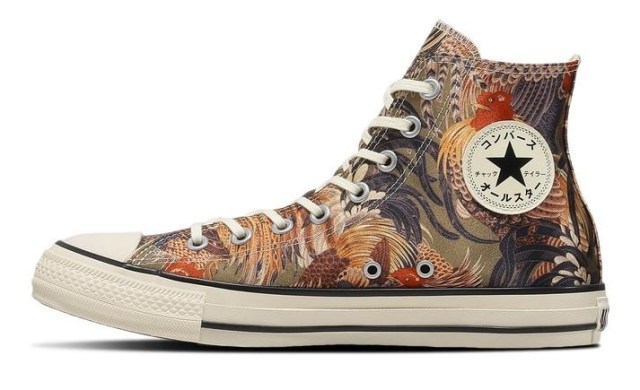
SoraNews24 reported the collaboration this week, pairing Converse Japan with the reproduced work of a painter celebrated for bird-and-flower compositions in the classical Japanese tradition, the kind of painting normally encountered in a museum scroll room or a temple screen, not stitched into canvas footwear sold through a sneaker retailer's regional release calendar.
This is textile design borrowing the authority of fine art, and it is worth being precise about the direction of the borrowing. The painting was not made for a shoe. It predates sneaker culture by centuries. What Converse Japan has done is take a static, revered, single-surface image and wrap it around a mass-produced three-dimensional object that bends at the ankle and scuffs at the toe within a week of purchase, which is a different kind of object than the one the original artist was making, and the interesting question is not whether that is disrespectful but what category the resulting shoe now belongs to.
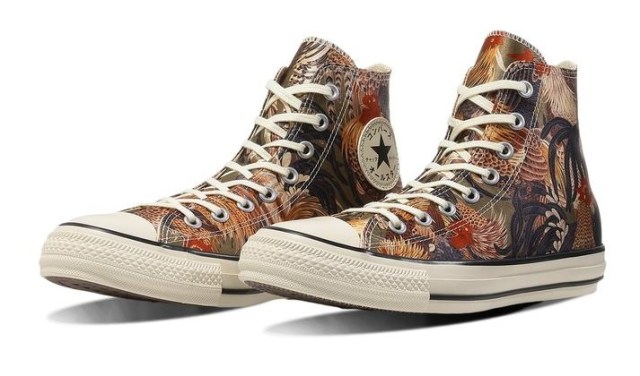
Japanese sneaker collaborations with classical or ukiyo-e imagery are not new as a genre. What distinguishes this one is the specificity of the reference and the regional scope of the release: this is not a global drop engineered for resale flippers, it is a Japan-market release built around a painter whose name carries weight domestically and very little recognition outside it. The shoe will not travel the way a Nike collaboration travels. It is built for a local eye that already knows the reference and does not need it explained.
That regionalism is the real story here. A collaboration this specific, this untranslatable, is not trying to be a global sneaker news item. It is a piece of local craft retail, dressed as streetwear, sold to an audience fluent enough in the reference to skip the wall text. The shoe belongs less to sneaker culture than to the long Japanese tradition of putting fine art on everyday objects, tea tins, fans, kimono, and letting the object carry the art into daily use. Converse Japan just found a new object to carry it.