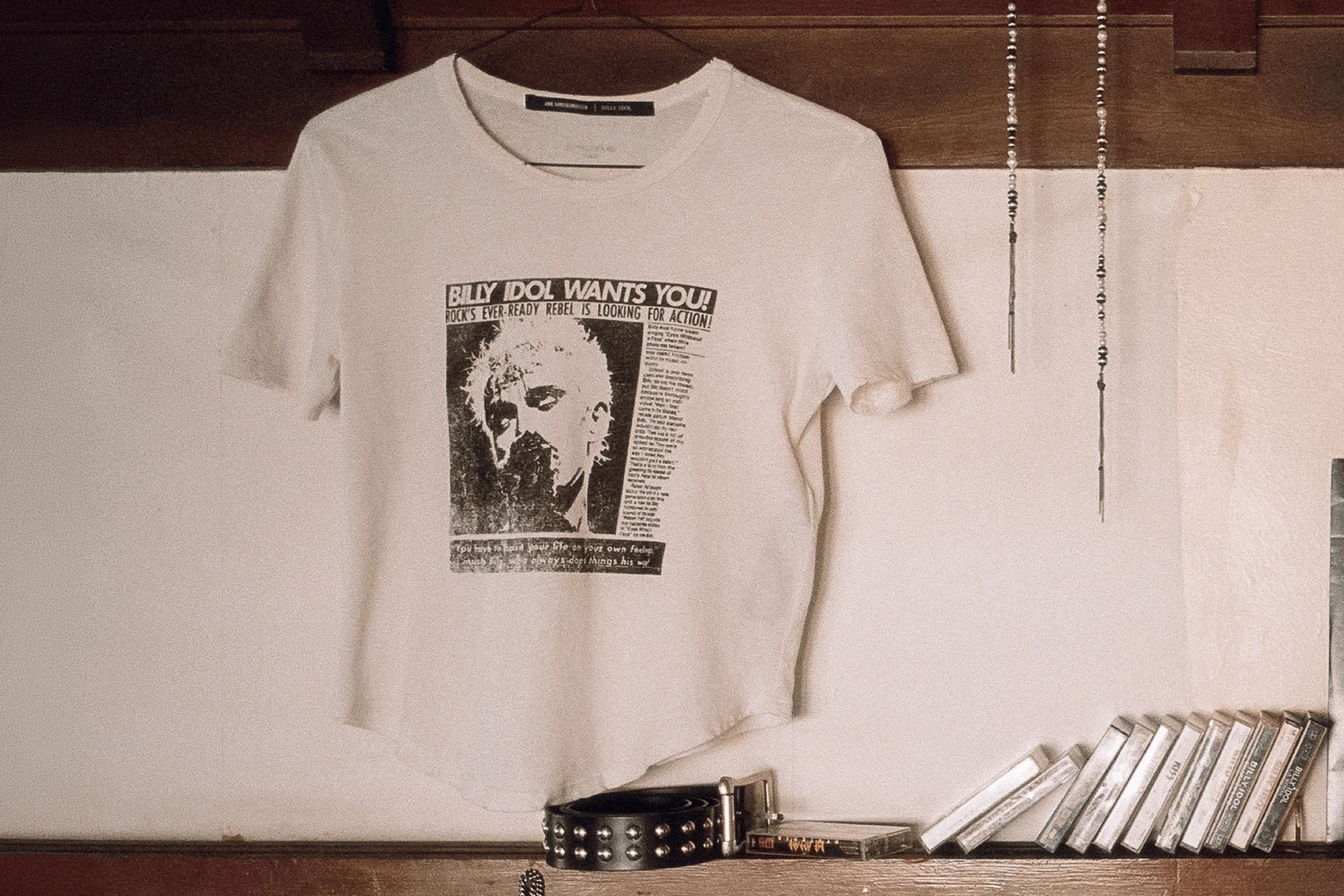
The jacket leads, as it should. A black leather Perfecto with a burgundy collar, cut with the severity Ann Demeulemeester has spent four decades perfecting on runways that rarely play guitar music. Underneath it sit eight jersey pieces and one striped open-neck knit, each one carrying a lyric fragment, a song title, or a photo reference pulled from Billy Idol's own archive. Creative director Stefano Gallici built the ten-piece run around Idol's 1980s image: the bleached spike, the sneer, the studs that made him a tabloid fixture before they made him a Rock & Roll Hall of Fame inductee.
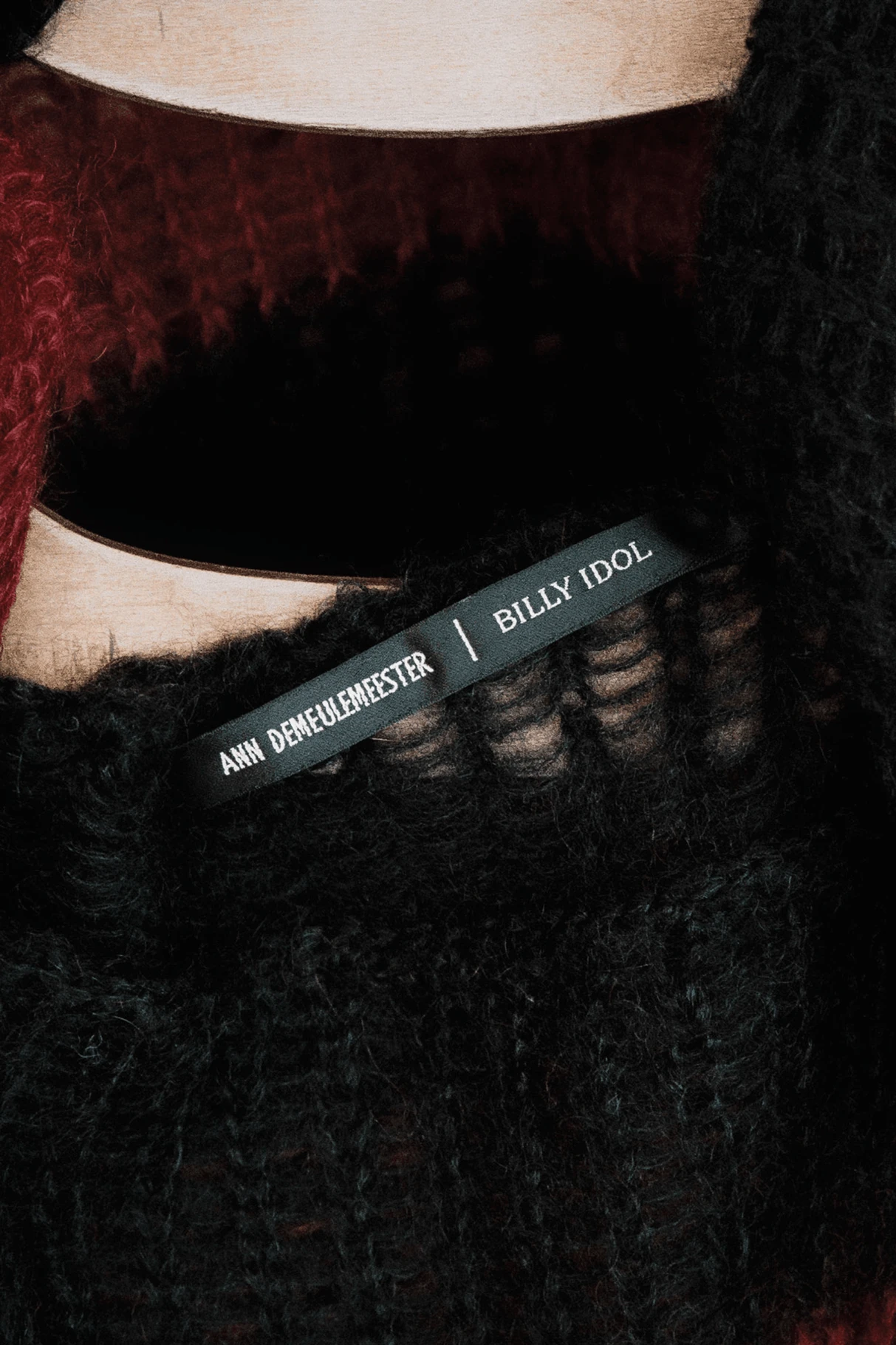
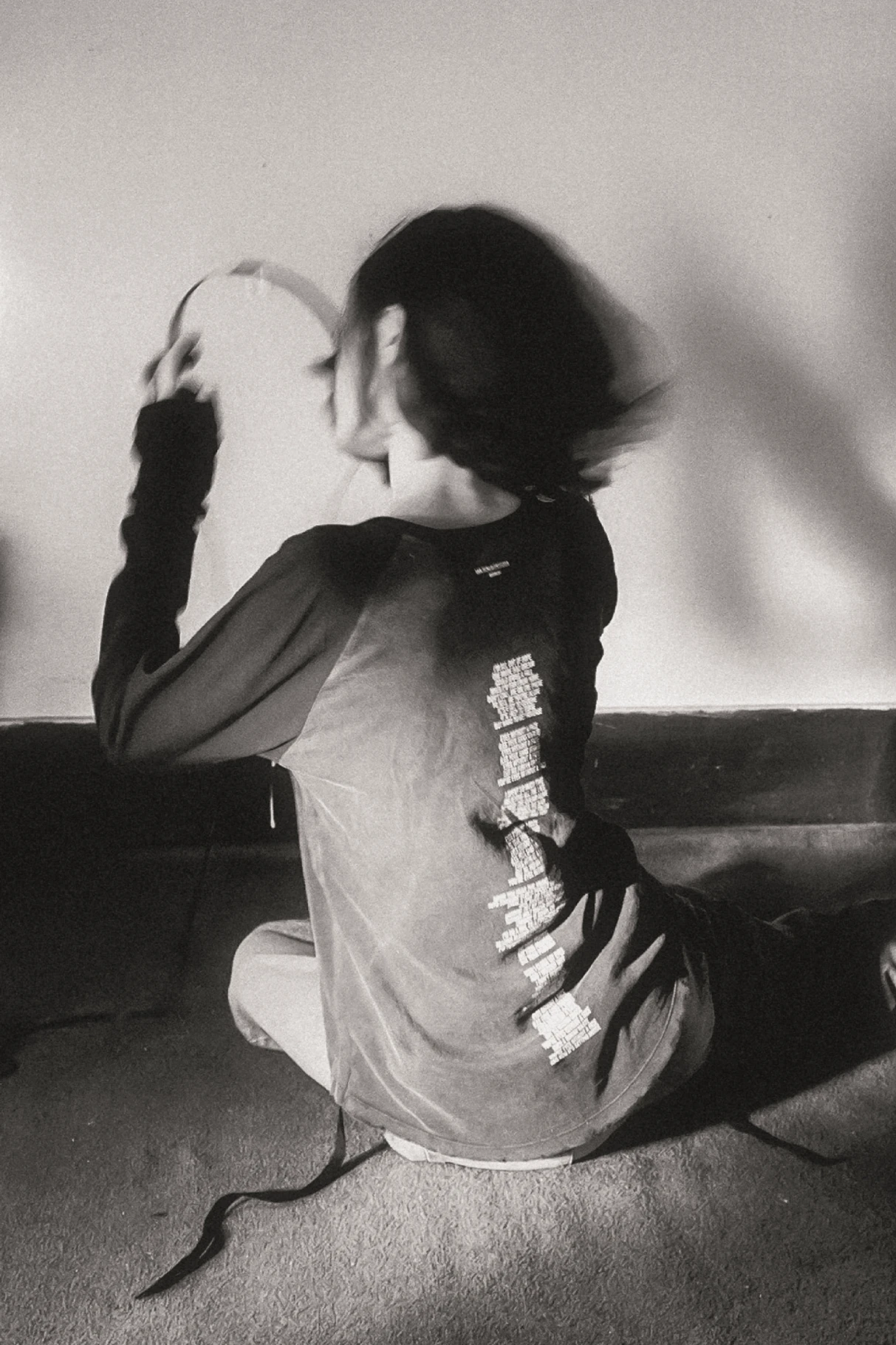
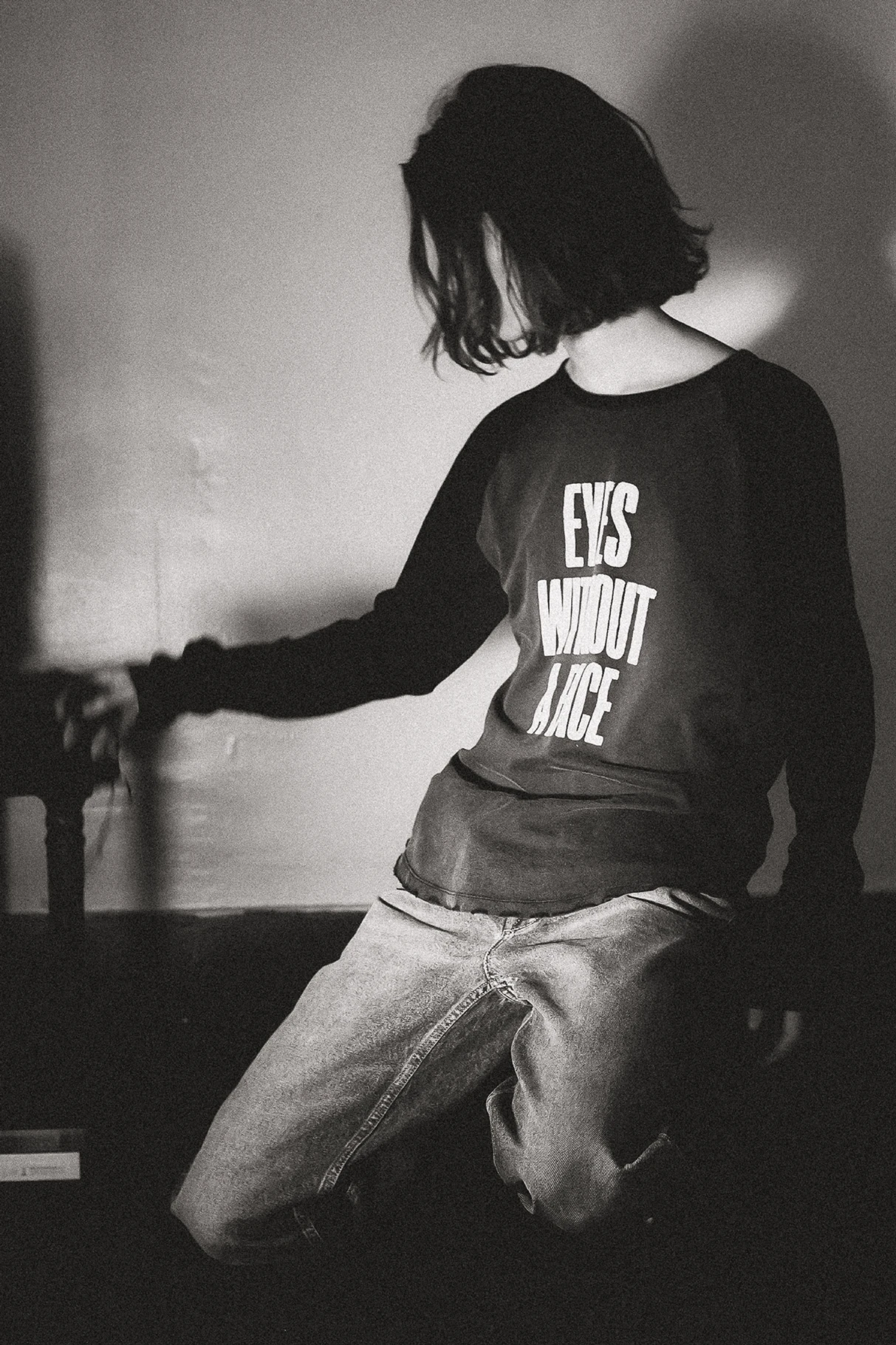
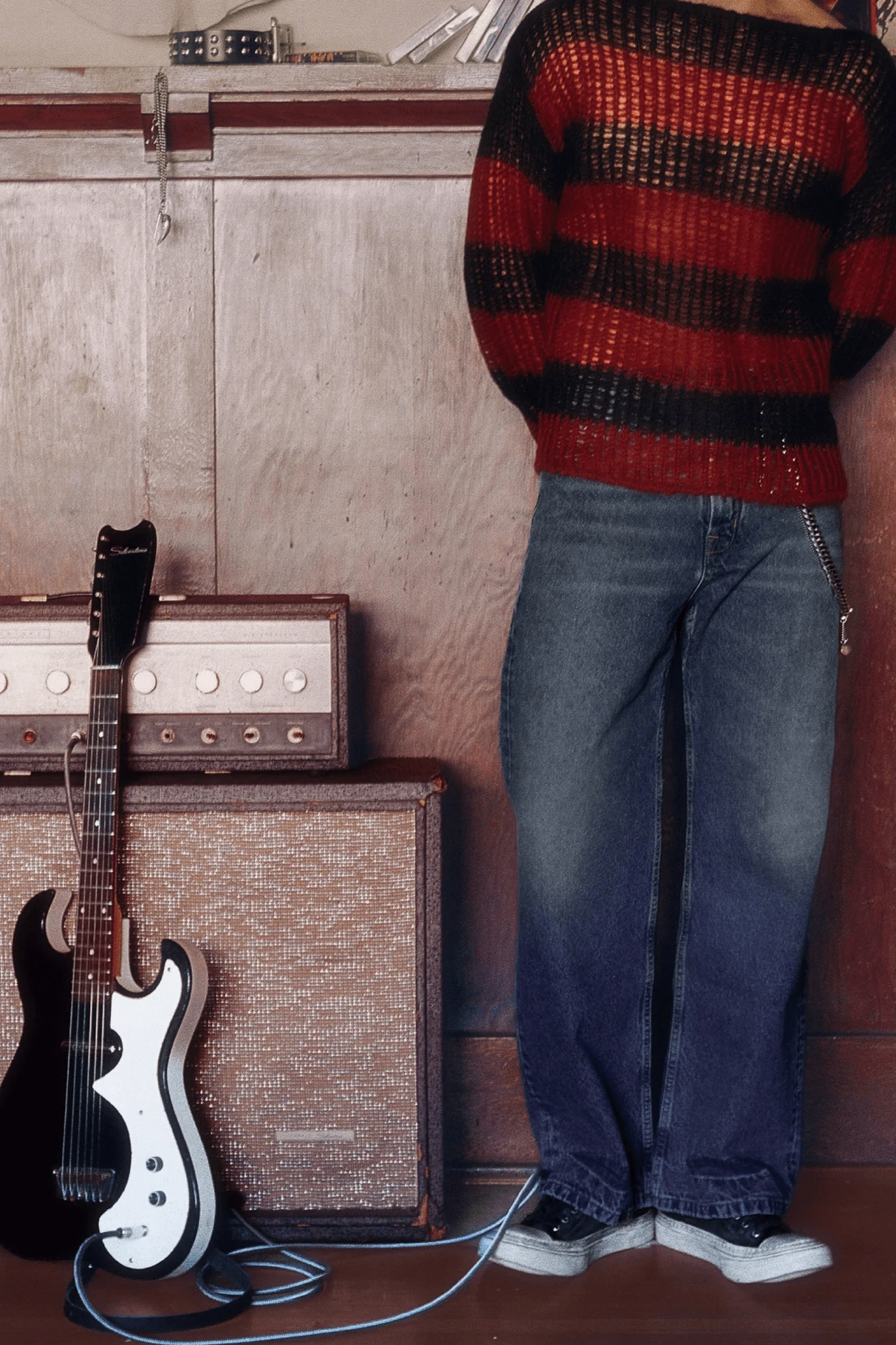
This is a fashion house known for working in silence: no logos, no slogans, collections that communicate through drape and shadow rather than text. Demeulemeester's entire design language, going back to the Antwerp Six years, has treated graphic statement as something to avoid. The brand's black leather has always carried meaning through cut, not caption. Putting Idol's own words directly onto garments, printing song titles where the house usually prints nothing, is the house borrowing a vocabulary it does not natively speak.
The linkup first surfaced when Idol wore pieces on the runway himself, ahead of the capsule's full reveal. That sequencing matters: the capsule exists because of an induction ceremony, a honor conferred by an American music institution onto a British punk veteran, and the clothing arrived as tribute rather than collection. Demeulemeester's prior collaborators have mostly come from inside fashion's own closed loop: other designers, other archives, other houses speaking the same structural language. Idol breaks that loop. He is not a design reference. He is a living subject whose entire career the capsule treats as source material, the way an archive house might treat a dead one.
The borrowing runs in one direction only. Idol gains a Belgian avant-garde pedigree attached to his induction moment, while Demeulemeester gains exposure to an audience built around a rock narrative rather than a fashion one. The house's usual tools, cut and shadow, still govern the Perfecto, but the jersey pieces hand communication over to Idol's own archive: his lyrics, his titles, his photographs. The label is translating, not originating.
That division explains why the capsule avoids limited-run theater. A graphic-heavy departure from a house that normally refuses text would, in another context, invite exactly that kind of staging. Instead the pieces sit in the regular web store, priced and merchandised alongside everything else Demeulemeester makes. The absence of ceremony signals that the house is not treating this as rupture. It is treating it as service, a capsule built to honor an occasion rather than to argue a point.
What results is a Belgian avant-garde label putting its craft in service of a mainstream rock narrative rather than an internal fashion conversation. The ten pieces sell through the brand's own web store, priced and merchandised like the rest of the line, with none of the limited-run theater that usually accompanies a graphic-heavy departure. Ann Demeulemeester has made a capsule that speaks plainly, for a brand built on refusing to. The jacket still leads. The words are new.