Amsterdam Dance Event runs its 30th edition from 21 to 25 October 2026. The numbers describe an institution, not a startup festival: over 3,000 artists, more than 200 venues, over 400 speakers across its ADE Pro conference track. The final headline speaker, confirmed by ADE's press office on 19 October, is Pasquale Rotella, founder of Insomniac and creator of Electric Daisy Carnival. His session, moderated by Billboard's Katie Bain, argues that rave culture's survival depends on building its own independent business ecosystem.
The institutional contradiction sits in plain sight. ADE is 30 years old. It did not emerge from rave culture's underground; it became the trade floor where that underground goes to do business, book agents, close distribution deals, and meet festival buyers. Three thousand artists and 200 venues is not a subculture holding its ground against industry capture. It is the industry.
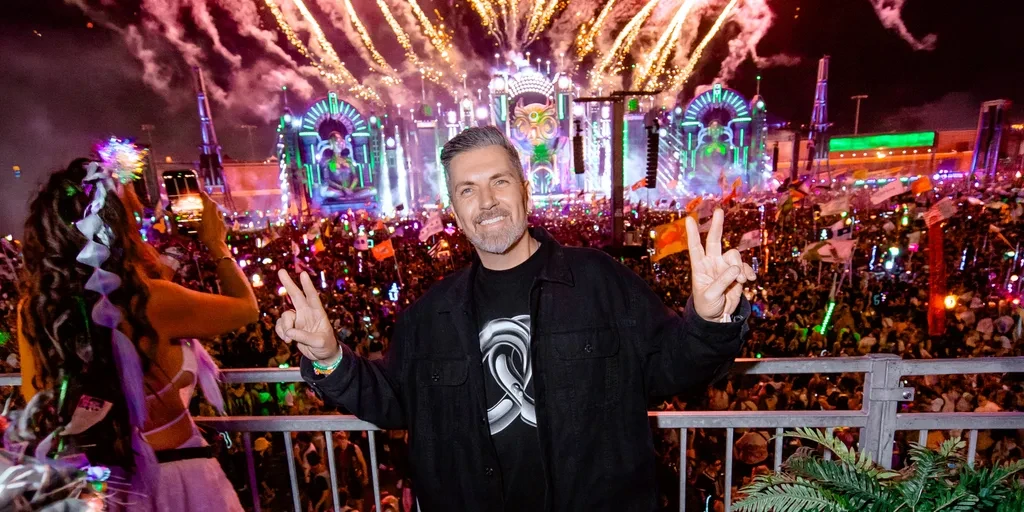
Rotella's own career maps the same arc he will be diagnosing on stage. Insomniac started as an underground party promotion outfit in Los Angeles in the early 1990s. It now operates Electric Daisy Carnival events across multiple continents and has been majority owned by a publicly traded entertainment conglomerate since 2013. The man booked to warn ADE's conference floor about corporate capture of rave culture runs one of the most corporatized rave businesses on the planet.
That is not a disqualifying irony. It is the only credible position left to speak from. A promoter who stayed fully independent for three decades would have no stage at ADE's scale to make this argument on, and no audience of festival buyers in the room who need to hear it. Rotella's session works precisely because he has lived both sides of the question he is now asking out loud.
The booking choice clarifies what ADE Pro's conference track actually sells. Over four hundred speakers and more than two hundred venues do not assemble themselves into a trade floor by accident. They assemble around the premise that the business of electronic music is worth discussing in public, with named moderators and press confirmation, rather than negotiated quietly between agents and festival buyers. Rotella's session is simply the most direct version of a conversation the conference exists to host.
Insomniac's trajectory under conglomerate ownership is the case study ADE's own framing invites. A promotion outfit that began without institutional backing now runs events across multiple continents under a public company's balance sheet. That path is not presented as a cautionary tale during the session; it is presented as evidence. The founder did not stay outside the system and critique it from a distance. He went all the way through it and came out the other side arguing for independent infrastructure anyway, which is a harder claim to dismiss than one made from outside the industry altogether.
ADE's own anniversary framing, 30 YEARS, sits on its homepage next to ticketing, a Pro login, and a startup accelerator track called ADE Startups. The conference that institutionalized electronic music's business side is now the venue where someone argues the business side needs to be rebuilt outside institutions like it. The closing keynote of ADE's 30th edition is scheduled for 25 October 2026.