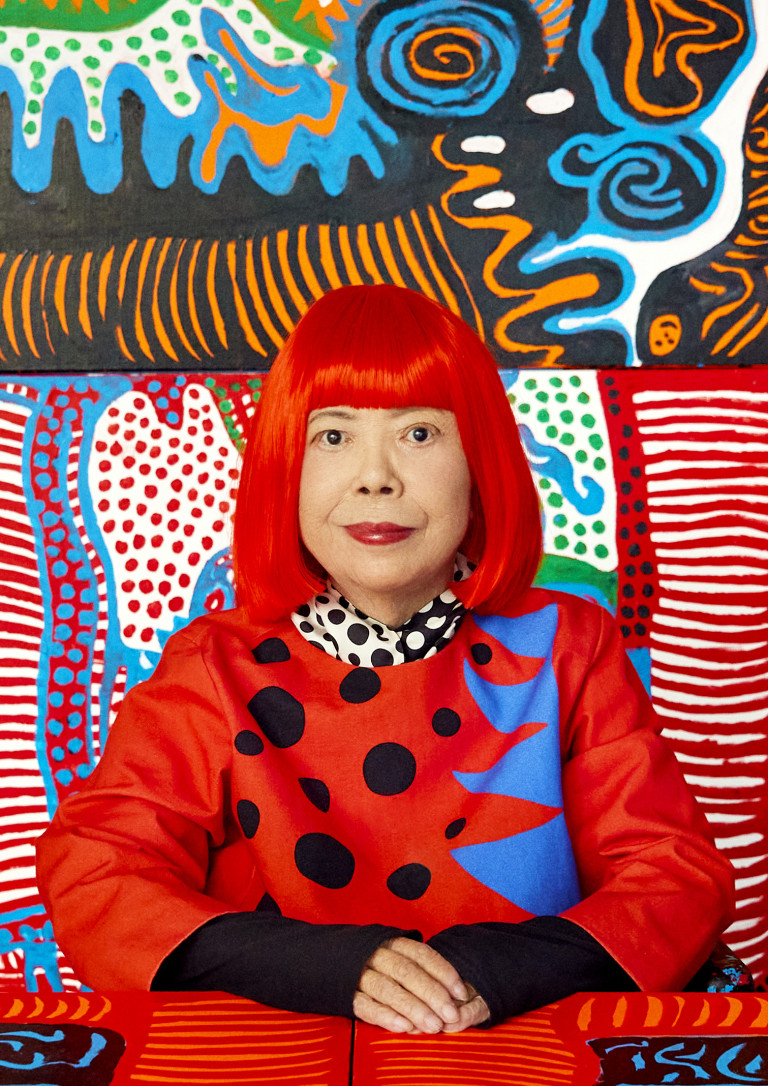
The Stedelijk Museum Amsterdam published a statement on 22 September 2026 mourning the death of Yayoi Kusama, describing a career of more than seventy years and calling her one of the most influential artists of her generation. The statement traces her biography carefully: born in Matsumoto in 1929, departure for New York in 1958, the polka dots, the pumpkins, the mirror rooms that dissolve the boundary between self, surroundings and infinity. It is the language of an institution marking the passing of an artist it has long claimed as one of its own.
That claim has a history worth dating. The Stedelijk's relationship with Kusama did not begin with this week's statement, and the museum knows it: its own release notes she was once active at the institution herself, a detail that anchors the mourning in something more specific than admiration from a distance. Earlier this year the museum wrapped its own building in a Kusama-inspired facade tribute on Museumplein, a decision made while she was alive and worked with, not after. The condolence statement is the third layer on top of two dated decisions: a facade commission, and, running now, a full survey exhibition inside the building itself.
The exhibition is the part the statement does not mention, and it is where the gap opens. Visitors posting this week describe arriving at the museum without a reservation and being unable to get in, some diverting to the Rijksmuseum gardens instead. One visitor wrote plainly that of course they should have booked ahead. That is not a complaint about the museum failing to plan. It is the opposite: the show has been running hot enough, for long enough, that walk-in access has effectively closed. The museum is not short of visitors wanting Kusama. It is short of Kusama capacity.
Set against the condolence statement, the sequence reads as an institution narrating loss in the register of biography while its ticketing system narrates something closer to demand management. The museum's own words describe Kusama's mirror rooms as spaces where boundaries between individual, environment and infinity vanish. The queue outside draws a much harder boundary: reservation or no entry. Neither the statement nor the visitor posts name this as a pattern, but it is one the Stedelijk has run before, most visibly with its Kusama facade earlier this year, a tribute staged for a living artist that the museum is now, in effect, staging again for a dead one, this time inside its own walls at capacity.
The museum's next dated decision is plain enough: extend the run past its current close date or move to timed-slot ticketing at scale, the kind of operational change a board typically confirms at a scheduled meeting rather than announces alongside a condolence statement. Until the Stedelijk makes that call, it is asking Amsterdam to grieve an artist it cannot currently get inside to see.