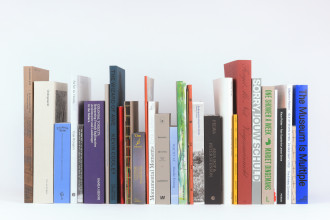
On 16 November the Stedelijk posted its jury selection for De Best Verzorgde Boeken 2025, the annual prize for Dutch book design that the museum has administered since 1925. This year: 281 submissions, two separate juries, 33 books chosen by each, eight titles where the panels agreed. One jury is professionals from book design, printing, and publishing. The other is six students drawn from the country's leading graphic design programmes. The museum's own language calls the combined result "an up to date image of developments within Dutch book design."

A century-old award administered by the museum that just drew queues for a Kusama retrospective and ran condolence programming after her death is not, on its face, a contradiction. But set next to what else the Stedelijk has done with design this year, it reads less like a footnote and more like infrastructure. The museum put out a Camiel Fortgens t-shirt as merchandise this year, not as a gift shop afterthought but branded explicitly as a Stedelijk collaboration. It staged a full collection rehang in December 2025. It is, in the same twelve months, running a mass-attendance blockbuster and a specialist jury whose own organisers describe its audience in terms of "vakjury" and "studentenjury": professionals and students, not visitors.
That is the gap worth naming. A hundred-year-old graphic design jury is specialist vocabulary in its purest form: typesetting decisions, binding choices, paper stock, argued over by people who make books for a living and six students who will. None of that vocabulary survives contact with the museum's public identity, which is painting, sculpture, and whichever name draws the ticket line that quarter. The Stedelijk's annual report will mention De Best Verzorgde Boeken in a paragraph. Its press calendar will mention Kusama in a headline. The jury has run every year since long before any current exhibition opened and will run again next November, judged this time by whichever design schools send representatives then. The specialist practice is not shrinking into the mass-market museum identity. It is sitting underneath it, undisturbed, the way it has for a hundred years, waiting for the next 281 submissions to arrive.
The Stedelijk's next dated test of this pattern arrives next November, when De Best Verzorgde Boeken 2026 either gets a press line of its own, separate from whatever blockbuster is filling Museumplein at the time, or folds quietly into the museum's newsletter the way the 2025 selection did. A hundred years of precedent says it folds in.