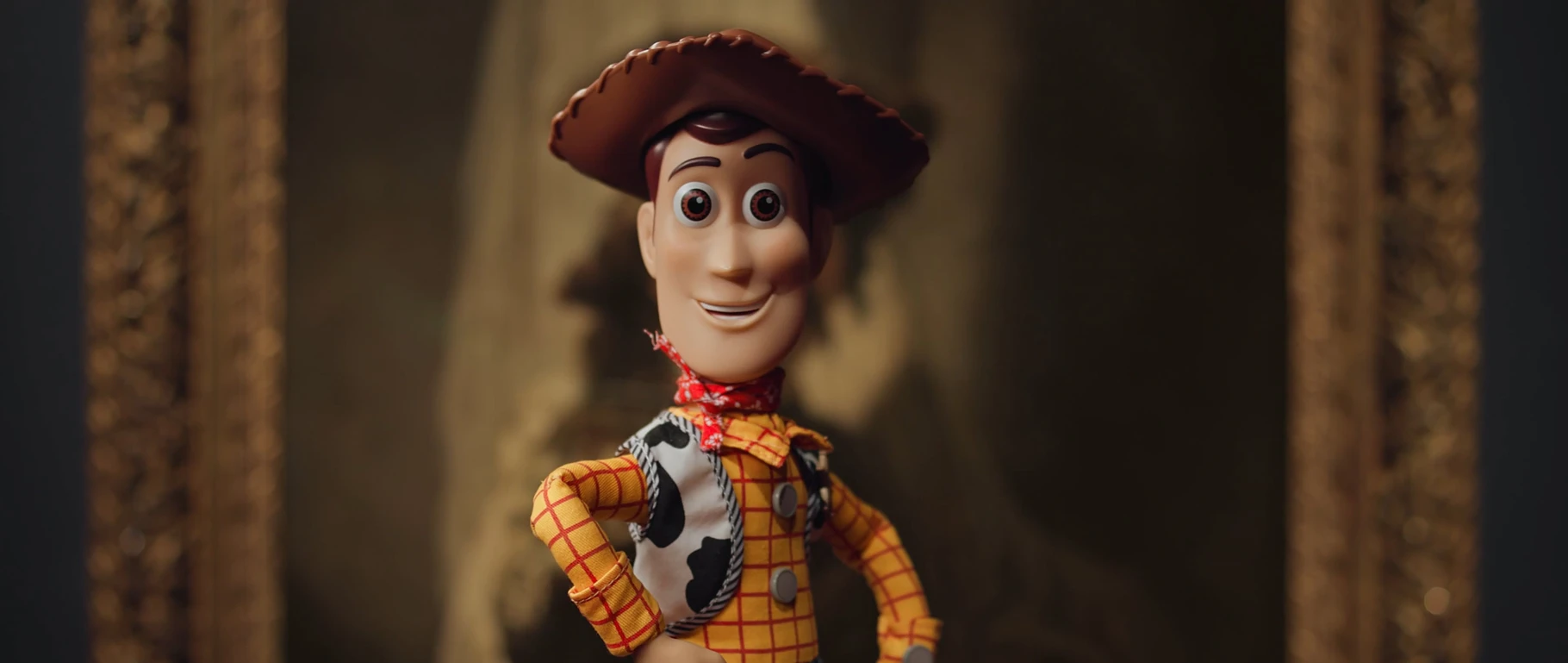
The Rijksmuseum announced this week that life-sized Toy Story figures will occupy positions throughout its galleries for the summer of 2026, a family-focused initiative that places Woody, Buzz Lightyear, and other Pixar characters in direct visual dialogue with works by Vermeer, Rembrandt, and Frans Hals. The installation runs through the school holiday period, with figures positioned to draw younger visitors deeper into the permanent collection rather than confining them to a dedicated children's wing.
The programme represents a shift in how the museum addresses its youngest audience. Previous family offerings centred on activity trails, audio guides with simplified commentary, and weekend workshops held in education spaces away from the main galleries. The Toy Story figures invert that logic: the entertainment property enters the sacred rooms, and the child follows. A Buzz Lightyear stands near the Gallery of Honour. A Woody appears in the seventeenth-century domestic scenes corridor, his cowboy silhouette a deliberate echo of the genre painting behind him.
The Rijksmuseum has long balanced its role as custodian of Dutch heritage with the commercial realities of visitor numbers. Annual attendance figures have hovered around 2.7 million since the 2013 renovation, with international tourists comprising the majority. But summer months bring a different demographic: Dutch families on school holiday, often seeking climate-controlled spaces in a city where July temperatures now regularly exceed thirty degrees. The museum's challenge has been to convert that foot traffic into genuine engagement with a collection that can feel remote to a seven-year-old.
Disney and Pixar partnerships are not new to European museums. The Louvre hosted a Delacroix exhibition in 2018 with tie-ins to the animated short attached to Coco. The V&A's 2017 Pink Floyd retrospective used immersive staging that borrowed heavily from theme park design. But the Rijksmuseum's approach is more structurally integrated: the characters are not in a separate exhibition with a ticketed supplement. They are in the collection, unannounced on wall text, encountered as you round a corner toward The Milkmaid.
General director Taco Dibbits has spoken in recent years about the museum as a space for encounter rather than instruction. The Toy Story programme extends that philosophy toward a demographic that institutional surveys consistently show as underserved: children aged four to ten, and the parents who would otherwise default to the Van Gogh Museum's sunflower selfie or skip Museumplein entirely for the zoo. The Rijksmuseum is betting that a plastic cowboy can do what wall labels cannot: hold attention long enough for the painting to register.
The drift here is from heritage institution to experience provider, a territory the museum has historically ceded to commercial attractions. ARTIS, the Heineken Experience, and the recently opened AMAZE immersive venue in Houthavens all compete for the same summer afternoon. By importing recognisable characters, the Rijksmuseum acknowledges that the frame of reference for its youngest visitors is set elsewhere, and chooses to meet them inside that frame rather than demand they leave it at the door.
The programme's success will be measured in dwell time and repeat visits, metrics the museum has been tracking with increasing granularity since its heat-mapping studies began in 2019. If a child stops at Woody, looks up, and sees the Vermeer behind him, the institution will count that as a win. If the child photographs Woody and walks past the Vermeer, the question of what the museum is for becomes harder to answer.
The figures come down in September. The board meets in October to review summer programming and decide what, if anything, returns for 2027.