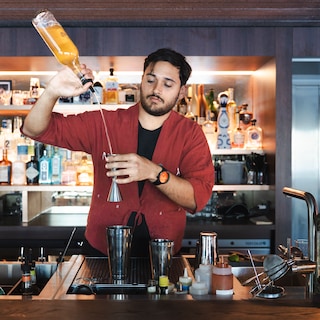
The signature drink at Nido, a cocktail bar that opened last autumn on Linnaeusstraat in Amsterdam-Oost, is built from cheesecake crust. Not a flavour note. The actual discarded bases from a neighbouring bakery, reprocessed into a syrup that anchors the bar's most-ordered pour. It sounds like a gimmick. In practice, it represents a structural shift: the zero-waste kitchen philosophy that reshaped fine dining a decade ago is now migrating into bar programmes, and Nido is the first Amsterdam venue to make it the entire operating premise.
The drift here is categorical. Restaurants like De Kas and Instock built their reputations on closed-loop sourcing and ingredient reclamation, turning food waste into a kitchen discipline. But bar culture in Amsterdam has remained largely untouched by that logic. Cocktail menus still run on imported syrups, single-use garnishes, and supply chains that treat waste as someone else's problem. Nido inverts the model. Every drink on the menu begins with a discard: citrus peels from juice bars, overripe fruit from market vendors, bread ends from bakeries. The kitchen scraps become the flavour architecture.
The location matters. Oost beyond the Dappermarkt has never functioned as a nightlife corridor. The foot traffic is residential, the retail is practical, and the hospitality options have historically been neighbourhood cafes rather than destination venues. Nido is betting that a strong enough concept can pull traffic east, the same wager that worked for wine bars in De Pijp before the area became saturated. The early returns suggest it is working. Weekend reservations fill days in advance, and the crowd skews younger and more intentional than the typical neighbourhood drop-in.
What makes the zero-waste bar model harder than the zero-waste kitchen is consistency. A restaurant can adjust a menu around available scraps, writing dishes to match supply. A bar needs repeatable recipes. If the cheesecake-crust syrup tastes different every batch because the source bakery changed its butter ratio, the drink falls apart. Nido's solution is a flavour-profiling system borrowed from coffee roasting: every incoming scrap is tasted, logged, and blended to hit target flavour markers. It is more lab than bar back, and it requires a level of process discipline that most cocktail programmes do not attempt.
The pricing tells its own story. Cocktails at Nido run €14 to €17, in line with hotel bars and high-end cocktail rooms in the centre. The waste-sourced ingredients do not translate into a discount; they translate into margin. The bar is not selling sustainability as a concession. It is selling it as a premium, and customers are paying.
The question is whether the model scales. A single bar can build relationships with a handful of suppliers and manage the variability. A second or third location would require either centralised processing or a tolerance for inconsistency that undercuts the concept. For now, Nido is not discussing expansion. The focus is on proving that a bar can run entirely on what others throw away, and that Amsterdam will treat that as a reason to visit rather than a curiosity to read about.
The neighbourhood is already adjusting. Two cafes on the same block have started sourcing spent coffee grounds from Nido for their own compost programmes, creating a micro-loop that did not exist six months ago. It is a small shift, but it suggests that the drift is not confined to a single venue. Zero-waste hospitality is moving from kitchen to bar to neighbourhood, one discarded cheesecake crust at a time.