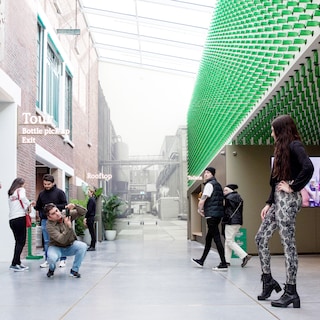
The Heineken Experience opened in 2001, converting a 19th-century brewery into a brand museum. Twenty-five years later it ranks among the most visited paid attractions in the Netherlands, drawing north of 1.2 million visitors annually. The overwhelming majority arrive with rolling suitcases and Schiphol boarding passes. Amsterdammers, the people who live within cycling distance of the Stadhouderskade entrance, almost never go.
This week Heineken announced free admission for Amsterdam residents through the summer, framed as an anniversary gesture. A spokesperson told Het Parool, "Our roots are here." The roots are real. Heineken brewed on this site from 1867 to 1988. But roots and relevance are different problems, and the free-entry offer is an admission that the brand museum has become functionally invisible to its own neighbourhood.
The preference gap is structural. Brand museums sit in an awkward category for locals: too corporate to feel like culture, too static to revisit, too associated with the tourist economy to seem worth the trip. Amsterdammers walk past the Heineken Experience the same way New Yorkers walk past the Statue of Liberty. Proximity breeds indifference. The Experience knows this. Its programming, pricing, and marketing have always targeted inbound tourism, because that is where the volume lives.
Free admission does not close a preference gap. It relocates the friction. A resident who did not value the Experience at €23 is unlikely to value it at zero, because price was never the obstacle. The obstacle is cultural: the Experience reads as a tourist product, and that reading is self-reinforcing. The more tourists queue, the fewer locals bother. The fewer locals bother, the more the Experience optimises for tourists.
What free entry might do is create a permission structure. Amsterdammers who felt vaguely curious but never curious enough to pay now have an excuse to satisfy that curiosity without buying into the tourist ritual. The anniversary framing helps: it reframes the visit as a civic act rather than a consumer one. Whether that reframing survives contact with the gift shop is another question.
The deeper issue is what the Experience is actually offering. A brewery tour frozen in the 1980s competes poorly with the living beer culture now scattered across the city, from craft taprooms in Noord to natural-wine bars in Oost. Heineken's own product has drifted toward premium in export markets while remaining a default lager at home. The Experience tells a heritage story, but heritage is not the same as relevance.
At 25 years the Heineken Experience is no longer a new attraction. It is an institution, with an institution's complacency and an institution's belated recognition that local legitimacy matters. The free-entry offer is a start. Whether it becomes more than a summer stunt depends on what the Experience builds next, and whether it can imagine a room that Amsterdammers would actually want to return to.