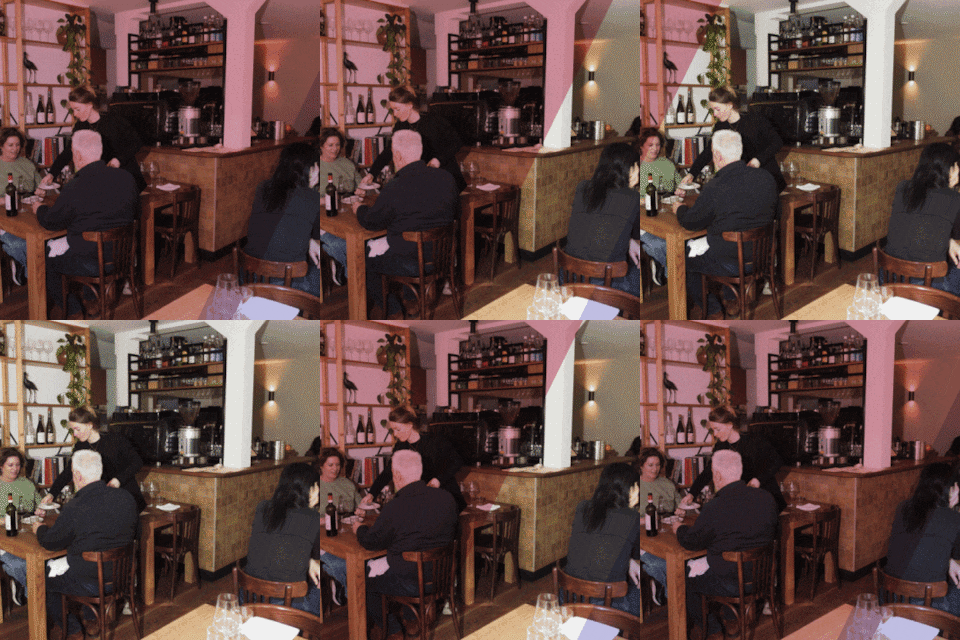
The formula that made De Kas a twenty-year reservation problem is not proprietary. It is pedagogical. The greenhouse restaurant in Frankendael park trained a generation of Amsterdam cooks in a specific religion: produce grown metres from the pass, menus that flex daily, front-of-house scripts built around agricultural storytelling rather than wine-list theatre. Vuurtoreneiland, the island restaurant accessible only by ferry, extended the same logic to even more controlled conditions. Now two alumni of that system have opened De Poldervogel in Nieuw-West, and the city's critical and reservation infrastructure has not yet registered the move.
The chef spent formative years at De Kas. The gastvrouw came through Vuurtoreneiland. Both cite the same operational conviction: hospitality is memory-making, and memory-making begins with legible sourcing. De Poldervogel inherits that framework but relocates it to a district where the nearest comparable room is a fifteen-minute cycle away. Nieuw-West has grocers, has bakeries, has Surinamese and Moroccan kitchens with multi-generational customer bases. It has not had a restaurant that speaks the greenhouse-produce language pioneered in Watergraafsmeer and exported to an island in the IJ.
The lead-time pattern here is structural, not promotional. De Kas itself opened in 2001 and spent years as a local secret before English-language press discovered it. Vuurtoreneiland followed the same arc, a ferry-dependent destination that filled seats through word of mouth long before it appeared on international lists. De Poldervogel is replicating the conditions of that early phase: a room staffed by trained operators, a location outside the tourism corridor, a name that does not surface in aggregator SEO. The Parool profile this week is the first media marker. The Michelin and Gault&Millau cycles are months away.
What distinguishes this move from a standard alumni opening is the geographic bet. De Kas alumni have previously opened in Oost, in Zuid, in Centre. Nieuw-West is different. It is the densest district in the city by population, the youngest by median age, and the least represented in English-language dining coverage. A restaurant that imports the De Kas framework to Nieuw-West is not simply extending a lineage. It is testing whether the produce-forward, memory-forward model translates outside the established fine-dining corridor.
The answer will take a year to read. Reservation pace, repeat-visit ratio, neighbourhood integration, critical notice. For now, De Poldervogel is operating in the lead-time window that defined its antecedents: known to the local network, invisible to the international one, running the playbook before the scorekeepers arrive.