Zara released Re{form} Vol. 1 on 2 October 2026. The collection is genderless. Every garment in it started as a previous Zara product, pulled from stock and reconstructed by John Galliano using couture dismantling and reassembly technique. Steven Meisel shot the campaign.
Hypebeast described the mechanics plainly: "the inaugural drop sees archival Zara garments dismantled, distorted, and reconstructed through high-end tailoring methods." That sentence contains the contradiction the release does not name. Couture technique exists to slow production down: pattern cutting, hand finishing, single-garment attention. Zara exists to speed production up. Industry reporting has for years placed Zara's design-to-shelf cycle at two to three weeks, among the fastest in apparel. Re{form} Vol. 1 takes garments built on that two-week cycle and runs them backward through a process built on the opposite premise.
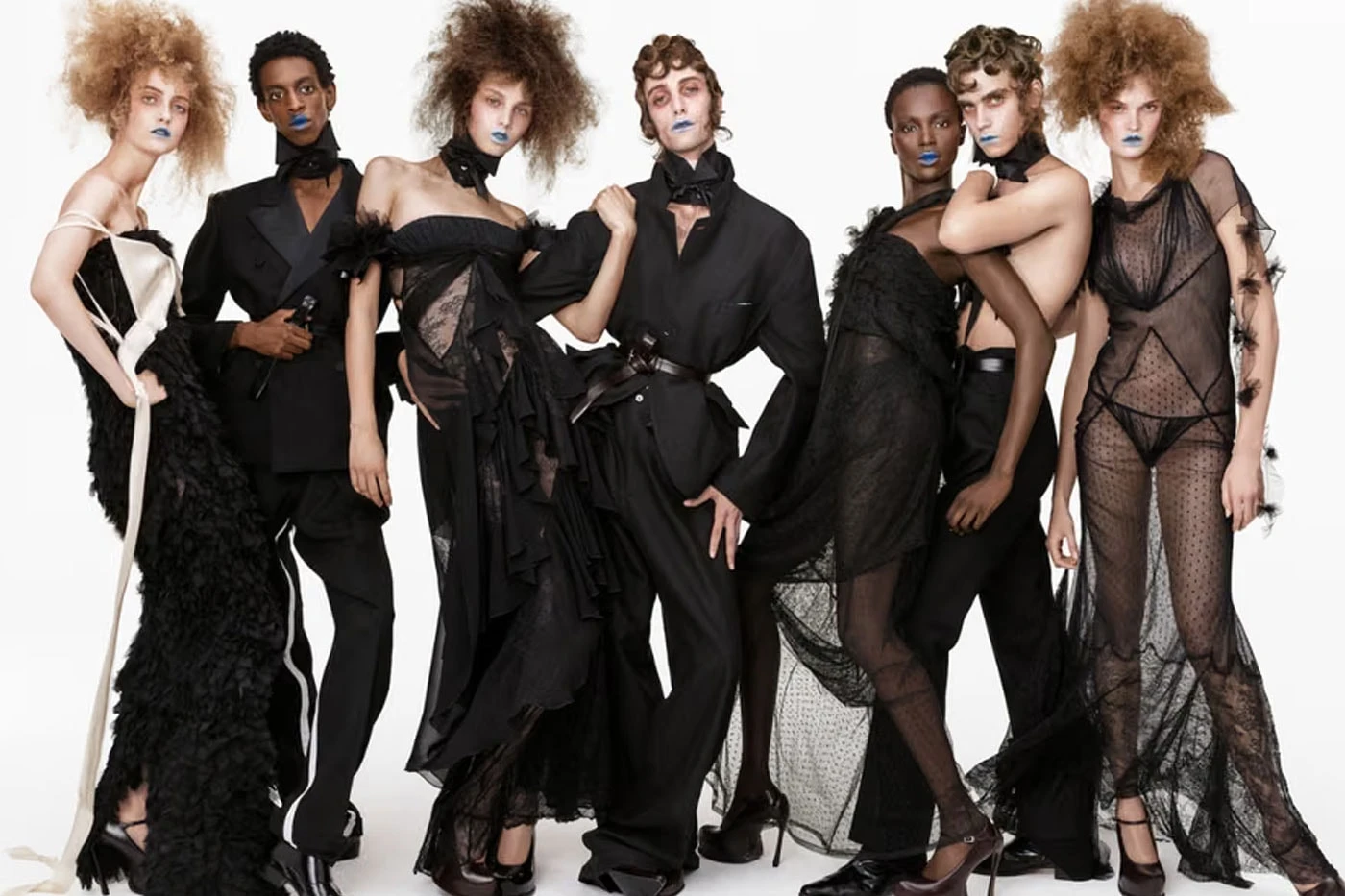
Galliano's own career record makes the pairing legible rather than strange. He built his reputation at Dior and later Maison Margiela on exactly this kind of archaeological garment work: cutting into existing cloth, exposing the seams of a prior construction, letting the history of the material show. What changes here is the source material. At Margiela, the base garment was often found, vintage, or anonymous. At Zara, the base garment is traceable to a specific SKU, a specific season, a specific fast-fashion run. The couture process is identical. The object it is performed on is not.
The release frames this as elevation: fast fashion treated with slow-fashion respect. The operational record shows a transfer in the other direction. Zara is not slowing down to meet couture. Zara is importing couture's vocabulary, Meisel's camera, Galliano's name, onto a production base that remains built for volume and speed. The two or three week cycle that generated the source garments has not changed. Only the garments pulled out of that cycle for this specific drop have been treated differently.
The contradiction holds even inside the single drop. Each garment in Re{form} Vol. 1 carries two timestamps at once: the week it was originally produced on Zara's ordinary cycle, and the day Galliano's dismantling and reassembly turned it into something else. Couture technique cannot erase the first timestamp. It can only sit on top of the second one, which is why Hypebeast's own description, dismantled, distorted, reconstructed, reads as a sequence of operations performed on an object rather than a redefinition of what the object is.
Galliano's record at Dior and Maison Margiela established that cutting into existing cloth to expose a prior construction is a legitimate couture method. What that record does not establish is that the method changes the nature of the cloth it is applied to. A found or anonymous vintage garment carries no production calendar attached to its name. A traceable Zara SKU does. Running the same technique over both does not collapse that difference, it just makes the difference harder to see in a single campaign image shot by Steven Meisel.
So the operational transfer described in the body runs one way only. Couture vocabulary, Galliano's name, and Meisel's camera move onto Zara's production base. Zara's production base does not move toward couture. The two or three week cycle keeps generating stock on schedule, and Re{form} Vol. 1 pulls from that stock rather than replacing it.
Re{form} Vol. 1 is dated 2 October 2026. The underlying Zara production calendar that generated its raw material is dated every two to three weeks, indefinitely, before and after it.