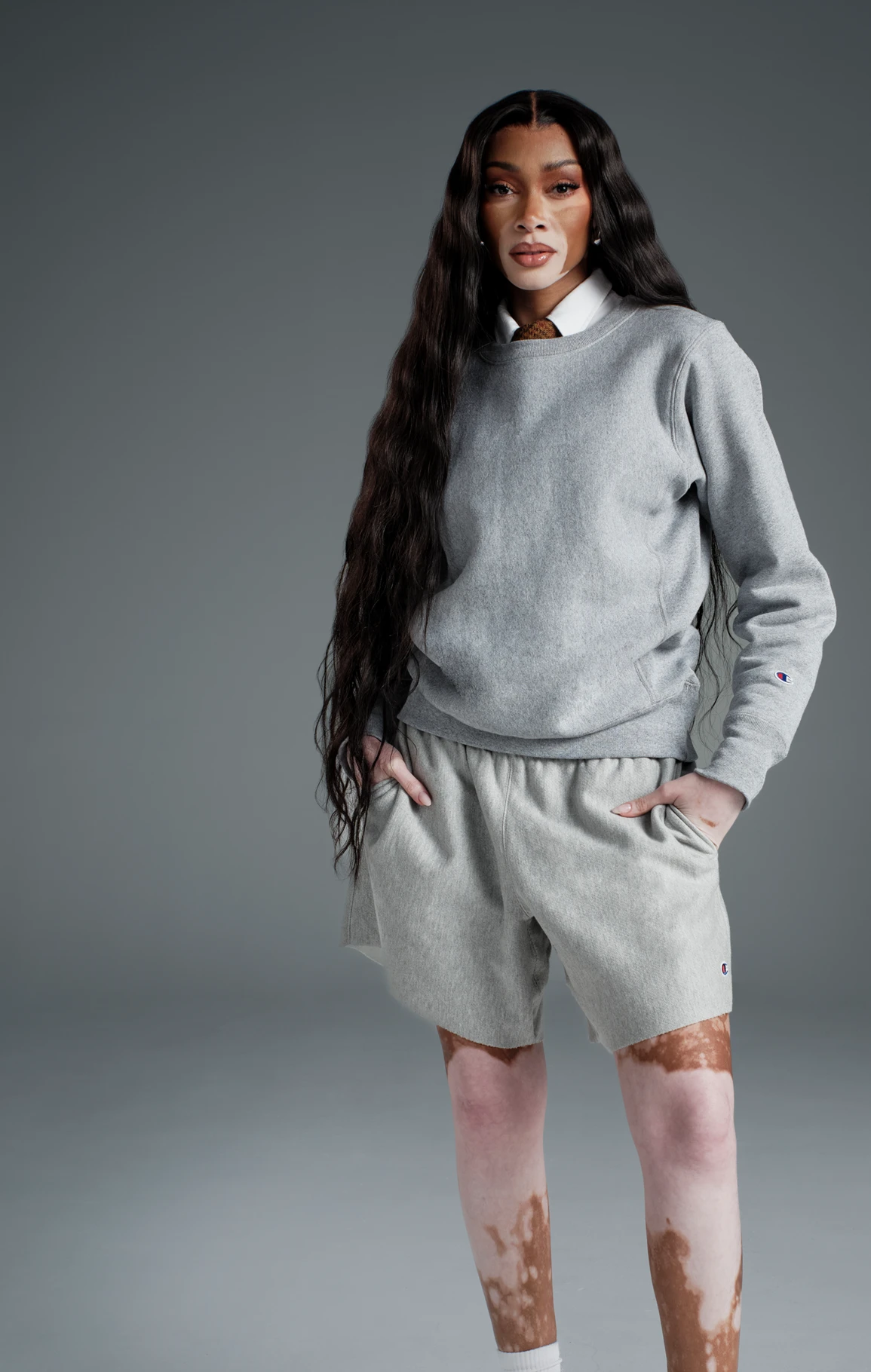
The fleece on a Reverse Weave sweatshirt is cut sideways. Champion engineered the construction in the 1930s so the fabric would shrink along its width instead of its length, a detail that has nothing to do with style and everything to do with a factory floor solving a durability problem. Ninety years later, that same horizontal cut is the canvas WACKO MARIA has chosen for its first collaboration with the brand, dropping October 31 as a five-style capsule of sweatshirts, hoodies and sweatpants.
WACKO MARIA is Tokyo tailoring with a reputation built on loud rayon bowling shirts, tattoo-flash graphics and a house style that reads as half vintage Americana, half yakuza film wardrobe. Champion is a mass retail staple sold in big box stores and college bookstores across the United States. Putting the two together is not an obvious pairing on paper, and the five-style scope, modest by collaboration standards, suggests both sides treated this as a controlled first outing rather than a full statement collection.
The graphics come from TIM LEHI, an artist whose linework already sits comfortably in both worlds: skate culture on one side, the airbrushed custom-car and tattoo aesthetic WACKO MARIA trades in on the other. That choice of collaborator is doing quiet work here. It lets a Tokyo label graft its visual language onto a garment whose entire identity is American gym-class utility, without the result reading like a licensing exercise.
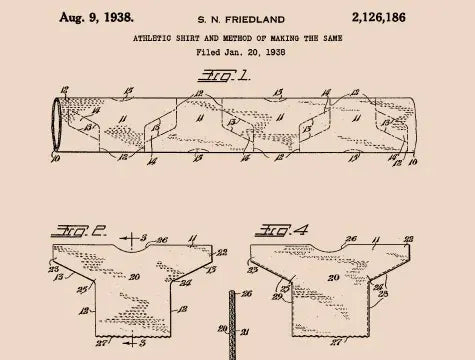
Champion has done dozens of collaborations over the decades, mostly with streetwear labels that already speak its visual dialect: bold block type, varsity colorways, a straight read of American collegiate style. WACKO MARIA does not speak that dialect. It speaks in paisley, snakeskin print and Año Nuevo-style airbrush work, and the fact that Champion let a 1930s construction method serve as the shared language instead of forcing a shared aesthetic is the more interesting decision than the garments themselves.
The choice to let a construction method carry the collaboration rather than an aesthetic is worth sitting with. A silhouette can be licensed and reprinted endlessly without touching what made it durable in the first place. By anchoring the project in the horizontal cut instead of in varsity colorways or block type, WACKO MARIA and Champion sidestepped the usual collaboration shorthand entirely.
That also explains why TIM LEHI was the right connector rather than a compromise. His linework does not ask Champion to become something it is not, and it does not ask WACKO MARIA to soften its airbrushed, tattoo-adjacent house style either. It sits between skate culture and custom-car aesthetics, which is exactly the gap a Tokyo tailoring label and an American gym-class staple needed bridged.
Five styles, one factory-floor detail from 1930, and a Tokyo label that has never needed to borrow American varsity signifiers before now. This capsule belongs to the growing category of workwear-grade basics getting reauthored by labels that have nothing to do with the original utility, and everything to do with what the fabric now signals on a different body.