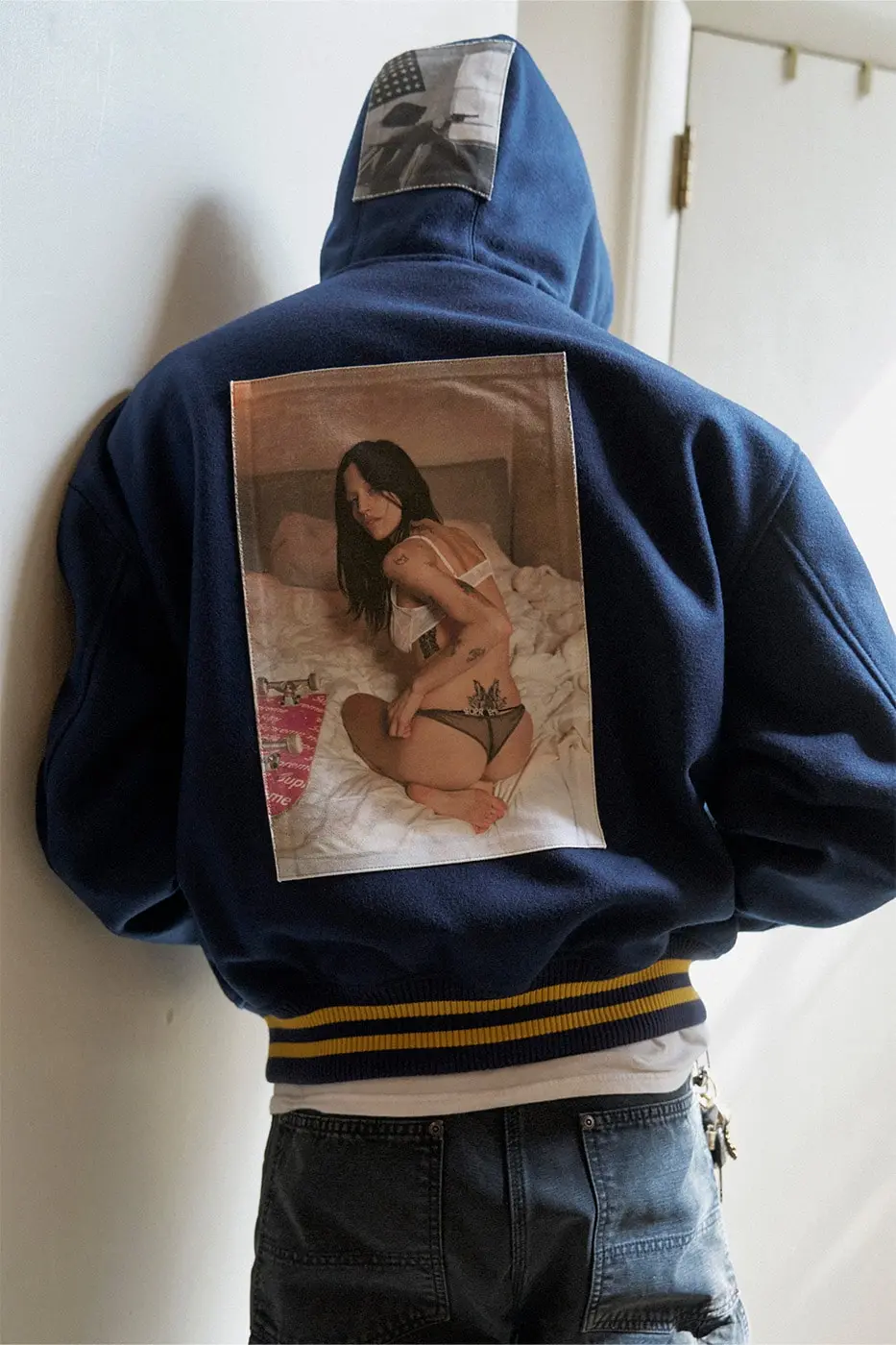
The bean bag is the detail that gives it away. A hooded varsity jacket carries a black and white still from a photograph taken in Tulsa, Oklahoma, sometime before most of the people buying this jacket were born. A sequin raglan catches light the way the original prints never could. And then there is furniture, upholstered in the same imagery, sitting in the corner of a Supreme fitting room like a coffee table book that decided to become load bearing.
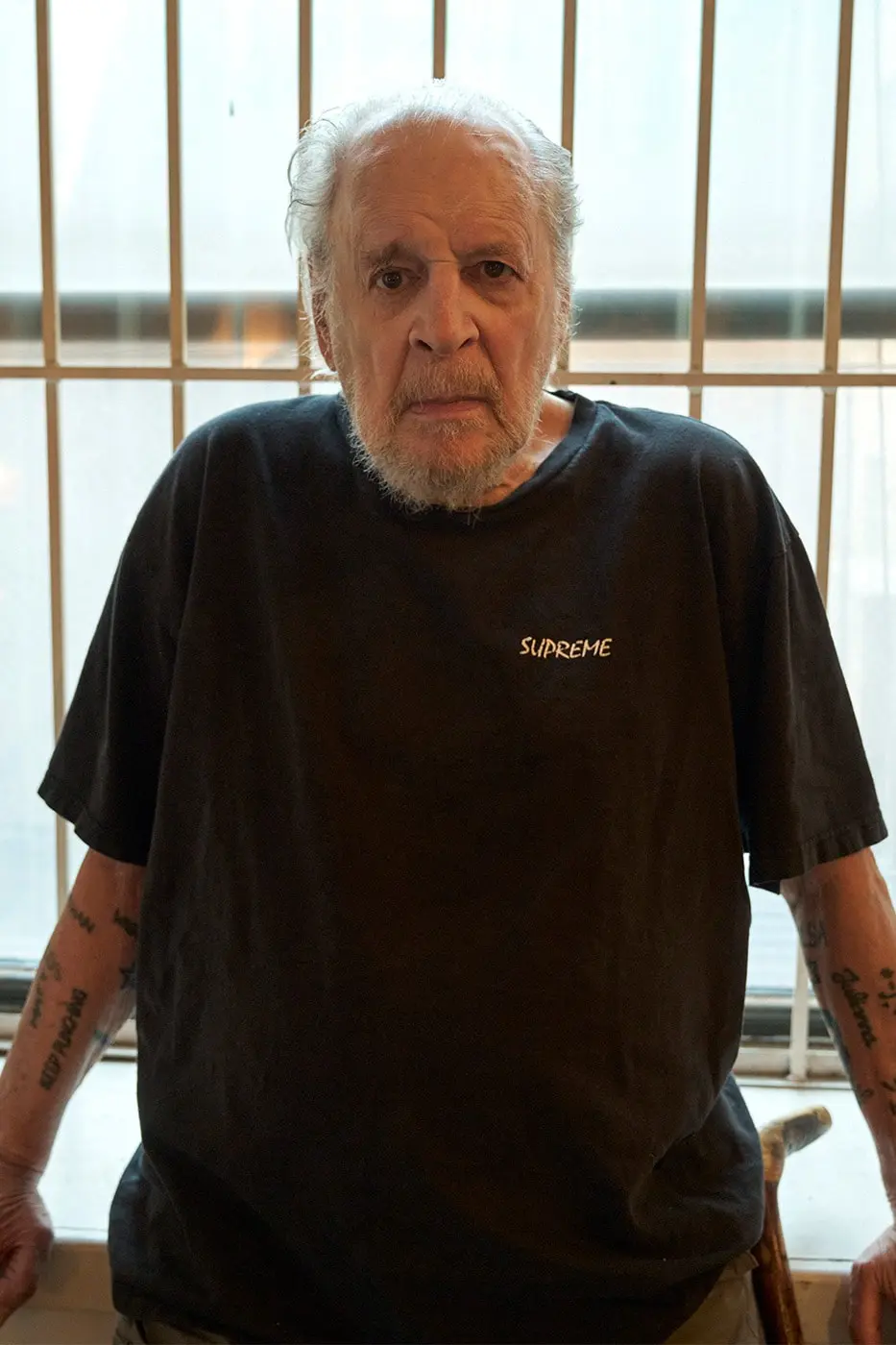
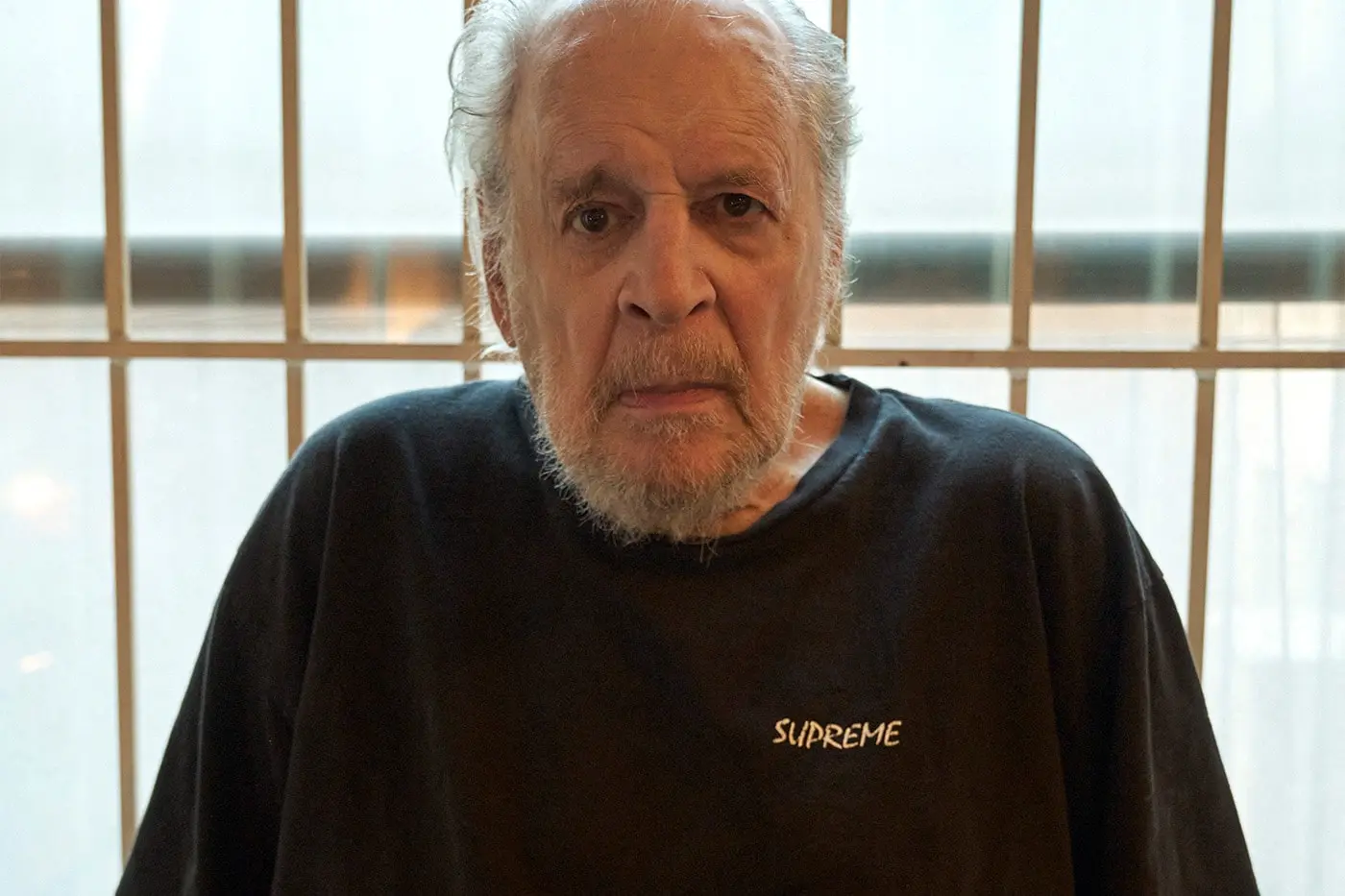
Larry Clark shot Tulsa across the late 1960s and early 1970s: teenagers, needles, guns, a series of images so raw that when the photobook finally published in 1971 it circulated as much through art school libraries as it did through court cases about obscenity. Clark went on to direct Kids in 1995, a film that got the NC-17 treatment and became a flashpoint for what American cinema was allowed to show minors doing on screen. This is not incidental biography. It is the material Supreme has now put on a zine sold next to a skate deck.
What makes this drop different from a one-off artist tee is the relationship underneath it. Supreme and Clark have worked together on and off for more than thirty years, since the label's earliest days sourcing skate and photography culture from downtown New York and Los Angeles. Clark's imagery has appeared on Supreme decks going back to the brand's first decade. The new collaboration is not an introduction, it is a renewal, the kind of long marriage that gets treated like breaking news every time it resurfaces because streetwear coverage tends to flatten every collaboration into a single transactional moment.
The category question is what Clark's work is now doing inside a retail calendar. Tulsa and Kids were built to disturb, to sit uncomfortably next to the institutions that regulate what counts as acceptable image-making. A hooded jacket does not disturb. It retails. The photographs have not changed, but the frame around them has: from gallery wall and censorship hearing to a September drop date with an Asia release two days behind the global one, following the same logistics as any other capsule. Clark's whole career depended on institutions refusing him easy access; Supreme's whole business model depends on granting that access on a schedule.
None of this makes the drop dishonest. Clark is a credited, compensated collaborator, and the apparel reads as archival tribute rather than erasure. But three decades in, Tulsa has become something closer to a design language than a document: a set of images whose original charge is now legible mainly as texture, deployed the way a heritage mill print gets deployed on a workwear jacket. The Supreme collaboration will sell out before most of its buyers open the accompanying zine. Larry Clark's most confrontational body of work has become apparel merchandising, and it took thirty years and one bean bag to get there.