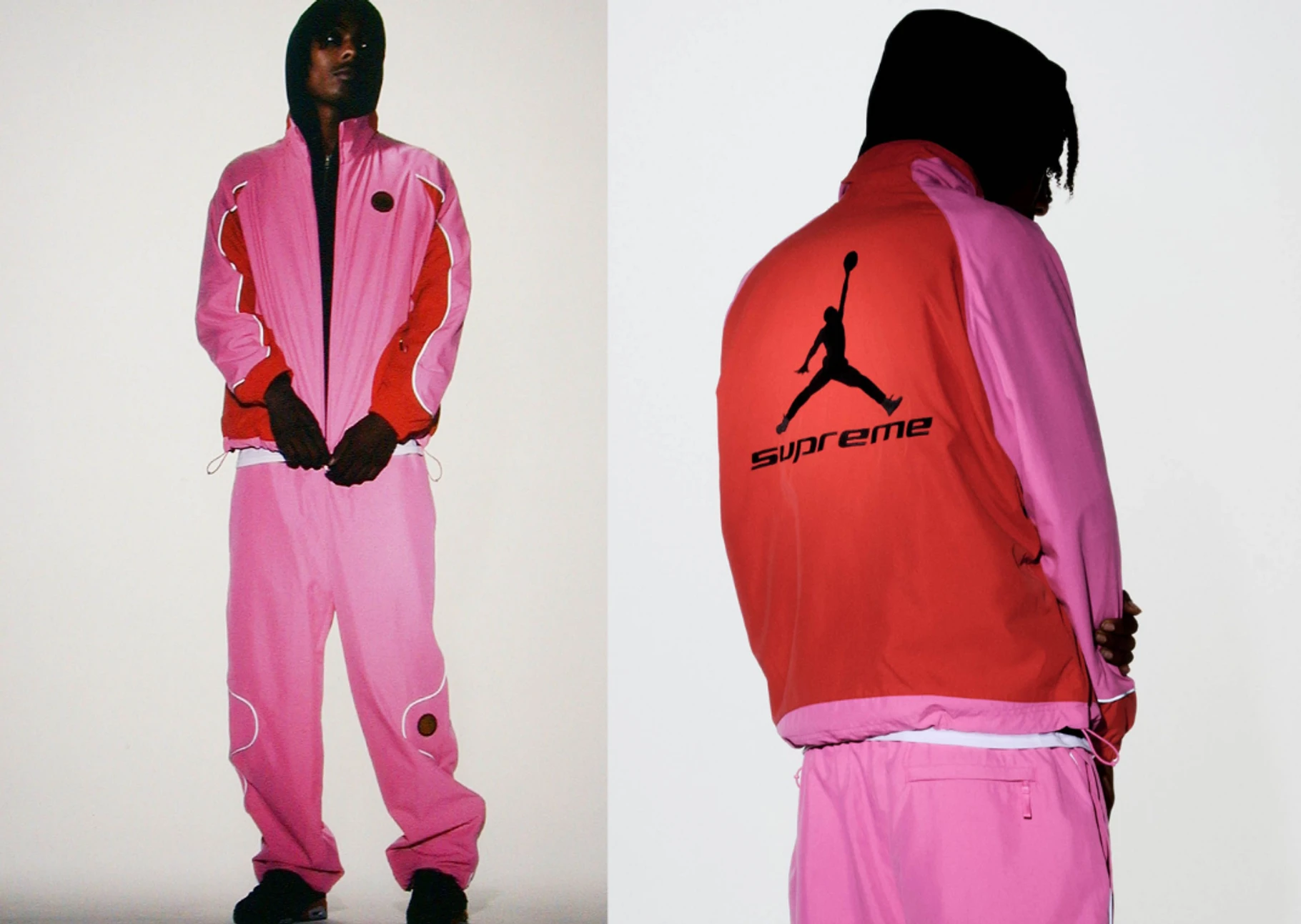
Supreme and Jordan Brand have released collaborative footwear since 2015, beginning with the Air Jordan 5 and continuing through multiple silhouettes over the following decade. Each sneaker drop followed a familiar pattern: limited quantities, instant sellout, resale premiums that often tripled retail price within hours. The formula was so reliable it became shorthand for how streetwear collaborations were supposed to work.


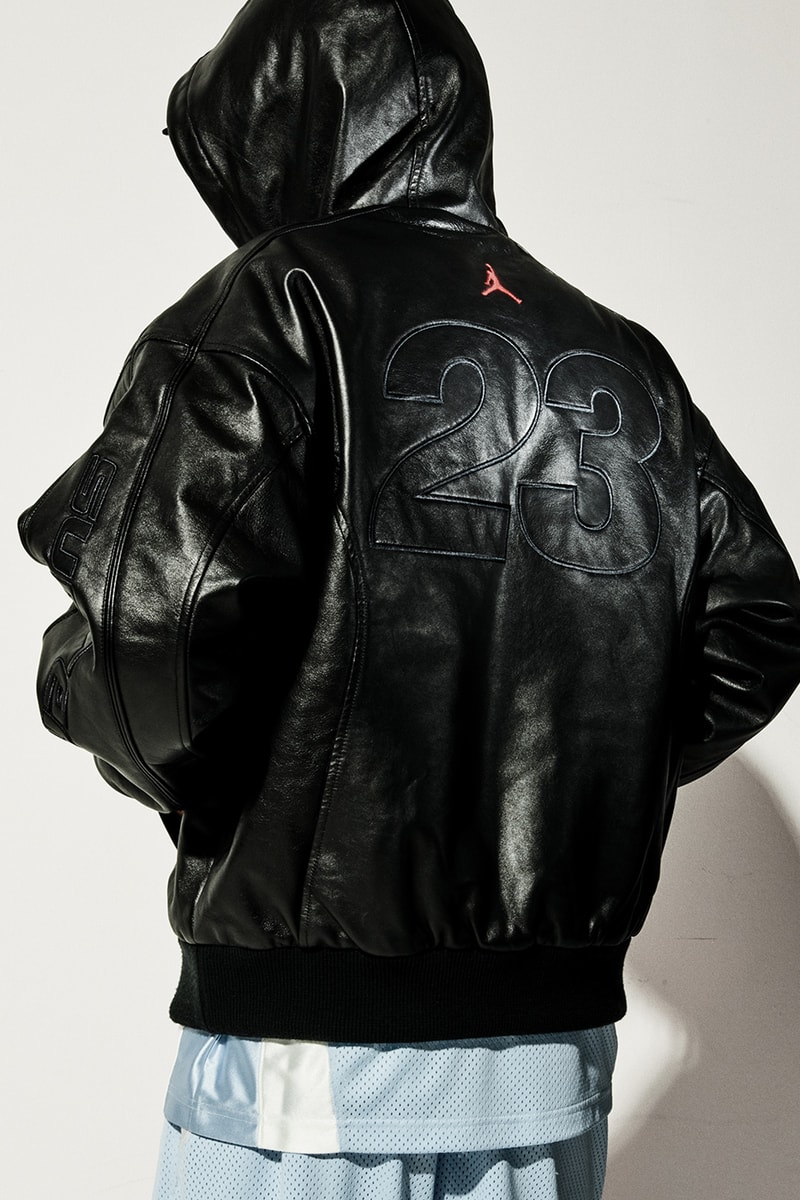
The Spring 2026 capsule abandons that formula entirely. For the first time in the partnership's history, there are no shoes. The collection consists solely of apparel: a hooded leather jacket, track jacket, jersey, zip-up hoodie, track pants, and basketball shorts. The pricing runs higher than previous apparel drops, with the leather jacket positioned as the centerpiece. But the absence of footwear is the actual statement.
This is a bet on where demand actually lives. Sneaker collaborations generate headlines and drive foot traffic, but the economics have shifted. Resale platforms have matured, authentication has become commoditized, and the arbitrage that once defined limited footwear releases has compressed. A Jordan 5 that sells out in seconds still generates revenue, but the cultural return on that investment has diminished. The conversation has moved.
Apparel operates differently. Margins are typically higher on cut-and-sew pieces than on footwear, where Nike's manufacturing complexity and Jordan Brand's licensing structures take a larger share. A leather jacket can be produced in smaller quantities at higher price points without triggering the same logistical burden as a global sneaker launch. The math favors this pivot.
There is also a question of cultural positioning. Supreme's audience has aged. The brand's core demographic, which once lined up outside Lafayette Street for box logo tees, now has disposable income for premium outerwear. A $1,200 leather jacket speaks to that customer more directly than another sneaker lottery. Jordan Brand, for its part, has been expanding its lifestyle positioning beyond performance basketball, and apparel collaborations with fashion partners signal that ambition more clearly than footwear alone.
The absence of sneakers also changes the conversation around the drop itself. Footwear collaborations are covered primarily as commerce events: release date, retail price, resale projection, sellout time. Apparel collaborations, particularly at this price tier, invite discussion of design, materials, and silhouette. The hooded leather jacket becomes an object to evaluate rather than a lottery ticket to win.
This matters for how both brands are understood. Supreme has spent years defending its relevance against accusations that the VF Corporation acquisition diluted its credibility. Footwear collaborations, while commercially successful, reinforced the perception that the brand was now primarily a vehicle for hype cycles. An apparel-only capsule at elevated price points repositions Supreme as a design house rather than a drop machine.
Jordan Brand's calculation is different but complementary. The Jumpman has been extending into lifestyle territory for years, but most of those moves have been internal: Jordan apparel lines, Jordan lifestyle footwear, Jordan-branded retail spaces. A collaboration with Supreme that leads with apparel rather than sneakers signals that the brand sees its future in wardrobing, not just performance product.
Whether the market agrees remains to be seen. The footwear collaborations sold out because the resale floor was predictable. Apparel resale is less liquid and more dependent on condition, sizing, and styling. A leather jacket that sits at retail tells a different story than one that sells out in minutes. But Supreme and Jordan are betting that the story they want to tell has changed.