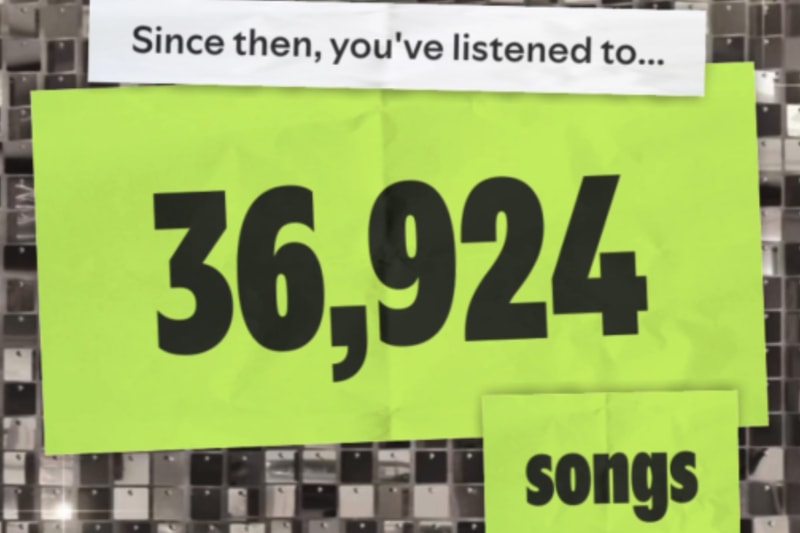
Spotify has launched a feature called "Spotify 20: Your Party of the Year(s)," a mobile experience that allows users to view their complete listening history since account creation. The rollout coincides with the platform's twentieth anniversary and includes metrics previously unavailable to users: their first streamed song, exact account creation date, and total minutes spent on their most-played artists. Users also receive a 120-track playlist of their all-time most-played songs and a set of shareable digital cards designed for social posting.
The feature arrives at an interesting moment in Spotify's relationship with its user base. The company has spent the past two years navigating creator payment disputes, podcast strategy reversals, and persistent questions about its per-stream compensation model. Artist-facing sentiment has shifted measurably negative in that period, with multiple high-profile catalogue removals and ongoing criticism from independent musician advocacy groups.
What the lifetime stats feature offers is not a response to those criticisms but a redirect. By surfacing the depth of a user's personal archive, Spotify converts what is functionally a data retention practice into an emotional artifact. The first song you ever streamed. The total hours with your favorite artist. These are not metrics that inform any practical decision. They are metrics that create attachment.
The shareability design is equally deliberate. Wrapped, Spotify's annual listening recap, has become one of the most reliably viral content formats in social media, generating millions of unpaid impressions each December. The lifetime edition extends that mechanic across a longer timeline, offering users content that feels more personal because it covers more years. The implicit message is not "look what you listened to this year" but "look how long you have been here."
This is a preference-shaping exercise dressed as a celebration. The user who sees their ten-year Spotify history visualized in shareable cards is not being shown data for their own planning purposes. They are being shown data that makes leaving the platform feel like abandoning a record. The switching cost is no longer just playlist migration. It is now identity erasure.
Whether this works depends on whether users experience the feature as a gift or a reminder. The distinction is thinner than Spotify might prefer. A decade of listening data is, after all, a decade of data collection, and the cards that make it shareable are also the cards that make it visible. Twenty years of platform operation is a long time. Long enough, apparently, to bet that nostalgia outweighs scrutiny.