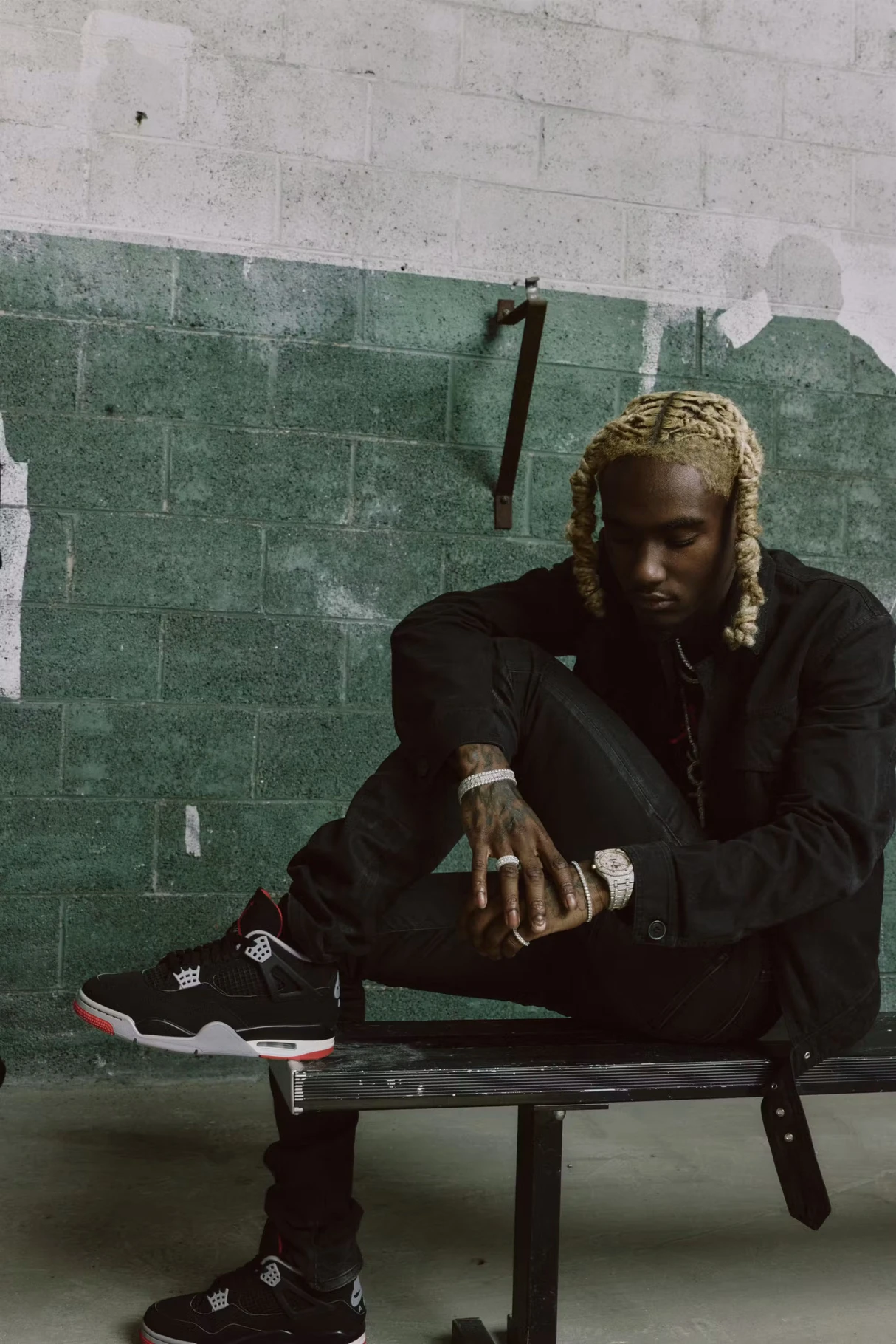
The mechanism is simple and it has worked for a decade: tell a crowd that there are a limited number of free sneakers somewhere in the room, and watch what happens to the room. At OsamaSon's show at Terminal 5 in New York this week, the DJ did exactly that, directing the floor toward a merch booth stocked with Jordan 4s. Fans ran. People were trampled. Stereogum reported the incident directly, noting that OsamaSon's team had been promoting the sneaker giveaway ahead of the show as part of the concert's draw.
This is the retail drop mechanism, relocated. The queue-camp-and-rush dynamic that built around physical sneaker releases, StockX resale spikes, and SNKRS app draws has a fifteen-year history of producing crushes, fights, and occasional injuries outside stores. What is new here is the venue. A general-admission concert floor is not a storefront with barricades, security lanes, and a known capacity. It is a crowd already packed tight and already in motion. Introducing a scarcity trigger into that physical context imports retail's worst failure mode into a space that was never built to contain it.
You have seen this shoe trigger lines before, outside Flight Club, outside Nike SNKRS pop-ups, outside Supreme on a Thursday. The mechanism by which presence becomes a stampede is not mysterious: scarcity announced to a dense crowd with no orderly distribution plan converts desire into physical velocity, and velocity in a packed room becomes a casualty report. What made sneaker-release crushes containable, when they were containable, was infrastructure built specifically around that risk: timed entry, numbered tickets, store staff trained for crowd control. A concert production team handling a merch giveaway is not that infrastructure, and the DJ's live instruction removed what little structure existed.
Nike and Jordan were not the organizers of the show and bear no operational responsibility for how the giveaway was staged. But the brand's product remains the object around which the incident organized itself, which is the pattern worth watching. Sneaker scarcity has moved from retail doorsteps into unrelated cultural venues, carried there by artists and promoters looking to borrow its pull, without carrying along any of the crowd-control infrastructure that made it survivable in its original setting.
Promoters attaching sneaker giveaways to general-admission shows now have a visible cost. The next tour stop that runs the same stunt without a distribution plan turns this from an isolated incident into a touring-circuit habit.