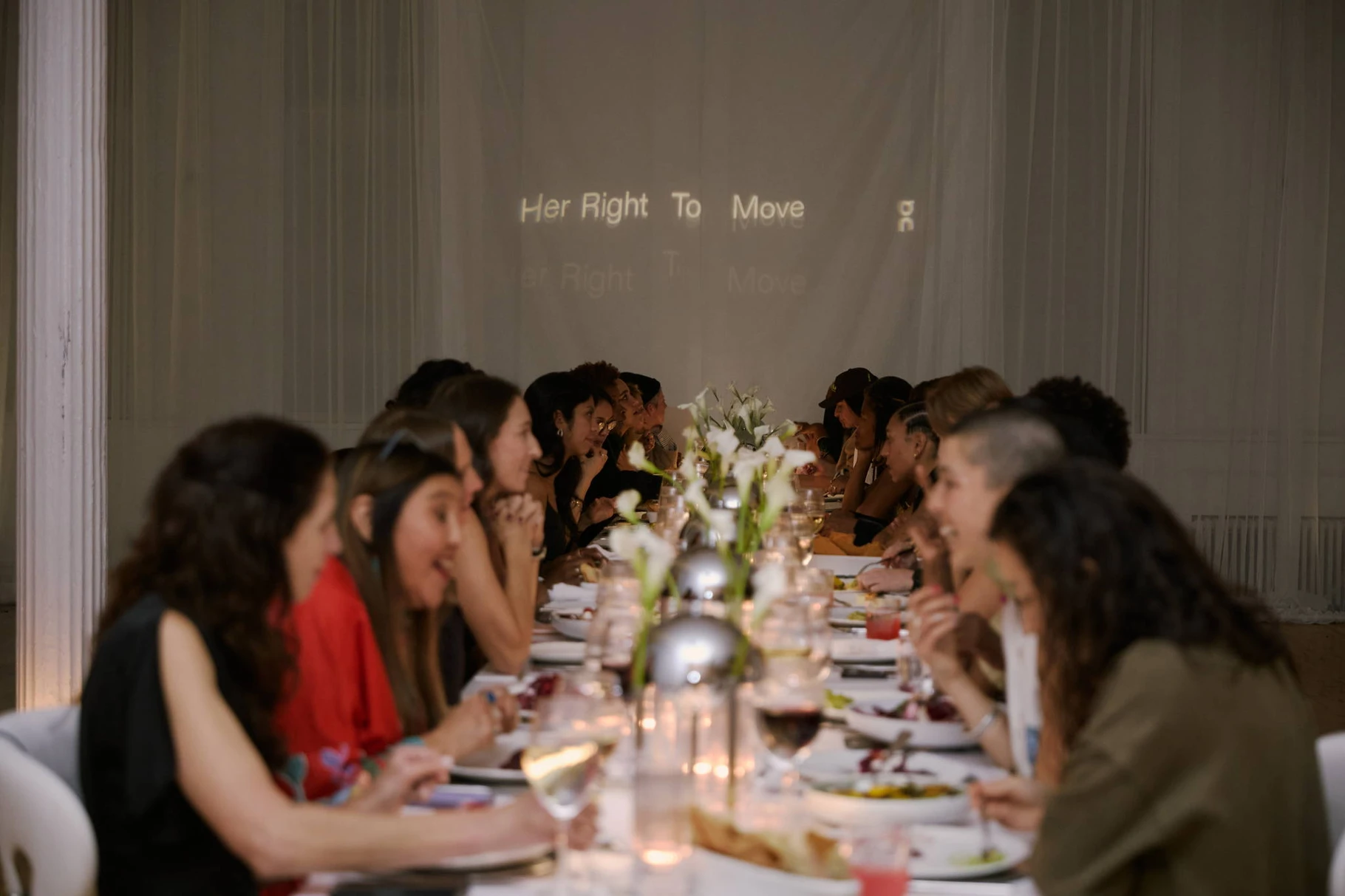
On's press release names the mechanism directly without naming it as a mechanism: dinners, community runs, and local partnership funding, the kind of spend that shows up in no highlight reel and converts no one watching a marathon broadcast. The brand calls the initiative Her Right to Move. The date is 19 November 2026, and the activity described, a run and dinner event in New York among them, sits nowhere near the podiums where On has spent the past two years accumulating medals through its elite athlete roster.
You have seen this shoe on a world record holder's feet at a major marathon. That image does the work of building awareness fast and cheap, a single photo finish carrying a brand name to millions of viewers who will never buy a performance racing shoe. Grassroots funding does the opposite work, slower and more expensive per person reached, aimed at building actual purchase habit among people who run three times a week in a local park rather than people who watch running on television twice a year.
The mechanism On is betting on here is straightforward: elite visibility builds the name, grassroots funding builds the habit, and a running brand that only invests in the first eventually discovers it is famous among people who buy someone else's shoes. On has spent heavily on the visibility side, sponsoring an entire athletics roster under the OAC banner and racking up medal counts at major championships this year alone. Her Right to Move is the other half of that ledger, aimed specifically at a demographic, women runners at the community level, where presence in elite sponsorship rosters has historically lagged far behind participation rates in the sport itself.
Running participation data across most national running associations has shown women making up the majority of recreational runners for several years running, while elite sponsorship rosters and gear marketing have stayed disproportionately built around male professional athletes. A grassroots program that funds dinners and local runs is a cheap way to close that gap on paper, but it only converts to preference if the women funded this month are still wearing On in twelve months, after the funding event has ended and the only thing left is the shoe itself.
Watch On's retail sell-through data in women's categories specifically over the next 90 days. If grassroots funding is converting to actual purchase preference rather than just goodwill, the brand's women's line should show measurable share gains in its Q1 2027 retail reporting, not just attendance numbers at the dinners themselves.