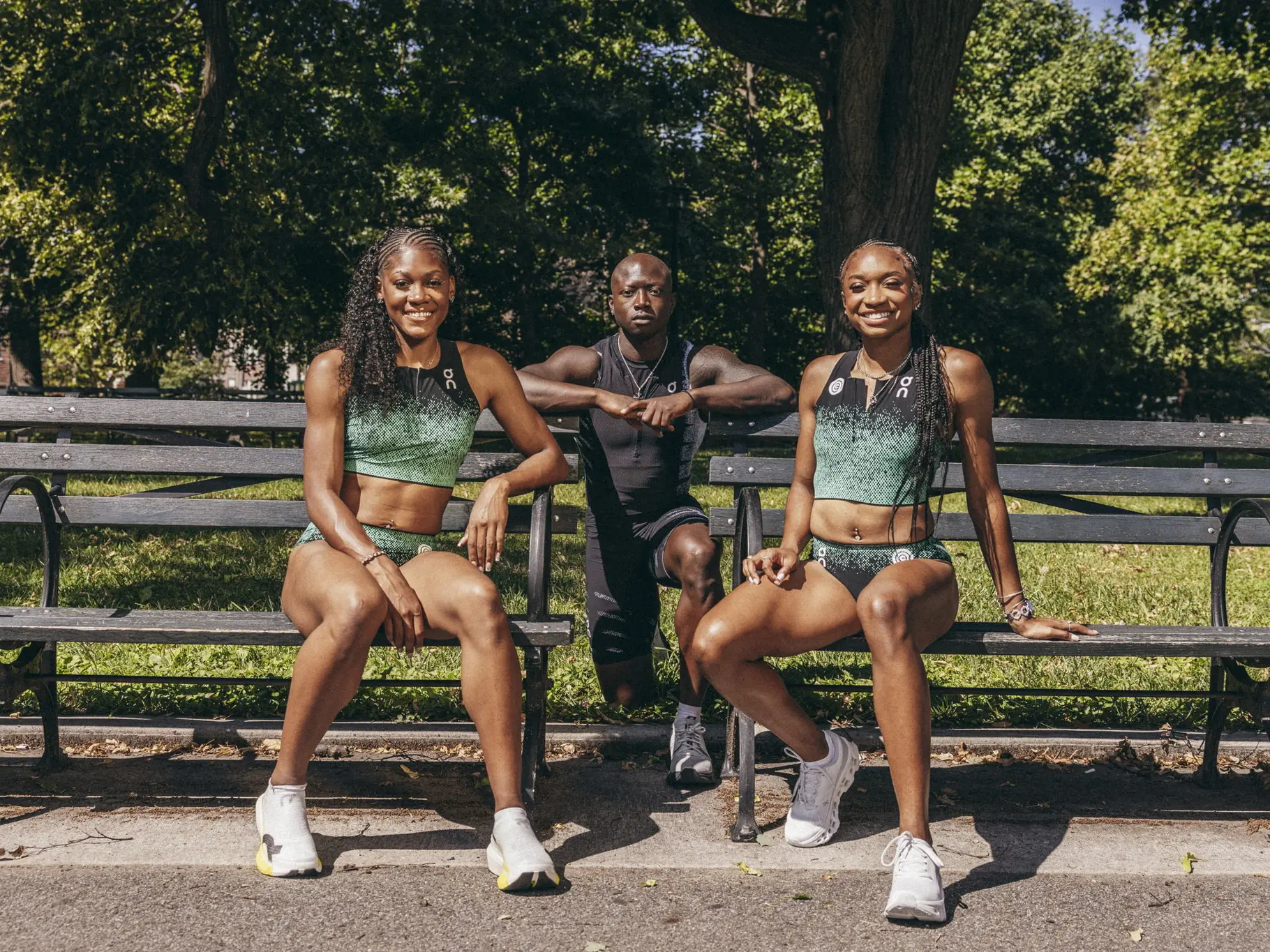
On announced three additions to its Athletics Club sprint program on August 21: T'Mars McCallum, Camryn Dickson, and Aaliyah McCormick. None of the three carries the name recognition of a Sha'Carri Richardson or a Noah Lyles. That is the mechanism worth naming here: a sports brand converts athlete presence into consumer preference not by signing the athlete everyone already wants, but by signing the athlete a following will want in eighteen months, before the price of that preference goes up.


This is roster-building as inventory, not roster-building as headline. On has spent the past eighteen months collecting seven medals at the European Championships and putting FKA Twigs in a campaign titled around the word unwind, both moves aimed at people who already know the brand. Adding three sprinters who have not yet won anything a general sports audience would recognize is aimed at a different clock: the clock that runs on athlete development, not marketing calendar. You have seen this shoe before it had a name, worn by someone before they were anyone, and that gap between when the brand commits and when the culture notices is where the actual value gets created.
The math is straightforward once you see it: track sponsorships are cheap relative to marquee basketball or football deals, and a sprinter's stock can move fast if a single season goes right. On is not betting that these three athletes are already preferred. It is betting that presence, established now at low cost, becomes preference later at a cost the brand will not have to pay again. The roster expansion reads less like an athletics department update and more like a venture allocation, spread across three names instead of concentrated in one.
Consider what the European Championships medals and the FKA Twigs campaign have in common: both spend against an audience that has already decided to pay attention to On. Signing McCallum, Dickson, and McCormick spends against an audience that has not decided anything yet, which is precisely why the cost is lower now than it will be once one of them breaks through on a Diamond League track or an NCAA final.
That is also why the move reads as inventory rather than headline. A medal count or a celebrity campaign proves a brand has arrived. A roster addition of largely unknown sprinters proves a brand is willing to wait, and waiting is the part of brand-building that never generates a headline on the day it happens, only in the season after.
Spreading the bet across three names instead of one sprinter also softens the downside the venture framing implies. If presence does not convert to preference for McCormick, it might still convert for Dickson or McCallum, and the Athletics Club roster absorbs that uncertainty the way any allocation spread across multiple names is designed to.
Watch the Diamond League and NCAA outdoor circuits over the next 90 days. If any of the three sprinters places at a marquee meet before next May, On's roster strategy will look prescient rather than incidental, and the gap between this quiet Friday announcement and the eventual highlight reel will be the clearest evidence yet of how the brand times its bets.