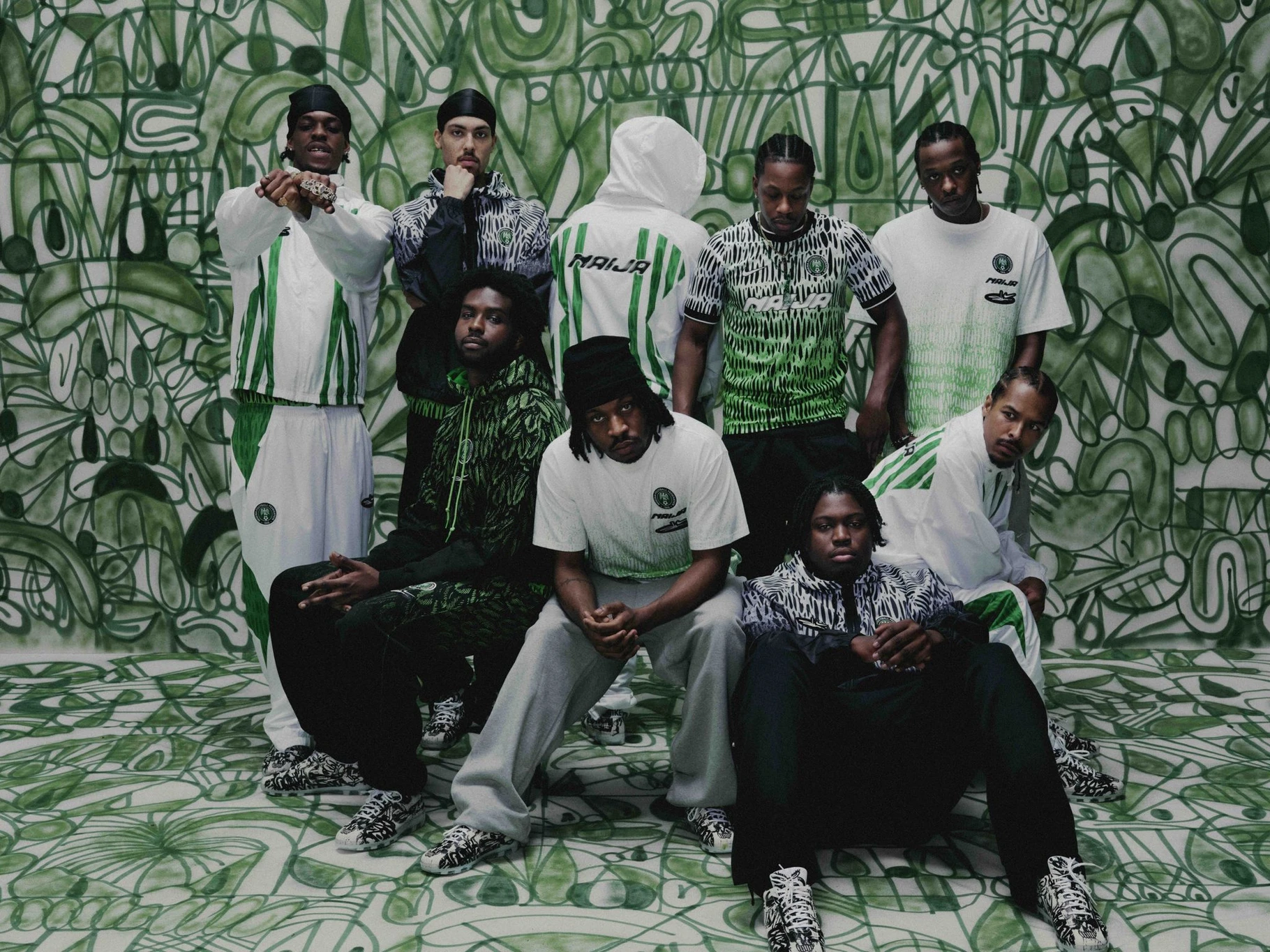
The Nigeria national football team will not appear at the 2026 FIFA World Cup. The Super Eagles failed to qualify, eliminated in the CAF third round last autumn. Nike is releasing a special-edition third kit for them anyway.
The jersey, designed by London and Lagos-based artist Olaolu Slawn, features bold "NAIJA" chest branding and an all-over pattern built from his signature hand-drawn, graffiti-inflected visual language. It is constructed with Nike's Aero-FIT performance technology, the same fabrication used for teams that will actually compete. The kit is a full athletic product, engineered for matches that will not happen.
This is not an error. It is a strategy. Nike's 2018 Nigeria home kit became the most pre-ordered federation jersey in the company's history, selling out within minutes and generating secondary-market premiums that exceeded retail by multiples. The design, with its chevron pattern and acid-green palette, became a streetwear staple independent of Nigeria's tournament performance. The team reached the group stage that year and exited. The shirt kept selling.

The Slawn collaboration extends that logic to its conclusion. The kit's value is not derived from the team's competitive standing. It is derived from cultural position, from the specific intersection of Nigerian visual identity and global streetwear appetite that Nike identified eight years ago. Slawn, whose work has appeared in galleries and on album covers, provides the artistic credibility. Nigeria provides the flag. The World Cup provides the calendar hook. Actual qualification is optional.
There is a term for this in market research: aspirational demand. Consumers purchase products that represent an identity they wish to signal, not necessarily one they inhabit. A Nigeria kit purchased in Brooklyn or Berlin may never be worn to a match because its owner does not attend matches. It functions as cultural merchandise, a wearable statement of affiliation with Nigerian aesthetics, diasporic identity, or simply the shirt's visual appeal.
Nike's decision to proceed with the release despite non-qualification makes the hierarchy explicit. The brand is not selling tournament performance. It is selling cultural proximity. The Super Eagles' absence from the pitch does not diminish their presence in the market. If anything, it clarifies the transaction. The kit is the product. The team is the license. The World Cup is the marketing moment. Whether Nigeria plays is, commercially, beside the point.
The Slawn kit releases alongside Nigeria's standard home and away jerseys through Nike retail channels. No date has been confirmed, but the timing will align with the tournament's June 11 opening.