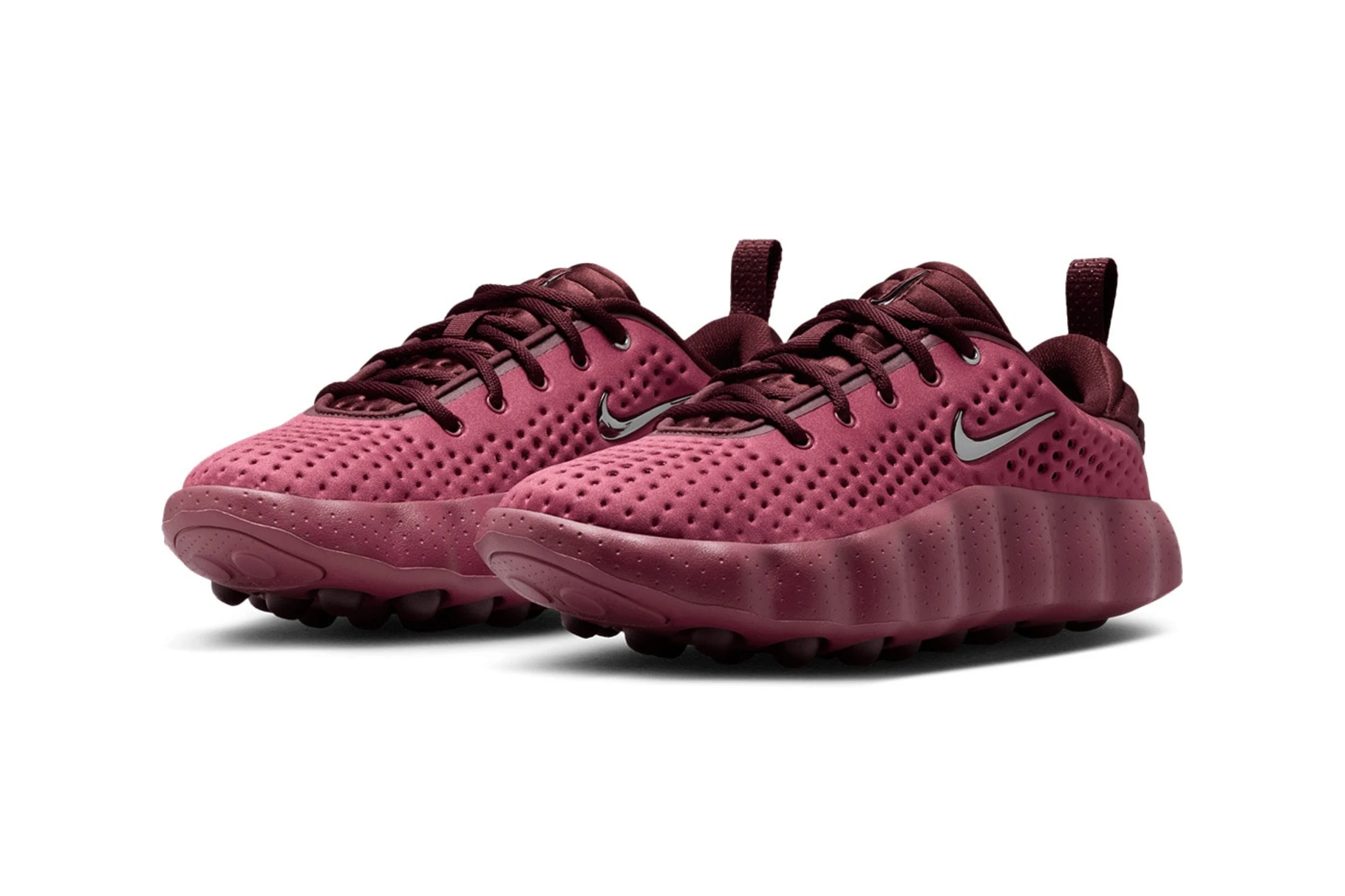
The Nike Mind 002 Pink Smoke releases July 23 at $145. The shoe is built around 22 individually articulated pressure points on the sole, designed to activate sensory feedback in the minutes before competition. Nike calls the category pregame footwear. The mechanism is touch, not cushioning.

The Mind Science Department, the internal unit responsible for the line, has operated within Nike's innovation division since 2024. The first Mind release, the 001, shipped in limited quantities to select athletes for testing. The 002 is the first general-release product from the department, and the Pink Smoke colorway targets women's sport specifically.
The design logic inverts Nike's standard performance framework. Running shoes optimize energy return. Training shoes optimize stability. The Mind 002 optimizes sensory input, treating the pre-performance window as a distinct use case with distinct footwear requirements. You have seen this shoe on sidelines in testing, not on courts or tracks during play.
The 22 articulated points are the technical claim. Nike's research, developed internally over several years, suggests that targeted pressure activation in the feet can sharpen focus and reduce pre-competition anxiety. The shoe is not designed to be worn during the event; it is designed to be worn in the tunnel, the locker room, the warmup area.
The category positioning is the move worth tracking. Nike already owns the performance footwear market across running, basketball, training, and lifestyle. The Mind line creates a new segment: preparation footwear. The segment did not exist as a retail category before this release. Nike is attempting to establish it.
The price point, $145, places the Mind 002 below Nike's premium performance models but above entry-level lifestyle shoes. The positioning suggests Nike views the category as viable at scale, not as a limited-edition collector item. The women's-first colorway suggests the initial target demographic is female athletes, a market where Nike has increased investment over the past three years.
The conversion question is whether athletes will adopt a shoe that serves a ten-minute window before competition. The use case is narrow. The sensory research is proprietary. The retail pitch requires explaining a new category rather than iterating on an established one.
By October 2026, Nike will have ninety days of sell-through data on the Mind 002. If the shoe clears inventory at rate, the Mind line expands. If it sits, the pregame category remains a research project rather than a product line. The articulated-sole design will either establish a new footwear segment or serve as evidence that some windows are too narrow to build a shoe around.