
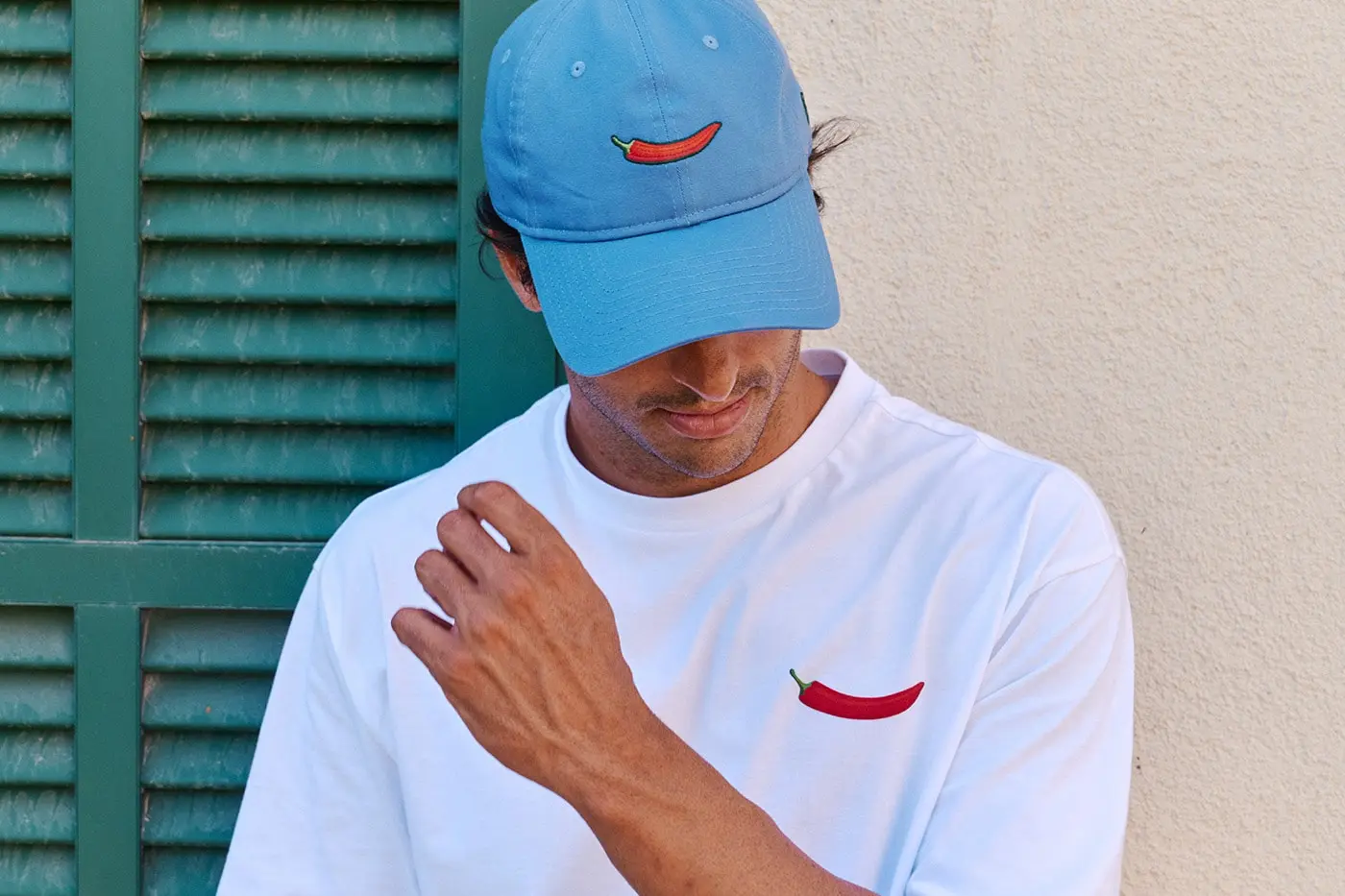
New Era has built collections around teams, leagues, and cities for a century. TEAM FIFTY5, launched September 2, is built around a person: Carlos Sainz, car number 55, and nothing else. No Williams livery, no F1 wordmark, no sponsor grid on the sleeve. Just his own chili-pepper motif and a yellow cap that nods to his home race in Madrid.

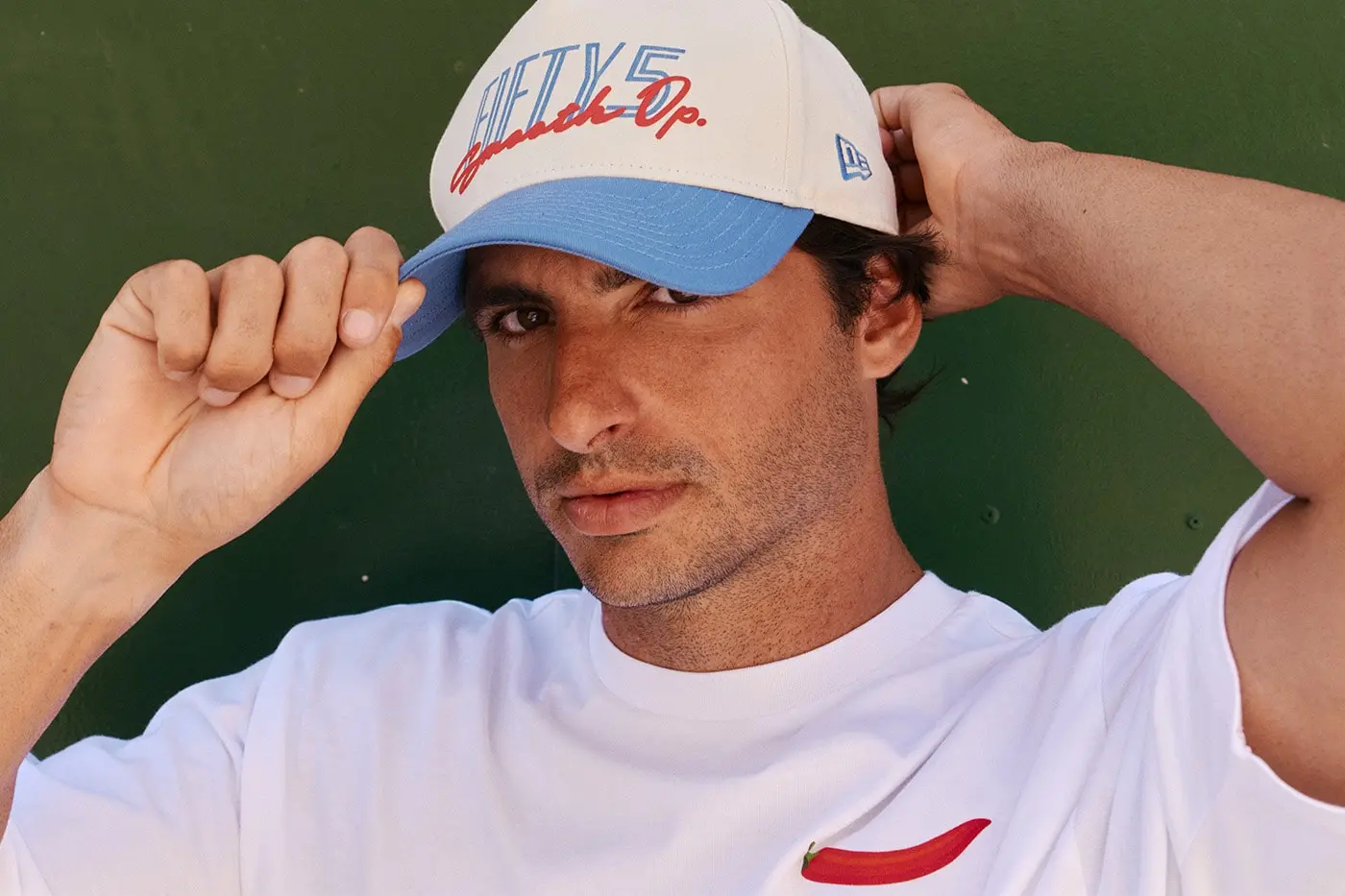
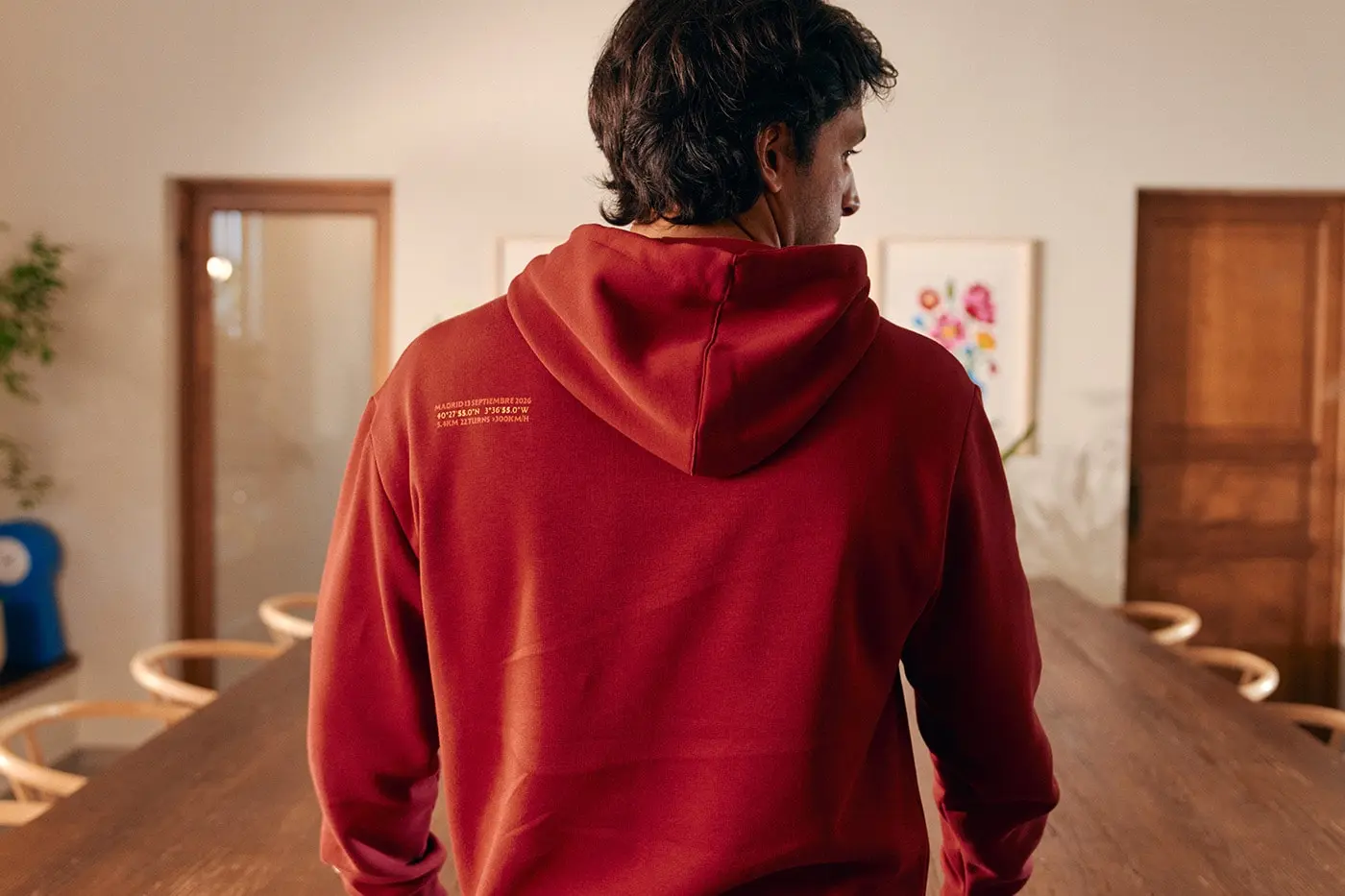
The mechanism here is straightforward and worth naming precisely: a driver's on-track presence, built over more than a decade in the sport, gets tested for whether it converts into a standalone consumer brand once the team logo is removed. Sainz has been visible in Formula 1 since 2015. Visibility is not the same as demand for a hoodie with his name on it and nobody else's.
This is a bet other drivers have made with mixed results. Lewis Hamilton has a fashion label under his own name that operates independently of any team deal. Max Verstappen has merchandise tied tightly to Red Bull's own retail machine, which makes it hard to separate his personal pull from the team's. Sainz's move sits somewhere between those two: New Era is a licensor with no F1 team relationship, betting that his fan base will follow him off a grid that also includes his actual employer's official gear.
You have seen this shoe before, if not this cap: an athlete with broad name recognition steps outside the team-branded merchandise system to sell you something with his own signifiers on it, and the test is never whether people recognize him. It is whether they will pay retail for a hoodie that carries no team crest and no league mark, just a personal brand doing the work alone. Fan loyalty to a driver and fan loyalty to a driver's product line are not the same purchase decision, and the gap between them is where collections like this tend to succeed or stall.
The chili-pepper motif matters more than it looks like it should. A team logo carries meaning fans already agreed on before the product existed. A personal signifier like Sainz's own icon has to build that meaning from nothing, sale by sale, on merchandise stripped of the Williams livery and the F1 wordmark that usually do the persuading for a driver.
That is also why the Hamilton and Verstappen comparisons are useful rather than incidental. Hamilton's label stands apart from any team deal and has had to earn its own footing. Verstappen's merchandise leans on Red Bull's retail machine, which blurs how much of the pull is his and how much belongs to the team apparatus around him. Sainz's arrangement with New Era, a licensor outside the F1 team system entirely, denies him that shortcut. The chili pepper and the yellow cap either mean something to buyers on their own terms, or they do not.
That is the real function of the Madrid-referencing cap as a test case. It carries no crest, no sponsor grid, nothing but a personal reference to a home race and a driver's own colorway. Whatever happens to that cap on resale or in restock will say more about the gap between recognizing Sainz and wanting his product than anything else in the collection.
Watch the resale and restock behavior on the yellow Madrid-referencing 9FORTY specifically. If that cap sells through and resurfaces on StockX or similar platforms above retail within 90 days, TEAM FIFTY5 has cleared the bar that most athlete personal-brand launches do not. If it is still in stock at full price by December, the presence was real and the preference was not.